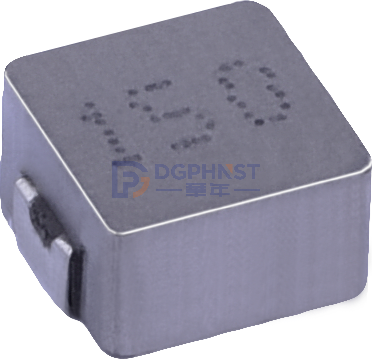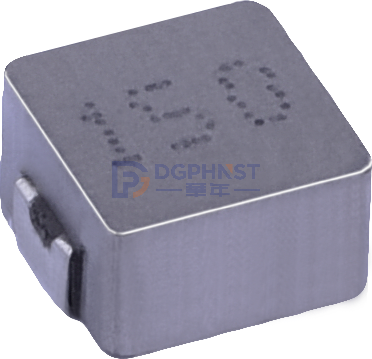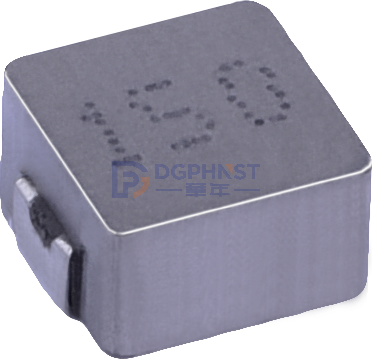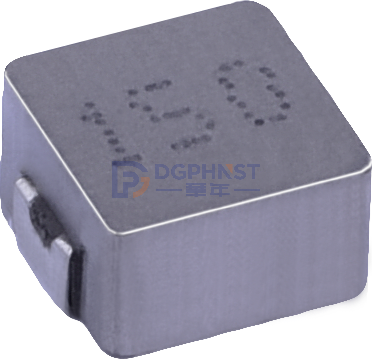
I. Product Overview
The ERHV2010 series current sensing resistors are high-voltage chip resistors manufactured using advanced thick-film technology, strictly complying with the EIA standard size 2010. With excellent electrical performance and stable structural design, they are widely used in various electronic devices that have strict requirements for voltage, resistance, and temperature stability. The product features an alumina substrate, a ruthenium oxide (RuO₂) resistive layer, and dual protection with glass and epoxy coatings. It integrates core advantages such as high voltage tolerance, high resistance accuracy, and a wide temperature operating range, providing key guarantees for the reliable operation of electronic systems.
II. Core Parameters and Performance Advantages
(I) Key Electrical Parameters
- Power Rating: The rated power is 1/2W (0.50W) at 70℃. When the operating temperature exceeds 70℃, the power can be derated reasonably according to the power derating curve.
- Voltage Tolerance: The maximum working voltage can reach 3000VDC, and the overload voltage follows the standard of twice the maximum working voltage. It has excellent high-voltage bearing capacity without the risk of breakdown or flashover.
- Resistance Characteristics: The resistance range covers 51KΩ~100MΩ. The 51KΩ~1MΩ range supports E-24 and E-96 standard resistance series, the 1.02MΩ~10MΩ range adopts the E-96 standard, and the 1.1MΩ~20MΩ and 22MΩ~100MΩ ranges adopt the E-24 standard. Two resistance tolerance options are available: ±1% (Grade F) and ±5% (Grade J), meeting different precision requirements.
- Temperature Coefficient: Depending on the resistance range, the temperature coefficients are ±100ppm/℃, ±200ppm/℃, and ±400ppm/℃ respectively. It can maintain stable resistance within a wide temperature range and is less affected by temperature fluctuations.
- Operating Temperature: The applicable temperature range is -55℃~+155℃, which can adapt to extreme high and low temperature operating environments without performance degradation.
(II) Core Performance Advantages
- High Voltage and High Resistance Characteristics: It combines a high working voltage of 3000VDC and a maximum high resistance value of 100MΩ, which can meet the current sensing needs in high-voltage circuits. There is no need to connect multiple resistors in series, simplifying circuit design.
- Stable and Reliable Structure: The alumina substrate combined with the RuO₂ resistive layer has excellent heat resistance and chemical stability. The dual coating design of glass and epoxy effectively improves the resistor's resistance to moisture and corrosion, extending its service life.
- Precise Resistance Control: Manufactured through advanced thick-film technology, the resistance tolerance is as low as ±1%, and the temperature coefficient performance is excellent, ensuring measurement accuracy under different working conditions and improving the control precision of electronic systems.
- Good Environmental Adaptability: It has passed strict environmental performance tests, including resistance to damp heat, dry heat, rapid temperature change, and bending. It can still work stably in complex environments such as humidity, high temperature, and vibration, with high reliability.
- Compliance Guarantee: The product complies with RoHS standards, contains no harmful substances, meets environmental protection requirements, and is suitable for various green electronic products.
III. Structure and Technology
(I) Product Structure
The ERHV2010 series resistors adopt a multi-layer structural design, with various components working together to ensure product performance:
- Substrate: Alumina, providing excellent mechanical strength and insulation performance;
- Resistive Layer: Ruthenium oxide (RuO₂), with stable resistance characteristics and good temperature stability;
- Coatings: The bottom layer is glass (Primary Overcoat) and the surface layer is epoxy (2nd Overcoat), providing dual protection to isolate external environmental influences;
- Electrode System: Including bottom electrode (Ag), top electrode (Ag-Pd), edge electrode (NiCr), barrier layer (Ni), and termination finish (Sn), ensuring good conductivity and solderability.
(II) Key Technology
The RuO₂ resistive layer is prepared on the alumina substrate by thick-film printing technology and cured by high-temperature sintering to ensure a firm bond between the resistive layer and the substrate. Precision laser trimming technology is used to achieve precise resistance control. Finally, the product is completed through processes such as glass coating, epoxy coating, and electrode treatment. Process parameters are strictly controlled throughout the process to ensure product consistency and stability.
IV. Environmental and Mechanical Performance
The ERHV2010 series resistors have passed a number of strict environmental and mechanical performance tests, with specific performances as follows:
- Load Life: Under the environment of 70℃±2℃, loaded with the rated working voltage, with 1.5 hours of power-on and 0.5 hours of power-off as a cycle, after 1000 hours of cumulative testing, the resistance change is only ±(2%+0.10Ω) (for products with ±1% tolerance) and ±(3%+0.10Ω) (for products with ±5% tolerance);
- Damp Heat with Load: Under the environment of 40℃±2℃ and relative humidity of 90%~95%, loaded with the rated working voltage, with 1.5 hours of power-on and 0.5 hours of power-off as a cycle, after 1000 hours of cumulative testing, the resistance change is consistent with the load life test standard;
- Dry Heat Performance: After continuous 1000 hours at 155℃, the resistance change is ±(1%+0.05Ω) (for products with ±1% tolerance) and ±(1.5%+0.10Ω) (for products with ±5% tolerance);
- Bending Strength: During the bending test (bending radius 2mm, holding for 5 seconds), the resistance change is only ±(1%+0.05Ω), with stable mechanical structure;
- Solderability: When soldered at 245℃±5℃ for 3 seconds, the solder coverage is not less than 95%; when subjected to soldering heat at 260℃±5℃ for 10 seconds, the resistance change is only ±(0.5%+0.05Ω) (for products with ±1% tolerance) and ±(1.0%+0.05Ω) (for products with ±5% tolerance), with excellent soldering adaptability;
- Rapid Change in Temperature: After 5 cycles of rapid temperature change tests in the range of -55℃~155℃, the resistance change is consistent with the soldering heat test standard, adapting to scenarios with rapid temperature fluctuations.
V. Conclusion
With its high voltage tolerance, high resistance accuracy, wide temperature operating range, and excellent environmental stability, the ERHV2010 series current sensing resistors have become an ideal choice for current sensing in high-voltage electronic devices. Whether in industrial control, power electronics, communication equipment, or automotive electronics, this product can provide precise current detection support for systems with reliable performance, simplify circuit design, and improve the overall reliability of products. In the future, we will continue to optimize product technology and performance, provide high-quality resistor solutions for more industry applications, and contribute to the innovative development of the electronic industry.