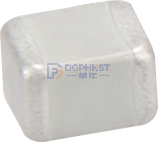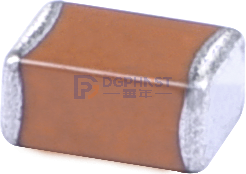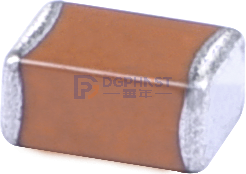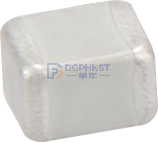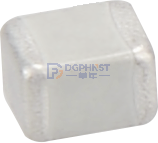
On May 27, 2026, Norihiro Nakajima, President of Murata Manufacturing, unveiled a brand-new business development roadmap for high-end AI MLCCs at an analyst conference. Following the release of this plan, market sentiment toward the MLCC sector has shifted fundamentally, ushering in fresh growth momentum for the entire passive component industry.
Widening Supply Shortage for High-End AI MLCCs
High-end MLCCs designed for AI servers are currently in acute shortage. The total volume of customer inquiries and orders has doubled the industry’s existing production capacity. Murata’s core production lines are already running at full capacity, with capacity utilization maintaining a high range of 90% to 95%.
Nevertheless, constrained by critical technical bottlenecks including ultra-thin material fabrication and high-capacity sintering, existing production workflows leave no room for throughput improvements. Current capacity levels fall far short of meeting the explosive surge in market orders.
As AI hardware undergoes continuous upgrades and iterations, the quantity of MLCCs deployed across all types of computing hardware has risen sharply, with stark disparities in consumption across different devices:
- A standard server requires only 2,200 to 4,000 MLCC units per unit;
- Each NVIDIA GB300 AI server consumes approximately 30,000 MLCCs, 30 times the volume used in a typical smartphone;
- Next-generation NVL72 computing racks demand between 440,000 and 600,000 MLCCs apiece, with MLCC procurement costs per rack hitting roughly USD 4,300 to 4,600.
Based on statistical forecasts by China International Capital Corporation (CICC), global MLCC demand for AI servers will hit 72.6 billion pieces in 2026, representing an 87% year-on-year jump. Demand is projected to climb further to 136.7 billion units in 2027, marking an 88% annual growth rate.
Murata Rolls Out JPY 80 Billion Capacity Expansion Plan
To ease the severe supply crunch of high-end MLCCs, Murata has finalized a dedicated capacity expansion initiative worth JPY 800 billion. Departing from conventional capacity expansion models, the company has ruled out constructing new manufacturing plants. The primary rationale is that new factory construction involves lengthy lead times, which cannot keep pace with the rapidly rising demand for AI hardware and will fail to quickly close the supply gap. All funding under this program will be allocated to upgrading existing production lines, refining manufacturing processes, and installing automated equipment to selectively boost output of high-end AI MLCCs.
The expansion funds will be disbursed in two annual tranches: JPY 400 billion each for fiscal 2026 and fiscal 2027. The capital is ring-fenced exclusively for production line upgrades targeting AI server-grade high-end MLCCs, with zero allocation to production upgrades for standard MLCC products.
Funding will be deployed across three key initiatives:
- Iterative upgrades to core production workflows and installation of brand-new manufacturing machinery at Murata’s Izumo Plant in Shimane Prefecture, Japan;
- Optimization of specialized production lines for miniaturized, high-stability premium MLCCs to lift product yield rates and cut raw material wastage;
- Installation of automated equipment at bottleneck processes with restricted production speeds to eliminate manufacturing holdups and comprehensively boost overall production efficiency.
Upon completion of all renovation and upgrade works, Murata’s overall MLCC production capacity will rise by 10% to 15%. Most notably, the share of capacity dedicated solely to AI server high-end MLCCs will surge from the current 30% to over 45%, delivering a dramatic improvement in supply capacity for premium products.
Concurrently, Murata is revamping its global manufacturing footprint. The manufacturer plans to lower the proportion of domestic Japanese production capacity from 60% to 50%. For fiscal 2026, additional product packaging and outbound shipping auxiliary processes will be introduced at its Indian factory. The Indian facility will only handle back-end finishing procedures and will not conduct MLCC chip fabrication. This setup will relieve shipment pressure on Murata’s Japanese plants, shorten customer delivery lead times, and mitigate widespread order fulfillment delays.
Industry Uptrend Projected to Extend Through 2030
Prior to this announcement, industry players and capital markets widely anticipated that market fervor for high-end AI MLCCs would peak in 2028 before gradually cooling off. Murata’s newly released development roadmap overturns this market consensus. Murata’s management states that the global construction boom for AI data centers, AI servers and other computing infrastructure will continue to gather steam, and robust demand for high-end MLCCs is set to persist through at least 2030, laying out a clear long-term positive outlook for the sector.
Two major application segments will underpin sustained long-term industry growth:
- Mass rollout of next-generation Rubin servers. Each unit’s mainboard consumes more than 12,000 MLCCs, creating steady rigid demand for premium passive components;
- Rapid penetration of smart devices including autonomous vehicles and humanoid robots, which will trigger a fresh wave of large-scale procurement for high-end MLCCs.
Fueled by incremental demand from these two core markets, Murata has raised its long-term industry forecasts. The firm estimates that global MLCC demand for AI servers in 2030 will expand 3.3 times compared with 2025 levels, translating to a steady compound annual growth rate of approximately 30% between 2025 and 2030.
Differentiated Pricing Strategy for New-Generation Products
On product pricing, Murata has adopted a flexible differentiated pricing framework. The company will refrain from arbitrary price adjustments to existing mature product lines on the market. Instead, leveraging hardware upgrade cycles for AI devices, Murata will establish independent pricing tiers for brand-new specifications of high-end MLCCs. This strategy offsets substantial costs incurred by product R&D and production line overhauls, safeguarding profit margins for its high-end product division.
As early as April 2026, price revisions were finalized for dedicated MLCCs compatible with the NVIDIA GB300 platform, with markup rates ranging from 15% to 35%. Post-adjustment, the product maintained stable order volumes and smooth delivery schedules with no signs of demand decline. Upcoming new premium products under the VR200 series will also carry customized price tags based on product performance, manufacturing yield rates and prevailing market demand.
This pricing model breaks free from traditional cost-plus pricing logic. Rather than calculating prices purely based on raw material and manufacturing expenses, Murata sets prices by referencing the core functional value of high-end MLCCs within AI computing hardware, aligning product pricing with their actual market value.
Three Core Industry Takeaways from the Analyst Conference
The development plan disclosed at this analyst conference has completely reversed capital market perceptions of the passive component industry, sending three pivotal signals that will shape the sector’s future trajectory:
- The long-term structural imbalance between supply and demand for high-end AI MLCCs will persist. Murata’s multi-hundred-billion-yen capacity expansion will only deliver modest gains to overall industry output, insufficient to close the massive gap between market supply and orders. Supply shortages for AI-grade high-end MLCCs will endure throughout 2026 and 2027.
- The industry has entered an upward cycle set to last five years or longer. Previously projected peak timelines for industry prosperity have been pushed back entirely, overhauling valuation metrics across the passive component sector. Multiple financial institutions calculate that the industry’s annual compound growth rate will firmly exceed 30%.
- Murata retains dominant pricing power across the sector. The manufacturer can continuously adjust pricing for new product generations in tandem with iterative AI hardware platforms, enabling it to consistently capture market dividends generated by global computing capacity expansion. Moving forward, MLCC procurement costs for AI racks and AI servers will see steady upward momentum.
Closing Remarks
Driven by dual catalysts of global AI computing infrastructure construction and widespread adoption of intelligent end devices, the high-end AI MLCC sector has moved past a short-term speculative rally and formally entered a golden age characterized by sustained long-term high-speed growth.
The current supply-demand imbalance cannot be resolved in the short run. Scarcity of premium MLCC products, gradual price appreciation and continuous market expansion will define the core operating landscape of the industry over the next several years.