
The electronics industry has never had truly "unimportant supporting roles".
Most people regard chips and GPUs as the core protagonists of the tech sector, considering small surface-mount capacitors, resistors, and inductors unimportant. However, they are unaware that the performance bottlenecks of high-end equipment are actually constrained by passive components.
In 2026, MLCC will reach a breakthrough. The three major sectors of AI servers, end-side AI devices, and new energy vehicles are expanding simultaneously, completely reshaping the MLCC supply and demand structure:
①MLCC usage per AI server has surged 13 times, with total capacity increasing by 27 times;
②A pure electric vehicle uses 18,000 MLCCs, six times that of a fuel vehicle;
③By 2029, the global market for MLCC in AI servers is expected to exceed 23.91 billion yuan;
④The end-side AI MLCC market will grow at a rate over 48.7% over five years, reaching 14.68 billion yuan by 2029.
Surging demand, shortage of high-end capacity, upstream material bottlenecks, and leading manufacturers controlling production...
Upstream powder shortages, midstream high-end MLCC backlogs, and downstream terminal manufacturers competing for materials to ensure production—supply and demand imbalance across the entire supply chain is now inevitable!
Many people wonder: Why has a small surface-mount capacitor suddenly become a hard currency?
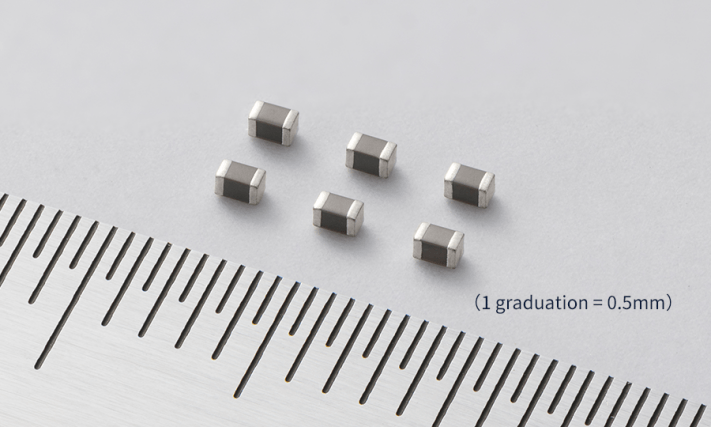
MLCC Comparison Ruler
Three Major Sectors Booming! MLCC Demand Surges
Previously, MLCC demand mainly came from traditional consumer electronics like mobile phones and computers, with slow growth.
Now, the simultaneous boom of AI computing power, edge-side intelligence, and new energy vehicles has completely restructured MLCC demand logic, with dramatic growth in per-unit usage and a severe shortage of high-end products.
MLCC Production Process Flow
1. AI Servers: The Strongest Engine for MLCC Demand
The high computing power, high power consumption, and high stability of AI servers have led to a leap in MLCC usage. Traditional general-purpose servers have a power consumption of around 2000W, with about 2200 MLCCs per unit; however, high-end AI servers can reach up to 15000W, directly driving a significant increase in key parameters:
- MLCC Count: 2200 → 28,000, an increase of 13 times
- MLCC Total Capacity: 22,000uF → 600,000uF, an increase of 27 times
- An 8-card AI training server can use up to 48,000 MLCCs, while flagship AI server cabinets can exceed 440,000 MLCCs.
UPS, PSU, IBC, VRM power lines in AI servers require components with high heat resistance, low ripple, and reliability, with MLCC performance directly affecting computing power stability. Data predicts that AI server capacitor demand will grow by 30% annually from 2025 to 2030, with the MLCC market size reaching 23.91 billion yuan by 2029, with a five-year compound annual growth rate (CAGR) of 39.6%, making it the primary growth sector in the industry.
- Edge AI Devices: Leading Growth in the Incremental Market
Outside of cloud computing, AI smartphones, tablets, and wearable devices continue to increase MLCC demand. With the popularity of edge-side large models, multi-camera systems, and fast charging, device integration continues to rise:
- 5G Smartphones: 700-1100 MLCCs per unit, with flagship models exceeding 1200 MLCCs
- New Laptops/Tables: 1500-2000 MLCCs per unit
- Smartwatches/TWS Headphones: MLCC usage has doubled compared to earlier versions, reaching 200-400 MLCCs
The edge-side AI MLCC market has grown from 360 million yuan in 2020 to 1.76 billion yuan in 2024, with an average annual compound growth rate of 48.7%. It is expected to exceed 14.68 billion yuan by 2029, with a CAGR of 54.5% between 2025 and 2029, showing strong growth potential.
3. New Energy Vehicles: Demand Far Exceeds That of Fuel Vehicles
Automotive electrification has driven steady growth in MLCC demand. Fuel vehicles have a simple electronic architecture, while hybrid models have four times the capacitor usage, at 12,000 capacitors per vehicle. Pure electric vehicles have reached 18,000 capacitors, six times that of fuel vehicles.
High-voltage batteries, power control systems, and autonomous driving systems all require large amounts of MLCCs. In 2025, China's new energy vehicle sales are expected to reach 16.49 million units, up 28.2% year-on-year, with high-level intelligent driving continuously penetrating, causing long-term rapid growth in MLCC demand on the automotive side.
Decomposing MLCC: A Small Component Supporting a Trillion-Yuan Electronics Industry Chain
From a market perspective, MLCC's position is irreplaceable:
①Ceramic capacitors account for 54.12% of the global capacitor market;
②MLCC alone accounts for 93% of the ceramic capacitor market.
MLCC is made by alternating hundreds of metal electrodes and ceramic dielectrics, then sintered at temperatures between 1100°C and 1350°C. The maximum number of internal layers can reach 500-1000, with top companies achieving up to 1600 layers.
MLCC Internal "Sandwich" Layer Structure Diagram — Precise Stacking of Thousands of Dielectrics and Electrodes Is the Core of the Process
The real industry barriers lie in two key areas: ceramic powder materials and ultra-thin layer manufacturing processes.
With explosive demand growth and locked supply, this MLCC trend is not a short-term hype but a long-term supply-demand mismatch.
Currently, the MLCC market faces serious imbalances in supply and demand, with long-term shortages of high-end products. Japanese and South Korean leading enterprises have long monopolized global high-end capacity, while domestic local manufacturers have a low market share. Domestic substitution offers broad incremental space. Combined with overseas restrictions on core barium titanate powder raw materials, high barriers to micrometer-level ultra-thin layer technology, and long construction cycles for production lines, high-end MLCC capacity cannot be quickly replenished in the short term.
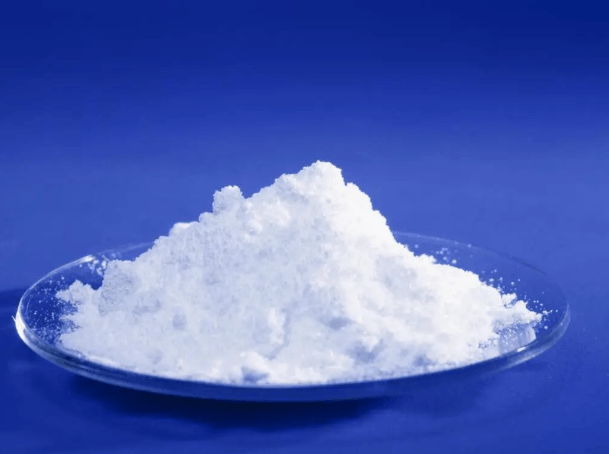
Pure Barium Titanate Powder
Deeply Cultivating the Supply Chain, Shunhai Technology Builds a Competitive Advantage in Components Supply
During the industry upturn, terminal manufacturers often face issues such as unstable high-end sources, incomplete product categories, and delayed deliveries. Shunhai Technology, with years of experience in the component field, has become a reliable supplier through its comprehensive supply chain, complete product matrix, and stable service system.
All-Kinds of Components, Covering Diverse Applications
Shunhai Technology primarily focuses on surface-mount MLCC capacitors, precision/alloy resistors, fuses, discrete components, and ICs. These components are suitable for applications such as AI devices, new energy vehicles, industrial control, consumer electronics, and smart homes, and can be supplied stably for conventional model components.
Online and Offline Integration, One-Stop Procurement for Cost Reduction and Efficiency Improvement
Its own online procurement platform, Huanyan Mall, allows one-stop ordering for capacitors, resistors, inductors, fuses, MOS tubes, etc., simplifying the procurement process and compressing the delivery cycle, helping companies reduce overall procurement costs.
Long-Term Steady Operations, Deeply Cultivating Industrial Technology Channels
Shunhai Technology rejects short-term profit-seeking strategies, adheres to a practical business approach, strictly controls quality, maintains stable inventory, and aligns with the industry's trend toward precision and high-end development, empowering upstream and downstream industries to seize the benefits of AI and new energy.
In Conclusion
The three major sectors of AI servers, edge-side intelligence, and new energy vehicles have reshaped the growth logic of MLCC, shifting demand from traditional consumer electronics to high-end technological drivers. The combination of supply-demand gaps, technical barriers, and domestic substitution presents three favorable factors, and the long-term prosperity period of the MLCC industry is still in the middle phase. A stable supply chain, complete product range, and reliable quality control are key to enterprise breakthroughs.
Looking ahead, Shunhai Technology will continue to deepen its focus on the semiconductor and passive component sectors, leveraging its supply chain and professional technology advantages to provide continuous component supply services suitable for high-end scenarios, connecting the upstream and downstream of the industry, and helping enterprises seize the development opportunities of the AI and new energy era.