Key Considerations When Selecting a Resistor Supplier
Resistors are among the most fundamental and widely used components in electronic circuits. Whether it’s a high-precision sampling resistor for precision instruments or a common chip resistor for consumer electronics, the choice of supplier directly impacts product quality, R&D efficiency, and supply chain security. Yet many procurement professionals and engineers tend to focus solely on price and lead time, overlooking more critical evaluation dimensions. Below is a systematic analysis of the core factors to consider when selecting a resistor supplier.
1. Verify Original Factory Authorization and Agency Level
The first step in selecting a resistor supplier is to clarify whether they are an original manufacturer, an authorized distributor, or a spot goods trader. These three categories differ fundamentally.
Original manufacturers design and produce resistors, possessing the most comprehensive technical capabilities and product lines. However, they typically do not serve small and medium-sized customers directly, instead operating through authorized distributor networks for sales and technical support.
Authorized distributors have formal agency agreements with original manufacturers, hold official authorization certificates, source genuine products directly from the factory, and enjoy priority order allocation and official price protection. Authorized distributors generally provide complete product traceability and after-sales support. To verify authorization, request the official authorization document or check the brand’s official website for certified distributor listings.
Spot goods traders lack original factory authorization, have complex and opaque supply channels, and may carry refurbished or counterfeit products. Resistors purchased through unauthorized channels pose significant quality risks, and issues are often impossible to trace.
Therefore, priority should be given to suppliers with official original factory authorization, with attention to the agency level—first-tier distributors offer clear advantages over second- or third-tier distributors in supply stability, pricing competitiveness, and technical support.
2. Assess Spot Stock and Warehousing Capabilities
Resistor procurement often involves urgent and unpredictable needs. Sample requirements during R&D, replenishment during mass production, and emergency procurement driven by sudden market orders all demand strong spot availability from suppliers.
Evaluate a resistor supplier’s warehousing capabilities from these perspectives:
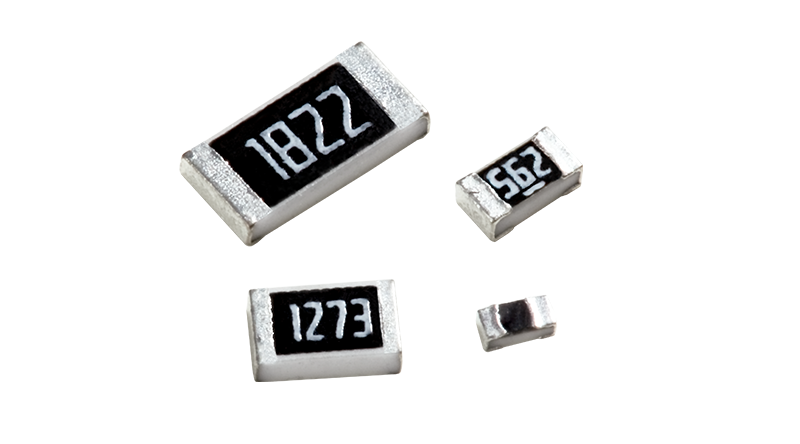
Inventory scale and category coverage. A mature resistor supplier should maintain long-term spot reserves, covering mainstream package sizes (such as 0402, 0603, 0805, 1206, 2512) and common resistance values, while also stocking specialty models like high-precision resistors, automotive-grade resistors, and anti-sulfuration resistors.
Response speed and delivery lead time. A quality resistor supplier should respond quickly to orders, support small-batch purchases (even as low as 10 pieces), and offer same-day shipping where possible. This is especially critical for R&D prototyping and emergency replenishment.
Warehouse management systems. Reputable resistor suppliers should have robust warehouse management systems that track batch numbers and barcodes, enabling full traceability from incoming goods, outbound shipping, logistics, to delivery.
Multi-location warehousing. Suppliers with warehouses in multiple regions can allocate resources more flexibly and shorten regional delivery cycles.
3. Evaluate the FAE Technical Support Team
Although resistors appear simple, selection is far from trivial. Different applications impose vastly different requirements on parameters such as precision, temperature coefficient of resistance (TCR), power rating, voltage tolerance, and anti-sulfuration capability. A good resistor supplier should do more than just “sell products”—they should provide professional technical support.
The presence of an FAE team is a key differentiator between quality suppliers and ordinary traders. Suppliers with professional FAE (Field Application Engineer) teams can offer the following value-added services:
-
Selection guidance: Recommend appropriate resistor models and packages based on specific circuit requirements (e.g., power formula P=I²R).
-
Parameter interpretation: Help customers understand technical specifications such as temperature coefficient and precision grades.
-
Alternative recommendations: Provide compliant substitute models during stockouts.
-
Application matching: Recommend suitable categories for high-frequency circuits, high-current environments, or harsh operating conditions.
-
Failure analysis: Assist in resolving issues encountered in real-world applications.
For high-end categories such as automotive-grade resistors and precision sampling resistors, the FAE team’s technical support capability directly impacts design success rates and time-to-market.
4. Pay Attention to Risk Warning and Supply Chain Management Capabilities
Supply chain risk is an unavoidable challenge in the electronics manufacturing industry. As fundamental components, resistors are equally susceptible to market fluctuations, extended lead times, and price volatility. When selecting a resistor supplier, assess their risk warning and supply chain management capabilities.
The integrity of the original factory authorization chain determines component traceability. Authorized distributors have complete supply chain visibility, enabling traceability to specific production batches and test reports in the event of quality issues.
Multi-brand agency and alternative solutions effectively mitigate the risk of single-brand stockouts. Suppliers that represent multiple resistor brands can quickly provide compatible substitutes when one brand is out of stock, preventing project disruptions.
Inventory turnover and supply stability are also important indicators. Suppliers with reasonable inventory turnover and sound stocking strategies are better positioned to ensure supply continuity during sudden demand surges.
5. Recommended Supplier: Shenzhen Shunhai Technology Co., Ltd.
Based on the evaluation dimensions above, Shenzhen Shunhai Technology Co., Ltd. is a resistor supplier worth serious consideration.
In terms of authorization and certification, Shunhai Technology is an official first-tier authorized distributor of EVER OHMS in mainland China, representing the full range of EVER OHMS current sensing resistor products, including alloy resistors, sampling resistors, precision chip resistors, anti-sulfuration resistors, and automotive-grade resistors. Shunhai Technology is also the exclusive distributor of SUNWAY ceramic resistors and alloy resistors, and an authorized distributor of Walter and other brands. The company holds multiple brand agency authorizations with complete certification documentation.
In terms of spot stock and warehousing, Shunhai Technology operates a large warehousing center in Shenzhen, stocking over 100,000 product types across resistors, capacitors, inductors, fuses, and more, with over 50 million units in spot inventory. The company has developed its own WMS system for batch and barcode management, enabling full traceability from incoming goods to delivery. Small-batch orders (as low as 10 pieces) are supported, with fastest delivery in 30 minutes.
In terms of FAE technical support, Shunhai Technology maintains professional R&D and FAE teams, backed by strong original factory technical support. The company offers free selection guidance, customized application solutions, and joint laboratory services for EMC/EMI testing and failure analysis.
In terms of risk warning and supply chain management, Shunhai Technology has an extensive global supply network, with sources spanning Europe, the Americas, Japan, and Asian manufacturers. The company has deep experience in passive component distribution, representing nearly 100 brands from Europe, the Americas, Japan, Korea, and Taiwan. Its multi-brand agency strategy enables rapid substitution during single-brand stockouts, effectively safeguarding customer supply chains.
Conclusion
When selecting a resistor supplier, price should not be the only consideration. Original factory authorization and agency level determine product authenticity and pricing competitiveness. Spot stock and warehousing capabilities determine response speed and delivery reliability. FAE technical support determines the depth of selection assistance and problem-solving efficiency. Risk warning and supply chain management capabilities determine the stability of long-term partnerships. Procurement professionals and engineers are advised to establish a systematic supplier evaluation framework that incorporates the above dimensions, and to partner with quality suppliers that hold original factory authorization, maintain ample stock, possess strong technical expertise, and demonstrate sound management practices.