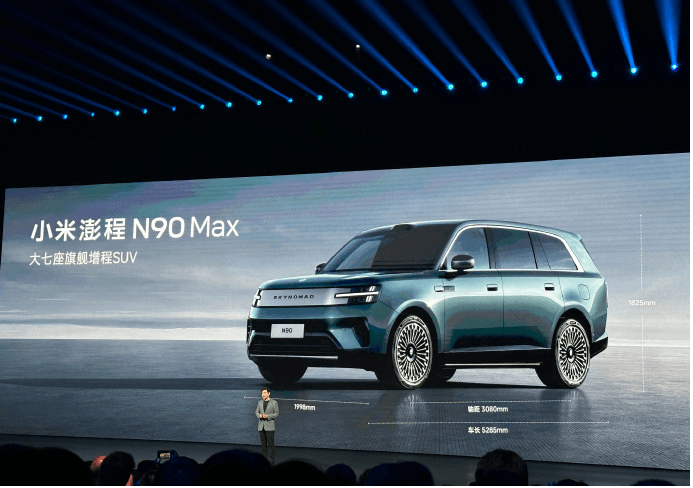
The Xiaomi Pengcheng N90, officially launched in late July, as Xiaomi's first range-extended flagship SUV, its core component suppliers have been gradually exposed, covering modules such as powertrain systems, intelligent driving and cockpit, vehicle wiring harnesses, chassis control, and low-voltage distribution.
As the supporting list becomes clearer, the focus has shifted from the product itself to changes in the domestic terminal industry chain. From a supply chain perspective, the operation of an intelligent electric vehicle relies on a large number of vehicle-grade electronic components.
Electronic Component Demand Distribution in Xiaomi Pengcheng's Five Modules
Based on the publicly available supplier information, we have categorized the sections with high electronic component usage into five categories:
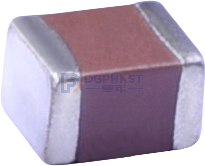
1. Intelligent Driving and Cockpit System: Hesai LiDAR, Qualcomm cockpit main controller, NVIDIA smart driving chip are the core components for the vehicle's computing power. The associated components include: in-vehicle MCU, power management IC, resistors and capacitors (MLCC), filter inductors, high-speed connectors, memory chips, various sensors, etc.
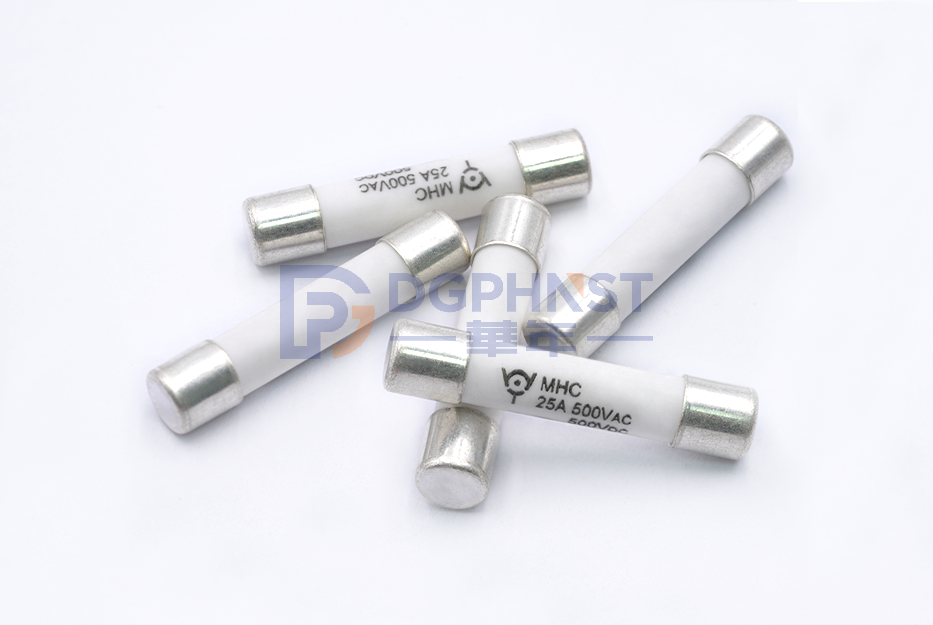
2. Electrical, Wiring Harness, and Power Distribution System: DeLisi low-voltage power distribution, Gongniu power distribution components, and the entire vehicle body wiring harness require a large number of vehicle-grade resistors, fuses, ceramic capacitors, terminal connectors, varistors, and alloy sampling resistors.
3. Battery and Thermal Management System: Battery thermal buffer material, battery cooler, and the entire vehicle air conditioning temperature control system are supported by components such as vehicle-grade thermistors, power inductors, high-voltage capacitors, shunt resistors, and temperature control sensing components.
4. Whole Vehicle Control and Range-Extended Power System: The whole vehicle control unit, front and rear motor drive assemblies, and BMS battery management system involve a large number of vehicle-grade passive components, power devices, and isolation chips.
5. In-Vehicle Smart Terminal and Body Control: LED headlights, in-vehicle smart terminals, and the entire vehicle control structure components use a combination of general-purpose and vehicle-grade components.
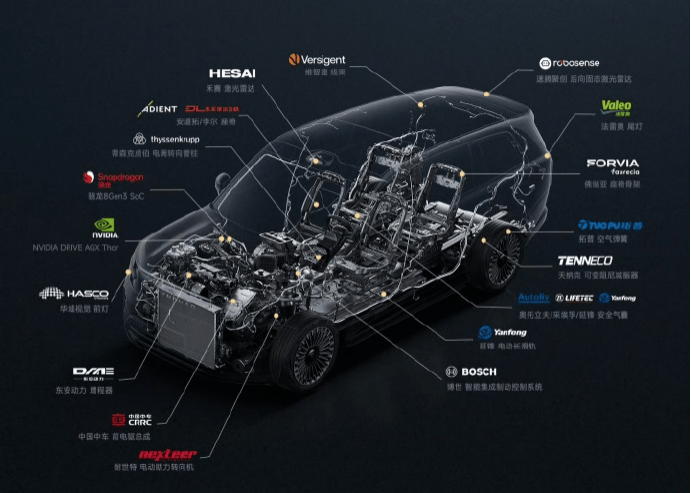
Xiaomi Kunlun Technology Architecture - Domestic and International Excellent Suppliers
Behind one smart terminal, thousands of electronic components work together.
Over the years, the changes in the electronics industry have been very fast. AI servers, new energy vehicles, high-end phones, and smart robots — each field brings new technical discussions. People are used to focusing on "big things".
For example:
- Which company has launched a new chip;
- Which product uses the latest platform;
- Which enterprise has entered a certain supply chain.
These are certainly important, but from the manufacturing perspective, the real problems that need to be solved when a product is finally put into production are far more complex than what is shown at the launch event.
- In the R&D design phase, component matching needs to be considered.
- In the production phase, batch consistency needs to be considered.
- In the supply chain phase, long-term supply needs to be considered.
- In the after-sales phase, product lifecycle needs to be considered.
And all these stages rely on a large number of basic electronic components.
There's a saying in the electronics industry: "Basic components determine the lower limit of a product."
This statement still holds true today.
Smart terminal upgrades bring higher requirements for components.
Previously, many companies focused more on price and delivery time when purchasing electronic components.
With the increase in product complexity, companies now consider more factors when selecting components: even a single resistor can have significant differences in actual application effects due to different material systems, precision levels, and temperature drift parameters.
In scenarios such as high-speed signals, power management, and precision measurement, standard specification components may not meet design requirements.
Therefore, component selection has gradually become a process involving research and development, supply chain, and manufacturing together.
Especially in the smart terminal field, the product update speed is fast and the lifecycle management requirements are high. After a product is launched, if a key component experiences supply fluctuations, it will not only affect the production plan but also potentially impact the entire product cycle. This is why more end users are beginning to pay attention to a stable and reliable component supply system.
Small components also contain big technology.
A characteristic of the electronics industry is: The more fundamental something is, the more easily it is overlooked.
Core components like chips and screens often become market focuses, but what truly supports the long-term and stable operation of electronic products are a large number of basic components.
Take resistors as an example: many people used to think that resistor technology had a low threshold, but with the development of new energy vehicles, AI servers, and industrial equipment, the market demand for high-reliability and high-precision resistors has been continuously increasing.
In AI servers, power modules, and industrial control equipment, resistors not only serve simple resistance matching, but also involve:
- High-precision sampling;
- Current detection;
- Temperature compensation;
- High-frequency signal processing;
- High-reliability environmental applications.
Different application scenarios have different requirements for resistance accuracy, temperature coefficient, long-term stability, and power load capacity. We can see that more and more component manufacturers are investing in R&D, constantly improving product performance.
Industry competition is no longer just price competition, but who can truly understand the application scenarios.
Supply chain development requires more "basic forces".
Today, China's electronics industry has formed a very complete manufacturing system. From terminal brands to component suppliers, and to a large number of basic component enterprises, the entire chain is constantly maturing.
Domestic manufacturing is entering a new stage.
- Previously, we focused on "whether there is".
- Now, we focus on "whether it is good".
- Future, we focus on "whether it can be stable long-term".
For the electronic component industry, this means new opportunities and new challenges.
Products are becoming more complex, application requirements are getting higher, and supply chain competition will become more in-depth.
From a small electronic component to a complete smart device, the connection is the collaborative capability of the entire industry chain. Perfecting every detail may be the important foundation for continued progress of Chinese manufacturing.
Shunhai Technology mainly engages in the self-research, production, and agency of semiconductors and passive components, focusing on providing technical communication services for electronic components. Keeping up with industry market dynamics, it provides supply chain solutions to terminal manufacturers, industrial control, and new energy sectors. It works with upstream and downstream partners to accurately respond to various supply demands and implement suitable products and scenario-based applications.