
When we look at the entire manufacturing industry, it's clear that electronic components are everywhere. A new energy vehicle, an AI server, an industrial robot, or even CT equipment in hospitals and automated production lines in factories contain a large number of electronic components.
Electronic components actually face companies rather than individuals. For component manufacturers, the real customers are not end consumers, but a supply chain that is divided into multiple layers and collaborates closely. Today, let's discuss the supply chain and see which clients the electronic components are finally sold to.
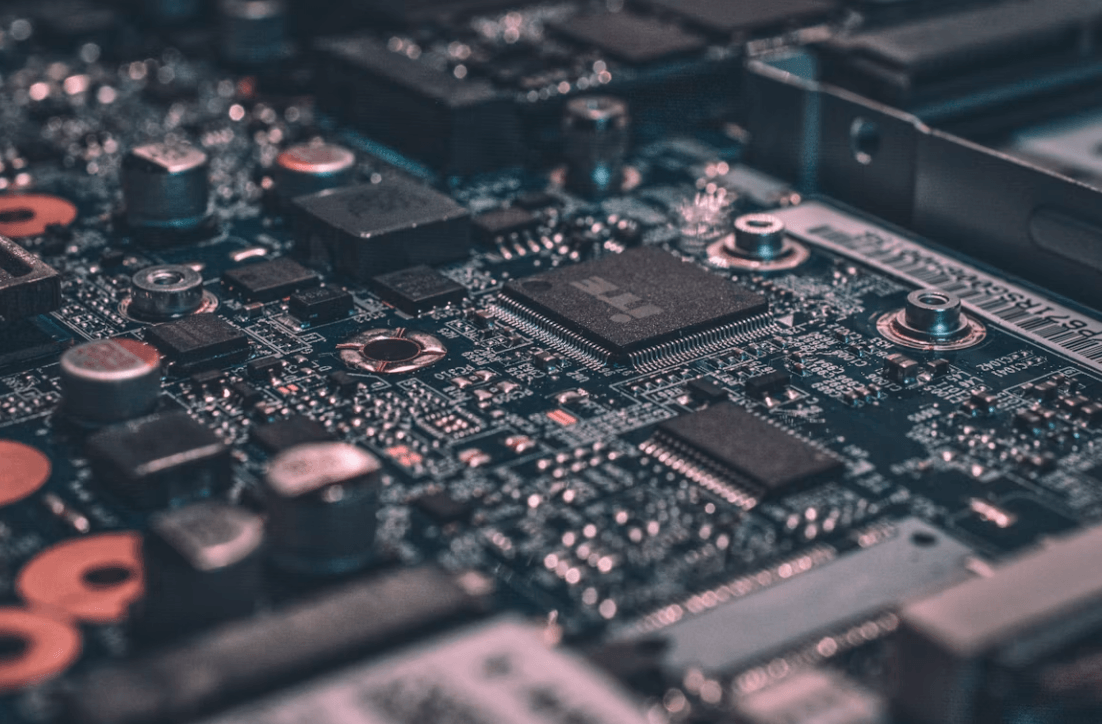
Consumer Electronics: A Traditional Core Market with Increasingly Refined Demand
Consumer electronics is the most core and widely applied traditional market for electronic components. It covers mainstream products such as smartphones, computers, smart home devices, and wearable devices, mainly purchasing basic components like capacitors, resistors, connectors, and general-purpose chips.
In the early stage of the industry, mass production was the main focus, and companies paid close attention to cost-effectiveness and supply stability, with a huge demand for general components. A regular 5G smartphone uses about 800 MLCCs, while high-end flagship models, due to multi-band RF, fast charging, and multi-camera modules, use more than 1000 MLCCs. An AI laptop can have up to 1200 MLCCs, and a smartwatch may use about 350 MLCCs, with extensive use of ultra-miniature passive components like 01005 and 0201.
Now, the industry as a whole has entered a period of stable output. Global smartphone shipments remain between 1.2 to 1.3 billion units annually, with slower growth, and competition is shifting towards refined and differentiated upgrades, with continuous iteration of downstream demand.
Flagship phones now require higher miniaturization, lower power consumption, and higher precision from components; emerging sub-sectors like smart homes and wearables evolve faster, with more product variations, leading to a continuous emergence of small-batch, multi-SKU new products, creating demand for customized matching and small-batch, frequent orders. The industry has completely moved away from the single low-cost mass production model.
Industrial Control: Stability First, Steady Core Demand
Although the growth rate of the industrial control market is not as fast as that of consumer electronics, its characteristics are very clear: long product life cycles and high stability requirements. Products such as PLCs, servo drives, industrial robots, inverters, machine vision equipment, and CNC systems all rely on electronic components.
Industrial customers usually do not frequently change component models. Once validated, many models are used for years. Common products include sulfur-resistant resistors, power inductors, high-voltage MLCCs, isolation devices, industrial-grade MCUs, industrial sensors, and high-reliability connectors.
Taking a medium-sized PLC as an example, the entire unit requires hundreds of resistors, capacitors, power components, signal conditioning chips, and connectors. The number of passive components inside an entire automated control cabinet can exceed 5,000, with strict requirements for component failure indicators.
For suppliers, although these customers have longer development cycles, they offer stable orders and high customer loyalty, making them a key market for many component manufacturers.
Automotive Electronics: Main Growth Driver, Continued Demand Expansion
New energy vehicles have become one of the fastest-growing markets for electronic components.
The value of electronic components in a traditional fuel vehicle accounts for approximately 20% of the total vehicle cost, while in intelligent new energy vehicles, this proportion has reached or even exceeded 40%.
From battery management systems (BMS), in-vehicle controllers, and smart cabins to laser radars, millimeter-wave radars, and domain controllers, each module requires a large number of electronic components. Especially high-reliability film resistors, precision resistors, current detection resistors, power components, and automotive-grade connectors are experiencing sustained demand growth.
The automotive industry has extremely high consistency requirements. A single failure could mean recalling tens of thousands of vehicles. Automotive customers often have supplier audit cycles lasting one year or more, and once accepted into the supply chain, the lifecycle often lasts for many years.
AI Servers and Data Centers
In recent years, the development speed of the AI industry has far exceeded many people's expectations. Whether it's GPU servers, liquid cooling systems, high-speed switches, or AI training clusters, they all require a large number of high-performance electronic components.
For example, a high-end AI server typically contains tens of thousands of electronic components, including a large number of precision film resistors, MLCCs, power management chips, high-speed connectors, inductors, and heat-related components.
As server power continues to increase, higher requirements are placed on power conversion efficiency, thermal management capabilities, and long-term stable operation. Components must not only meet electrical performance standards but also adapt to long-term high-load operating environments.
In recent years, the global expansion of AI infrastructure has also driven increased demand for server power supplies, high-speed interconnects, and precision passive components, providing new market opportunities for relevant suppliers.
Communication Equipment: Infrastructure Upgrades, Focused on High-End Components
The communication equipment sector focuses on the application of high-end components, with downstream players mainly being communication infrastructure and network equipment manufacturers. It covers scenarios such as 5G base stations, optical communication equipment, data centers, and switches, serving as a core application market for high-end RF and high-speed transmission components.
Base stations and optical modules need to be equipped with high-frequency capacitors, ultra-low parasitic inductors, and RF filter components to ensure the stability and signal integrity of high-speed data transmission. With the commercialization of 5G, the construction of computing networks, and the continued expansion of data centers, communication infrastructure has entered a regular iteration cycle, with continuous release of demand for high-end specialized components.
Compared to consumer electronics, the update cycle for communication equipment is longer, but the number of components per device is high, and the value per component is high. There are strict requirements for product accuracy and consistency, and customers place more emphasis on the R&D capabilities and yield rates of enterprises, with relatively low price sensitivity.
Medical Electronics and Security & Military: High-Barrier Niche Markets with Essential Demand
Medical electronics and security & military sectors belong to high-barrier, high-stability niche markets with essential demand. Medical electronics are applied in diagnostic, monitoring, and home medical equipment scenarios, requiring components to meet high-precision, high-security, and low-interference standards, and must pass specialized industry certifications, resulting in high entry barriers and steady, countercyclical demand.
The security & military field primarily serves surveillance, satellite communications, aerospace, and military equipment, with extremely strict requirements for component reliability, environmental adaptability, and confidentiality. Certification cycles are long, and cooperation thresholds are high. With the acceleration of domestic substitution, demand for high-end local components in these two high-end niche markets continues to grow, bringing new growth opportunities for the industry.
Demand Differentiation, Scenario Adaptation is the Core Competitiveness
Looking at the entire supply chain, electronic components ultimately serve various terminal devices. Customers are not a single group, and the demand characteristics, procurement standards, and market cycles of each sector vary significantly.
When industries such as new energy vehicles, AI servers, industrial automation, and high-end medical equipment continue to expand, related electronic component companies often feel the changes in demand first. Understanding downstream customer needs and iterating products in line with terminal scenarios is the key to maintaining market share in a fragmented market.