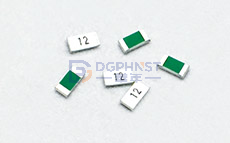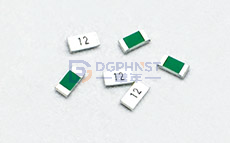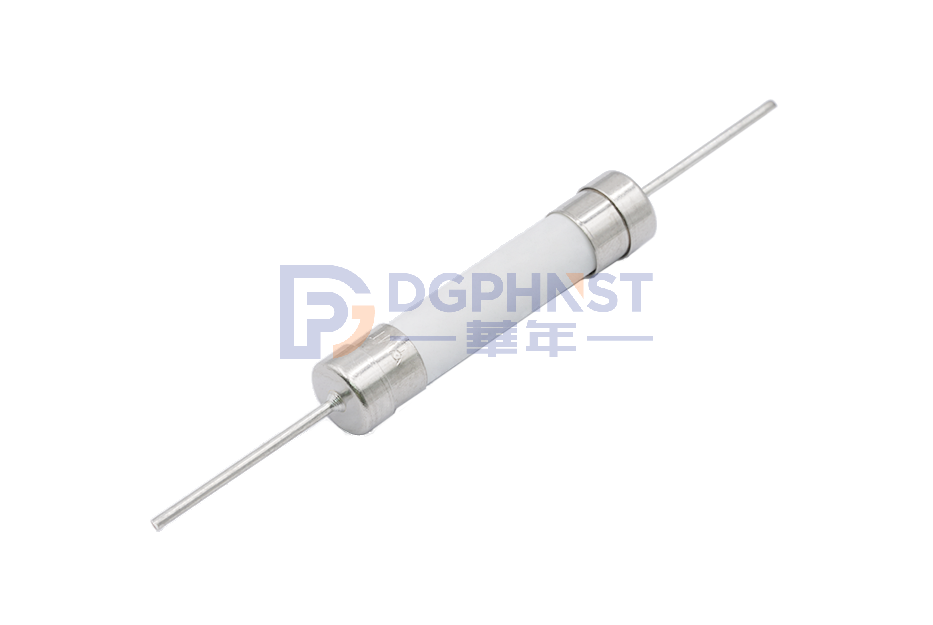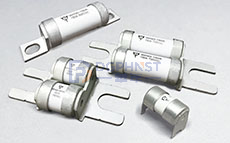
In today's highly digitalized era, from smartphones in our pockets to smart cars racing on highways, and aviation equipment soaring in the sky, the normal operation of all electronic products relies on a core carrier —— PCB (Printed Circuit Board). The key to making this board 'come alive' is the topic we will explore today: electronic components.
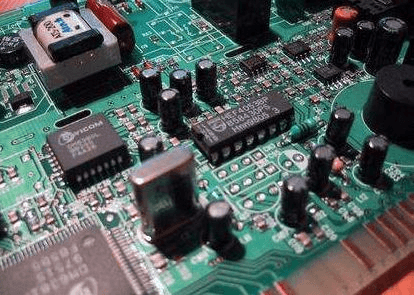
I. What are Electronic Components?
Electronic components refer to the general term for electronic components and electronic devices. The industry mainly distinguishes them based on whether the material's molecular structure changes during the manufacturing process.
- Electronic components: During the production process, the molecular structure of the material does not change. Common types include resistors, capacitors, inductors, potentiometers, connectors, filters, etc., which are basic supporting parts of electronic products.
- Electronic devices: During the production process, the molecular structure of the material changes, and they have electronic control functions. Core products include diodes, transistors, integrated circuits (chips), etc., which are key components for achieving intelligent control and signal processing in electronic products.
II. Core Functions and Assembly Production Process
Electronic components are the physical basis for electronic products to achieve various functions, and they are the basic unit of PCB circuit boards, directly determining whether the circuit board can operate normally. Their main functions include conducting circuit current, transmitting and processing electronic signals, etc.
In the production of electronic products, electronic components must be combined with PCB circuit boards through professional processes. Currently, the industry's mainstream assembly processes are divided into two categories:
- SMT Surface Mount Technology: Mainly used for surface mounting of small electronic components on the circuit board, suitable for the production needs of refined and miniaturized products.
- DIP Through-Hole Technology: Mainly used for the assembly of large-sized components that require insertion installation.
- After the assembly of electronic components, the core production process of the electronic product can be completed through program burning and function testing.
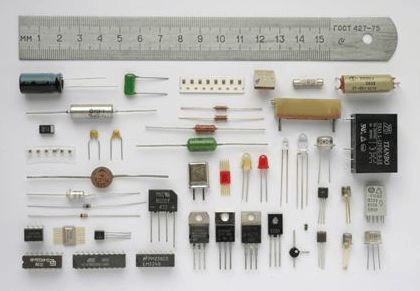
III. Core Characteristics of Modern Electronic Components
Thanks to industry technology iteration and process upgrades, the adaptability of modern electronic components continues to improve, meeting the needs of multi-industry production applications. The core characteristics are mainly reflected in four aspects:
First, lightweight and material-saving. Miniaturized design allows terminal electronic products to achieve portability and miniaturization upgrades while effectively reducing raw material usage and controlling production costs.
Second, strong device compatibility stability. Relying on mature manufacturing processes and high-quality materials, components have good heat resistance and shock resistance, longer service life, and effectively improve the overall reliability of terminal devices.
Third, stable electrical performance. It can adapt to high-frequency and high-speed signal transmission scenarios, support low-power operation, and meet the stable operation requirements of various complex electronic systems.
Fourth, high standardization of specifications. The industry has formed unified metric and imperial packaging size standards, adapting to automated mass production, effectively reducing the comprehensive cost of product development and mass production.
Electronic components are exemplified by Huade Electronics. Huade was established in Taiwan, China in 1968, and is a local professional fuse manufacturer. It has obtained eight international certifications globally, mainly producing surface mount, current, self-resetting, and temperature fuses, as well as surface mount/power/alloy resistors, with global sales and production scale ranking among the top. In 2000, it built a factory in Fenhu, Wujiang, with a team that has been deeply involved in power automation for decades, closely cooperating with State Grid, Southern Power Grid, and universities such as Tsinghua and Zhejiang University, and has been deeply engaged in power technology research and development, leading in the industry.
Shenzhen Shunhai Technology is the first-level agent of Huade in mainland China, with a full range of original stock on hand, competitive prices, and fast delivery. It also represents brands such as Liangsheng, Tiansan, and Luhai. If you need to purchase electronic components, contact Shunhai Technology to complete your procurement in one stop, with a professional technical team to provide answers.