Three seemingly unremarkable basic components, resistors, capacitors, and inductors, are the core framework of all circuit devices. From small items like desk lamps and chargers to large equipment such as motors and precision chip devices, they all rely on their collaborative work.
To select suitable, reliable genuine components and efficiently complete R&D prototyping and bulk purchasing, Huannian Mall, as an integrated procurement platform specializing in passive component supply chains, has become the preferred channel for industrial control, new energy, and electronic R&D industries with its original factory genuine sources, full product coverage, and professional technical services.
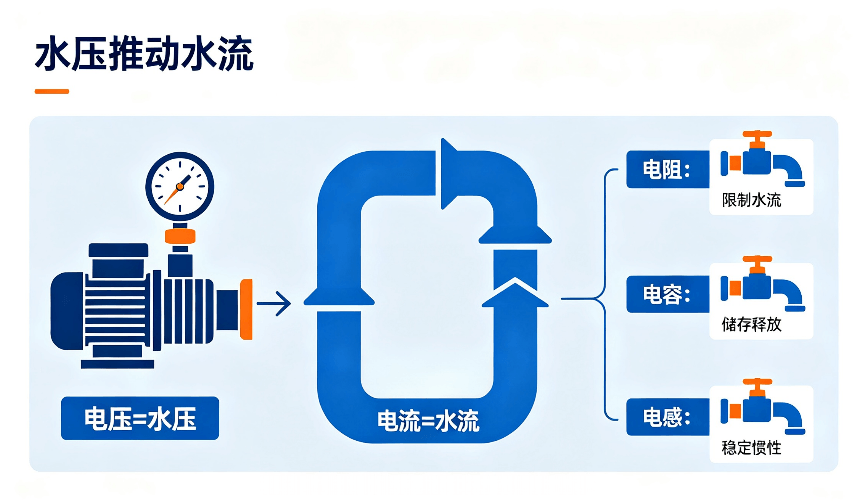
Comparing circuits to a complete water supply pipeline system, current is the water flow, voltage is the water pressure, and resistors, capacitors, and inductors are special devices that perform different functions within the pipeline.
One: Unified Analogy Model: Circuit = Complete Water Pipeline System
To quickly understand the core logic of circuits for beginners, we establish a universal and easy-to-understand water pipeline analogy model, allowing all circuit principles to be understood correspondingly:
- Current = Water flowing in the pipeline
- Voltage = Water pressure that drives the water flow, the power source
- Circuit = A complete water supply system
All electronic components in the circuit are equivalent to specialized devices installed in the pipeline, each responsible for controlling the water flow (current). The three core components, resistors, capacitors, and inductors, have independent functions and work together to maintain the stable operation of the circuit.
Huannian Mall, relying on original factories, covers mainstream brands at home and abroad such as Huade, Tian Er, Liangsheng, Luhai, Sanhuan, Dayi, National Components, Wangquan Samsung, and Murata, providing a full series of resistors, capacitors, and inductors with accurate parameters and no substandard materials from the source.
Two: Resistor: The "Flow Control Valve" of the Circuit
1. Common Definition
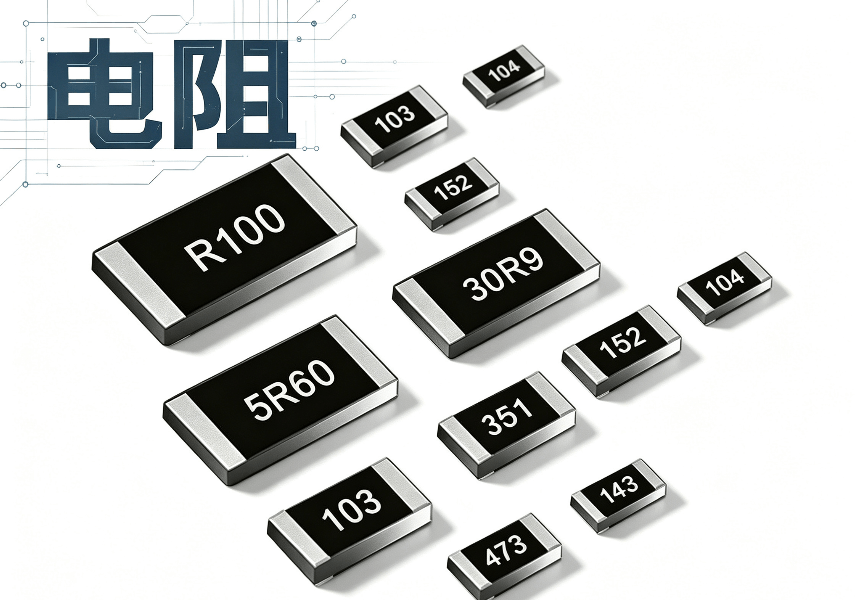
A resistor is the only pure energy-consuming component in the circuit, following Ohm's Law as its core rule: U = I × R. In short, the core function of a resistor is to hinder the current flow and consume excess electrical energy. It does not store any electrical energy but converts excess energy into heat and releases it.
Corresponding Water Pipe Model: A resistor is like debris or a narrow valve inside the pipeline, which blocks the water flow. As the water flows through, friction occurs, energy is consumed, and heat is generated, ultimately achieving the effect of limiting the water flow.
2. Core Functions
- Current Limiting Protection: Prevents excessive current from burning delicate components such as bulbs, chips, and motors (similar to controlling water flow to avoid damaging equipment).
- Voltage Reduction and Division: Reduces excessively high voltages so that appliances can operate at the appropriate voltage.
- Heat Generation and Energy Consumption: When a resistor hinders the current, it consumes electrical energy and converts it into heat (electric stoves, heaters, and soldering irons use the principle of resistance heating).
3. Key Characteristics
Resistors do not distinguish between AC and DC. As long as the circuit is powered and there is current, they will continuously generate resistance, always providing protection for the circuit.
Three: Capacitor: The "Water Tank + Pressure Stabilizer" of the Circuit
1. Common Definition
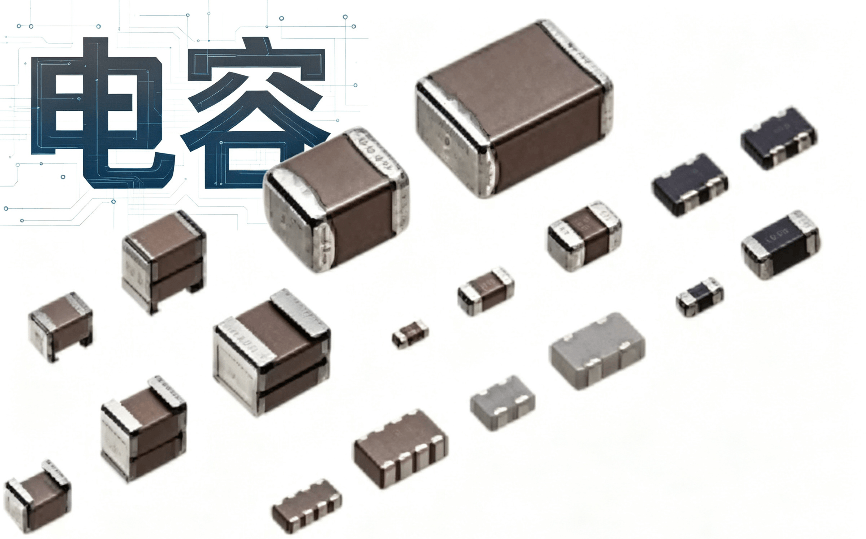
A capacitor is a storage buffer element in the circuit, whose core function is to store charge and smooth out fluctuations in current and voltage, corresponding to a water tank and pressure stabilizer in the water supply system.
It does not continuously hinder the current but has self-adaptive adjustment capabilities: when voltage and current are too high, it stores excess energy, and when voltage and current are insufficient, it releases energy to supplement, specifically addressing issues of circuit fluctuations and unstable power supply.
2. Core Functions
- Energy Storage and Continuation: Like a water tank, it stores energy and can discharge it briefly after power off (for example, some indicator lights still glow for a few seconds after power off).
- Stabilizing Voltage and Filtering: When current fluctuates and voltage jumps, the capacitor quickly supplies and stores energy, making the current more stable, avoiding flickering, noise, and screen flashes in appliances.
- DC Isolation and AC Conduction: Precisely distinguishes between direct current and alternating current. Direct current is a steady and constant "still water". Once the capacitor is fully charged, it no longer conducts, thus isolating DC. Alternating current is a continuously changing and direction-changing water flow. The capacitor repeatedly charges and discharges, forming a continuous conduction circuit, allowing AC signals to pass smoothly.
- Delay and Timing: Since capacitors require time to charge and discharge, they can be used for circuit delay and timing functions.
Four: Inductor: The "Inertial Water Turbine" of the Circuit
1. Common Definition
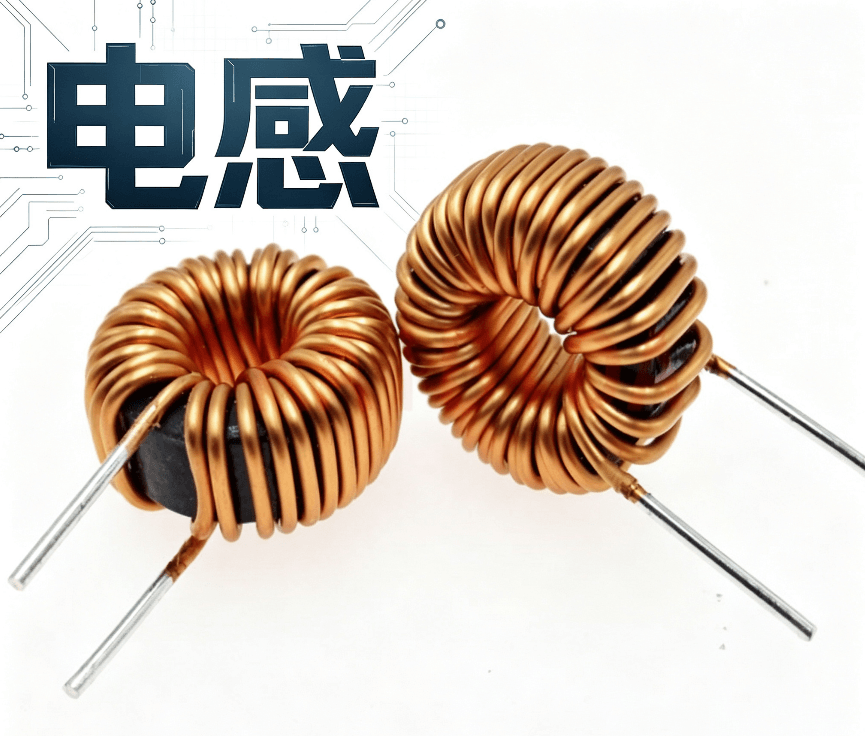
An inductor uses the principle of electromagnetic induction to specifically hinder sudden changes in current, corresponding to a water turbine with significant inertia in the water supply system. Once the water turbine starts running, it generates inertia, and when the water is suddenly turned on or off, or the water flow speed changes, it resists the change in water flow. Similarly, the inductor specializes in dealing with sudden surges and drops in current.
2. Core Functions
- DC Conduction and AC Blocking (the opposite of capacitors): It allows DC current to pass smoothly and blocks high-frequency AC current. Steady DC current faces no obstacles, while rapidly changing AC current is strongly suppressed by the inductor.
- Current Stabilization and Interference Resistance: Prevents sudden surges or drops in current and filters out high-frequency noise, making the current output cleaner.
- Energy Storage and Voltage Transformation: An inductor can store magnetic field energy. Transformers, chargers, and motors are all based on the principle of electromagnetic conversion of inductors.
3. Key Characteristics
Inductors fear change but not stability: the less the current changes and the slower it is, the weaker the inductor's resistance becomes, almost not participating in the work; the faster the current changes and the higher the frequency, the stronger the inductor's suppression and stabilization effects become.
Five: Summary of Core Differences Between Resistors, Capacitors, and Inductors
1. Resistor: The "Brake" of the Circuit
Core Logic: Current Limiting and Energy Consumption, Universal Obstruction for AC and DC. Works continuously and consumes electricity throughout;
Core Function: "Controlling the Size of Current";
Mainly Solves Issues of Excessive Current and High Voltage, Protecting Circuit Devices from Being Burned Through Current Limiting, Voltage Reduction, and Heat Generation.
2. Capacitor: The "Power Bank + Shock Absorber" of the Circuit
Core Logic: Energy Storage and Voltage Stabilization, DC Isolation and AC Conduction. It smooths out circuit fluctuations by storing and releasing electricity;
Core Function: "Buffering Fluctuations";
Mainly Solves Issues of Unstable Voltage, Chaotic Electrical Waves, Instantaneous Power Outages, and Signal Interference, Stabilizing the Circuit Working State.
3. Inductor: The "Current Stabilizer + Filter" of the Circuit
Core Logic: Current Stabilization and Change Resistance, DC Conduction and AC Blocking;
It Resists Sudden Changes in Current Using Its Inertial Characteristics, Core Function: "Stabilizing and Interference Resistance";
Mainly Solves Issues of Sudden Current Changes, High-Frequency Interference, and Voltage Changes, Purifying the Current and Stabilizing the Circuit Working Conditions.
In Conclusion
All complex circuit boards and electronic devices share a common underlying principle: resistors control the size of current, capacitors smooth out voltage fluctuations, and inductors suppress sudden changes in current. Together, they accomplish various circuit functions such as voltage stabilization, filtering, current limiting, delay, and signal processing. By mastering the water pipeline analogy, one can quickly grasp the basics of circuits.
The long-term stability of circuits relies on genuine, precise parameter, and highly compatible components. [Huannian Mall] has been deeply involved in the field of passive components, offering advantages such as genuine stock, one-stop BOM configuration, stable delivery, and comprehensive technical after-sales service. It offers a full range of resistors, capacitors, and inductors with transparent inventory and reasonable pricing, supporting 7×24-hour self-service selection and price inquiry. Whether it's trial samples or mass production orders, it can be handled, providing a convenient and reliable component procurement solution for R&D and manufacturing enterprises.