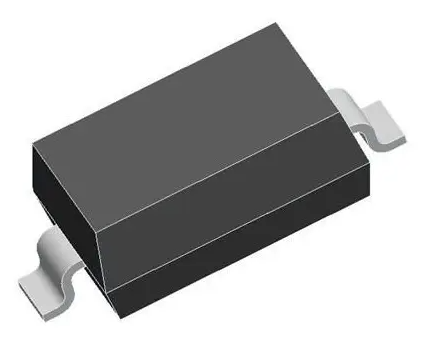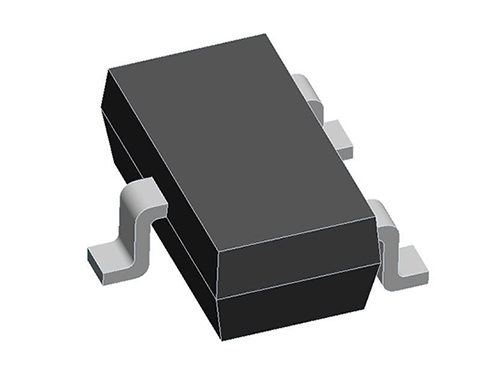
Under the premise of identical packaging specifications and rated power, the pulse withstanding capability of ordinary thick-film resistors and surge-resistant resistors is vastly different: ordinary thick-film resistors are prone to be burned out and open-circuited under surge pulse impact, while surge-resistant resistors can stably withstand the same instantaneous impact and maintain their performance integrity.
The pulse resistance capability of a resistor is not determined by its rated power. The core difference between them is not in the nominal power parameter but in the layout design of the resistor film layer. Surge-resistant resistors use a dedicated design of meandering film lines and increased electrode spacing to reconstruct the electric field and heat distribution, fundamentally avoiding single-point high-temperature breakdown issues and solving the industry's pain point that 'power meets standards but is not surge-resistant'.
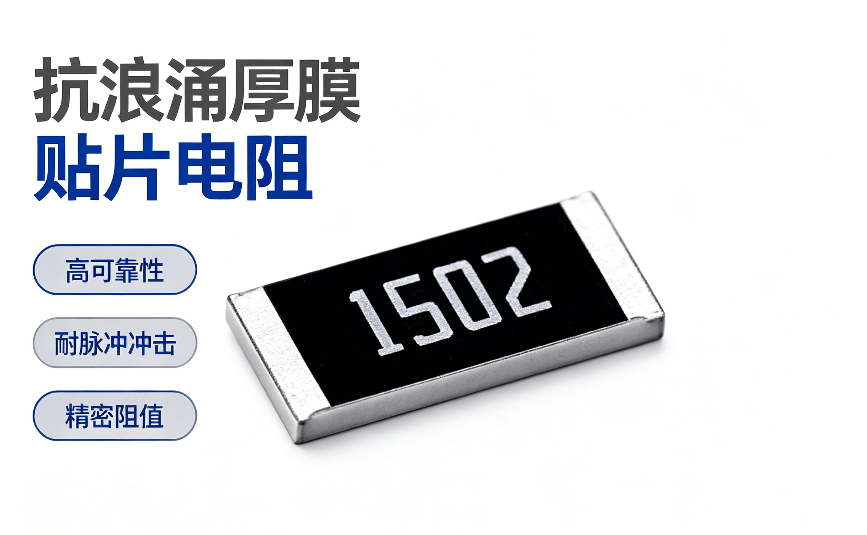
1. The Root Cause of Surge Failure in Ordinary Thick-Film Resistors: Concentrated Electric Field, Single-Point Thermal Breakdown
Conventional surface-mount thick-film resistors use a short straight conductive strip design for the resistor film, with very small electrode spacing, which is structurally simple but has an inherent surge resistance defect. When a sudden high-voltage surge pulse occurs, it triggers a chain reaction of failure:
1. Voltage Concentration
The instantaneous high voltage is almost entirely concentrated on the edges of the film layer at both ends of the electrodes, causing a sharp increase in electric field intensity within a small area, forming an electric field peak;
2. Local Heat Accumulation
The surge pulse instantly releases a large amount of joule heat, and the heat cannot diffuse, accumulating entirely in a very small area of the film layer, forming a fatal local hot spot;
3. Rapid Damage to the Film Layer
The metal oxide paste used in the resistor film layer has limited thermal capacity. The hot spot temperature rapidly exceeds the material's tolerance threshold in microseconds, ultimately leading to carbonization or a gap in the film layer, causing resistance value drift or even direct open-circuit failure.
Even if the resistor's rated power parameter is sufficient, the short-term pulse energy is not determined by average power, but by local electric field and film layer resistance capability, which is the core reason for the phenomenon of "power is sufficient but the resistor still burns".
- Core Design of Surge-Resistant Resistors: Meandering Resistor Film + Extended Effective Electrode Spacing
Surge-resistant resistors discard the straight-line film structure of ordinary resistors. During the photolithography and screen printing process, the resistor film is designed as a continuously folded serpentine structure, optimizing the pulse resistance performance from three dimensions: electric field, potential, and heat dissipation, without changing the package size.
1. Extend Conductive Path, Reduce Unit Electric Field Intensity
In the same package size, the serpentine routing significantly extends the resistance path between two electrodes. Under the same applied voltage, the electric field intensity per unit length of the film layer is significantly reduced, preventing the electric field from concentrating at the electrode edges.
2. Flatten Potential Gradient, Eliminate High-Voltage Breakdown Peaks
The potential of ordinary straight-line resistor films changes abruptly, with high concentration of potential difference between the two poles. However, the serpentine meandering structure allows the potential to gradually decrease along the bent path, thinning the potential gradient and eliminating high-voltage electric field peaks at the electrode edges, preventing single-point high-voltage breakdown.
3. Expand Heat Dissipation Area, Eliminate Local Hotspots
The joule heat generated by the surge pulse is no longer limited to a narrow local film layer, but is evenly distributed along the entire serpentine resistor film. After the heating area expands significantly, the instantaneous power per unit area decreases markedly. Combined with the rapid heat conduction and dissipation of the substrate, this effectively suppresses temperature rise, ensuring that the film layer temperature remains below the material's tolerance threshold, avoiding issues such as film layer carbonization, burning, and damage.
3. The Surge-Resistant Design Is Not an Unlimited Protection
The meandering film layer structure optimizes the electric field and heat distribution, but it is not an all-powerful "universal design" for unlimited surge resistance. Its protective capability has clear boundaries, and three types of limiting conditions should be focused on during application:
1. Energy Threshold Limitation: When the surge pulse energy exceeds the overall tolerance limit of the resistor film layer, substrate, and protective layer, the resistor may still suffer irreversible damage;
2. Fatigue Aging Risk: Repeated pulse impacts may cause gradual aging and performance degradation of the film layer material, leading to slow resistance drift and creating hidden failures that are difficult to detect;
3. Electrical Characteristics Side Effects: The serpentine meandering routing may generate small parasitic inductance. In high-speed signal transmission scenarios, this characteristic must be considered for compatibility, to avoid affecting the overall circuit performance.
In Conclusion
The core logic of surge-resistant resistors is clear and precise: relying on the serpentine meandering resistor film structure, the conductive path is extended and the effective electrode spacing is increased without changing the package specification, thus thinning the potential gradient and dispersing the heat generated by the instantaneous surge across the entire area, completely eliminating single-point local hot spots.
This structural optimization fundamentally addresses the inherent defects of ordinary thick-film resistors, significantly improving the resistor's ability to withstand instantaneous high-voltage pulses and surge impacts, meeting the circuit protection needs of various complex working conditions.