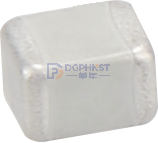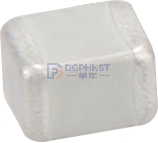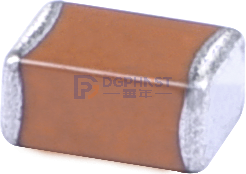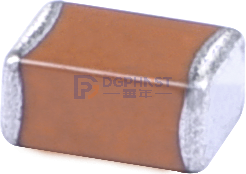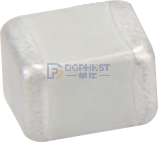
It is reported that Okayama Murata Manufacturing, a subsidiary of Murata Manufacturing Co., Ltd., the global leader in MLCCs, plans to invest approximately 9 billion Japanese yen to build a new production line to expand the output of ceramic raw materials required for MLCCs and other electronic components. Construction of the new line is scheduled to start in October 2026 and commission in April 2028. The scale of the added capacity has not yet been disclosed.
Upon release of the news, many people immediately wondered: If the industry leader is expanding production, will MLCC supply become more abundant? This conclusion overlooks a critical fact: the expansion targets not finished MLCC products, but upstream ceramic powder.
1. Where will the 9 billion yen be spent?
Okayama Murata is an affiliated factory within the Murata group, specializing in high-purity ultrafine ceramic powder, RF modules, filters, inductors and other products. Ceramic powder is one of the most upstream raw materials for MLCCs. Its purity, particle size and batch consistency directly determine the electrical performance and yield of finished components.
According to information disclosed by Murata, the investment will mainly fund the construction of factory buildings and the new production line. Two points deserve attention: First, the capital will not go to finished MLCC production lines. The current tight links in the industry lie in finished-product capacity and back-end equipment such as casting and sintering, rather than powder itself. Second, powder from the new line will be supplied primarily for internal use, with no plans for large-scale external sales. This means the investment will not bring a direct increase in supply to the global MLCC market in the short term.
This is an upstream raw material self-sufficiency initiative. Its purpose is to reduce raw material uncertainties for high-end MLCC manufacturing, instead of boosting finished-product capacity.
2. Industry impacts: No short-term impact; effects emerge only in the medium to long run
In the short term (2026–2027), this expansion will not alter MLCC supply-demand dynamics. The reasoning is straightforward: the bottleneck for high-end MLCCs today resides in finished production lines and equipment, not powder. A single AI server consumes several times more MLCCs than a conventional server. Coupled with rising penetration of automotive-grade electronics, the tight balance for high-spec parts will persist. The powder infrastructure will only come online in 2028 and will have no material bearing on supply in 2026–2027.
Over the medium to long term (post-2028), the launch of the new line will ease Murata’s raw material constraints for high-end MLCCs, supporting utilization of its existing capacity and upgrades to its product mix. Importantly, the additional powder will feed only its own production lines and will not be available to overseas competitors. Industry barriers will therefore rise rather than fall.
For domestic manufacturers, mid-to-low-end orders vacated by Japanese and Korean suppliers are relatively accessible in the near term. Gaps in technology remain for high-grade products, which also require a 2–3-year terminal qualification cycle. This represents the major time lag between potential benefits and actual revenue realization.
3. Domestic industrial chain: Who can seize this opportunity?
From an industrial chain perspective, each player has a distinct positioning. (The following is a collation of industry information and does not constitute investment advice.)
- Sinocera: China’s leading exporter of MLCC dielectric powder, holding roughly 80% of the domestic market share. Its customers include top global manufacturers such as Murata and Samsung Electro-Mechanics, making it a direct beneficiary of rising demand for high-end powder.
- 3TCeramics: Mostly self-sufficient in powder with a vertically integrated model, boasting strong cost controllability. It can capture spillover mid-to-high capacitance orders for industrial and automotive applications.
- Fenghua Advanced Technology: A full-range platform for resistors, capacitors and inductors. It mainly purchases powder externally and benefits from spillover mid-to-low capacitance orders for consumer electronics.
- Sunlord Electronics: Leading manufacturer of power inductors, set to gain from rising inductor demand driven by automotive electronics and AI servers.
The overall landscape can be summarized as follows: manufacturers with in-house powder production focus on cost control; powder vendors selling to external customers prioritize market share gains; competition at the finished-product level remains centered on high-spec components for automotive and AI server applications.
The domestic localization rate of automotive-grade MLCCs remains below 20%, while ultra-high capacitance products for AI servers are still dominated by Japanese and Korean suppliers. Gaps do exist, yet a substitution window is opening. As Japanese and Korean manufacturers shift capacity focus toward high-end parts for AI and automotive markets, domestic firms are gradually filling the space in the mid-to-low-end segment.
4. Practical implications for the spot market
High-grade components feature long lead times and low inventory levels. Market conditions will not reverse merely due to raw material capacity expansion, especially since the new line will not go live for another 18 months. Consumer-grade MLCCs are still in a weak cycle, with no fundamental basis for a sustained decline in spot prices. Traders need neither to liquidate inventory blindly nor hoard goods out of panic.
Until 2028, the core variable shaping spot market trends will be the commissioning schedule of finished MLCC production lines at major manufacturers, not powder infrastructure.
In the long run (post-2028), the launch of the powder line will genuinely lift the ceiling of Murata’s high-end finished capacity, which will indeed create supply pressure. Nevertheless, demand-side variables remain numerous: the growth trajectory of AI computing power and automotive electronics will both affect market balance, so there is no need to position for this far in advance.
Closing remarks
In essence, this 9 billion-yen investment represents Murata’s effort to consolidate its upstream foundation, rather than ramp up finished-product output. It cannot change the tight MLCC balance in the short term. The real driver behind this boom cycle is AI computing power and automotive electronics.
Long-term competition in the passive components industry hinges on mastery of the full industrial chain. Instead of reacting to a single raw material news release, focus on three metrics: finished-product capacity, end-customer orders, and channel inventory.