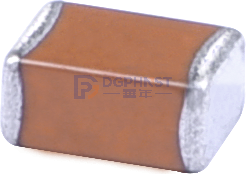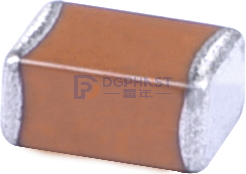
Recently, South Korean media outlet "Chosun Ilbo" broke major news: Samsung Electro-Mechanics' MLCC product delivery lead times have further extended to 52 weeks—meaning if customers place orders now, they must wait a full year to receive goods. This figure sets a new record for this cycle of the economic downturn, and the MLCC supply crisis ignited by AI is accelerating its spread from high-end, high-capacity products to all categories.
I. Behind the 52-Week Lead Time: Samsung Electro-Mechanics' Production Capacity Has Been“Fully Booked”
What does 52 weeks mean? It means that the entire production capacity for 2027 has already been largely locked in by top global customers.
According to publicly disclosed information, since 2026, Samsung Electro-Mechanics has signed four long-term MLCC contracts extending through the end of 2027, with a cumulative value of approximately 2.4 trillion Korean Won.
A single contract disclosed on June 30 alone reached 453.9 billion Korean Won, with the supply period starting January 1, 2027; in September, it secured a massive annual order worth 1.07 trillion Korean Won for MLCCs used in AI servers, with clients being leading global tech companies.
More alarming is that this extension in lead time is no longer an "exclusive phenomenon" for high-end products:
- Low-capacity general-purpose MLCCs: Lead times have surged from under 30 weeks to 52 weeks
- High-capacity MLCCs for AI servers: Remain in extremely tight supply
- Automotive-grade MLCCs: Delivery cycles have also significantly lengthened
In other words, from consumer electronics to automotive electronics to AI computing power, all categories of MLCCs have entered a "queue-and-wait" mode. The utilization rate of Samsung Electro-Mechanics' MLCC business division's production capacity in the first half of the year has reached 91%, essentially operating at full capacity and full sales.
II. The Core of Supply-Demand Imbalance: AI Is Not a Concept, but Real Production Capacity Absorption
The underlying logic of this round of MLCC shortage is very clear; essentially, it is the contradiction between the explosion in AI computing power demand and rigid production capacity constraints.
Demand Side: One AI Server Consumes 10x the Volume
The demand for MLCCs from AI servers has jumped by an order of magnitude —— the MLCC allocation per AI server is more than 10 times that of a standard server.
As global tech giants accelerate the construction of AI data centers, orders for high-capacity, high-performance MLCCs are growing exponentially. Currently, only Samsung Electro-Mechanics and Murata Manufacturing are effectively capable of producing high-end server-grade MLCCs with sufficient energy output, and their duopoly's capacity growth rate completely fails to keep up with the demand growth rate.
Supply Side: Distant Water Cannot Quench Present Thirst
Capacity expansion is not a short-term "one-click" operation, but a long-cycle project measured in years, making it difficult to fill the gap in the short term:
- The expansion project at Samsung Electro-Mechanics' Philippines factory will not achieve mass production until after 2027
- Delivery cycles for high-end sintering equipment are generally 12-24 months, and upstream materials such as ceramic powders are similarly constrained
- Leading manufacturers maintain a cautious attitude toward expansion and will not blindly increase capacity significantly due to short-term surges in demand
Mainstream institutions generally predict that large-scale new MLCC capacity will be difficult to release before the end of 2027, and the situation of undersupply for high-end products will persist at least until 2028.
III. Industry-Wide Resonance: Price Hikes and Capacity Restructuring Are Happening
The wave of MLCC price increases is not just an action by Samsung Electro-Mechanics alone, but a collective consensus among global leaders.
Price End: Three Rounds of Price Increases Propagating Layer by Layer
- First round (Q1-Q2 2026): Murata led the price increase of AI server and high-end automotive products by 15%-35%, followed by Samsung Electro-Mechanics and Taiyo Yuden, with double-digit increases
- Second round (July-August 2026): Samsung Electro-Mechanics announced a uniform 30% increase in shipment prices for all MLCC categories starting August 1; Taiyo Yuden adjusted prices simultaneously and explicitly stated that "even after price adjustments, delivery dates cannot be guaranteed"
- Third round (Q4 expected): Consumer-grade medium-high capacity products are expected to continue rising by 10%-20%, and Samsung Electro-Mechanics plans to further raise the average price of consumer-grade X5R series by 25%-30%
One of the purposes of manufacturer price increases is precisely to suppress mid-to-low-end orders through price leverage, tilting limited production capacity towards high-margin AI servers and automotive-grade products.
Production Capacity Side: Expanding High-End While Cutting Low-End
- Murata: Capital expenditure of 250 billion yen in fiscal year 2026, with an additional 80 billion yen specifically allocated for expanding server MLCC production; simultaneously announced the cessation of production for certain consumer-grade and automotive part numbers in GRM and GCM series, freeing up capacity to shift towards ultra-high-capacity products
- Kyocera: Investing 100 billion yen over 7 years to expand AI server MLCC production
- Taiyo Yuden + TDK: Jointly developing MLCCs and inductors specifically for AI scenarios
- Murata Okayama Factory: Investing 9 billion yen to add new ceramic raw material production lines, scheduled to commence operations in April 2028
On one hand, major players are aggressively expanding high-end capacity; on the other, they are proactively reducing low-end product lines —— this is not a cyclical fluctuation, but a permanent restructuring of industry capacity.
Final Thoughts
The 52-week lead time is not the end point, but rather a milestone in this super-cycle of MLCCs. The AI wave's pull on electronic basic components has just begun; from servers to edge AI, and from computing power to automotive, the breadth and depth of demand continue to expand.
For electronic component distributors, this is both a challenge and a critical window for reshuffling the market landscape.
As a professional distributor with over a decade of deep focus in the passive components sector, Sunhai Technology completed its forward-looking positioning at the very beginning of this cycle. This effectively alleviates supply pressure caused by excessively long lead times for customers, providing stable and reliable delivery guarantees across various sectors.
The AI-driven reshaping of component demand is a long-term industrial revolution, and the tight balance between supply and demand for MLCCs will persist for several years. Sunhai Technology will continue to closely follow the pace of global manufacturers' capacity restructuring and technology evolution paths, continuously increasing investment in the supply chain for high-end passive components. With a traceable system of genuine goods, stable supply capabilities, and professional technical services, we aim to be a reliable supply chain partner for customers navigating industrial cycles and capturing AI growth dividends.