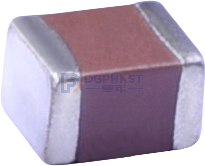
Electrolytic capacitor is a common electronic component, belonging to a type of capacitor. Its characteristics and working principle are as follows:
Basic structure
Polarity: Electrolytic capacitors have positive and negative poles (ordinary capacitors usually have no polarity), and must be strictly distinguished during use, otherwise they may be damaged or even cause danger (such as bursting).
Medium: Metal oxides (such as alumina and tantalum oxide) are used as the medium to form a conductive layer through an electrolyte (liquid or solid).
Electrode: The positive electrode is made of metal foil (aluminum or tantalum), and the negative electrode is made of electrolyte or conductive polymer material.
Main types
Aluminum electrolytic capacitor:
Features: Large capacity (several μ F to tens of thousands of μ F), high voltage resistance (several volts to several hundred volts), low cost.
Disadvantages: Large size, limited lifespan (electrolyte easily dries up), poor high-frequency performance, temperature sensitivity.
Applications: power filtering, low-frequency signal coupling, etc.
Tantalum electrolytic capacitor:
Features: Small size, high stability, long lifespan, and superior high-frequency performance compared to aluminum electrolysis.
Disadvantages: Small capacity (several μ F to several hundred μ F), low voltage resistance (generally<50V), high cost.
Application: Precision circuits, high-frequency filtering (such as mobile phones, computer motherboards).
core features
Large capacity: Suitable for storing large amounts of charge and smoothing voltage fluctuations.
Polarity limitation: Reverse voltage or overvoltage can easily cause damage.
Equivalent series resistance (ESR): relatively high, affecting high-frequency performance.
Leakage current: larger than non-polar capacitors, may affect high-precision circuits.
Typical applications
Power filtering: Smooth the DC voltage after rectification circuit (such as power adapter).
Coupling/decoupling: transmitting AC signals and eliminating circuit noise.
Energy buffering: Short term provision of high current (such as camera flash).
Low frequency circuit: signal coupling in audio devices (utilizing high-capacity characteristics).
advantages and disadvantages
Advantages:
Large unit volume capacity, suitable for high-capacity requirements.
Low cost (aluminum electrolysis), easy to use on a large scale.
Disadvantages:
Limited lifespan (especially in high-temperature environments).
Poor high-frequency performance and high ESR.
Attention should be paid to polarity and installation direction should not be wrong.
precautions
When replacing, it is necessary to match the capacity, withstand voltage, and polarity.
Avoid working at high temperatures for extended periods of time (such as near heat sources).
High frequency scenarios require the use of ceramic capacitors to reduce the impact of ESR.
Electrolytic capacitors play a crucial role as "energy storage buffers" in electronic circuits due to their large capacity characteristics, but their lifespan, volume, and performance limitations need to be balanced based on specific scenarios.