When organizing BOMs or repairing circuit boards, many junior engineers and hobbyists only focus on reading resistance values from the color bands on resistors, while ignoring the color of the resistor body itself. In practical applications, even when resistance and power ratings match perfectly, circuits frequently suffer from excessive temperature drift, severe noise interference, or even direct failure under high low temperature conditions.
In fact, resistor casing colors are not randomly applied by manufacturers for cosmetic purposes. They directly correspond to internal core materials and manufacturing processes. Choosing the wrong color (i.e., wrong material) may, at best, result in substandard signal sampling accuracy, or at worst, trigger reliability failures across entire product batches. Today, we dive deep into the technical know how behind resistor body colors by examining this outer "shell".
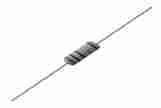
In the field of traditional through hole resistors, color serves as the most intuitive indicator of resistor manufacturing processes. The two most common colors on the market — black and blue — represent two entirely different resistor types:
Beige/Black/Green (Carbon Film Resistors)These are the most basic and lowest cost resistors. Their core manufacturing process involves thermally decomposing and depositing a carbon film onto a ceramic substrate. Carbon film resistors feature low cost, decent high frequency performance, and relatively good pulse resistance. However, their critical drawbacks include low precision (typically only ±5%), high noise, and extremely poor temperature coefficient of resistance (TCR). Under harsh operating conditions, their resistance values drift drastically with temperature changes.
Blue (Metal Film Resistors)These are the mainstream choice for mid to high end circuits today. Manufactured by evaporating or sputtering alloy materials such as nickel chromium onto ceramic substrates in a vacuum environment, metal film resistors deliver core advantages: high precision (up to ±1% or even ±0.1%), ultra low temperature coefficient (usually within ±50ppm/°C), and minimal current noise. Blue metal film resistors are an absolute necessity for precision instruments, operational amplifier circuits, and signal sampling applications.
Color Secrets of SMD Resistors
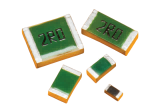
Color rules shift for surface mount device (SMD) resistors. Most standard thick film SMD resistors are black (with black ceramic substrates and white resistance markings printed on the surface). Sky blue SMD resistors, by contrast, are usually high grade products from Japanese brands (e.g., KOA) or high precision resistors made with special processes such as ultra thin film technology. When assisting customers with domestic substitution component selection, Shunhai Technology specifically reminds clients to always check original manufacturer datasheets for SMD resistors with special colors, as these often indicate special materials or ultra high precision requirements.
Neutral Component Selection Recommendations
- For general digital circuits, LED current limiting, pull up/pull down resistors: Carbon film resistors (beige/black) are the optimal choice for cost performance, meeting basic functional needs.
- For precision instruments, signal voltage division, audio circuits, and ADC sampling: Metal film resistors (blue) are mandatory, as high precision and low temperature drift are essential — never cut corners here.
- For SMD resistor selection: Standard black thick film resistors suffice for ordinary applications. For quality critical or special process requirements (e.g., sky blue SMD resistors), consult professional distributors like Shunhai Technology to verify original manufacturer specifications for absolute reliability.
There is no absolute "best" choice in electronic component selection — only the most suitable solution for specific application scenarios. If you are struggling with matching complex resistor materials and parameters, Shunhai Technology’s one stop component sourcing and original manufacturer technical support are reliable options to help you avoid pitfalls accurately.