Pain Points and Solutions in Consumer Electronics Circuit Protection
In circuit protection schemes for consumer electronics, industrial control equipment, new energy devices, lithium battery energy storage systems, automotive wiring harnesses, and smart home products, traditional one-time-use fuses have clear shortcomings: once the component is blown, it requires manual replacement, which significantly increases maintenance costs and causes prolonged downtime for production lines and terminal devices.
PPTC resettable fuses can specifically address these industry pain points: when a circuit experiences an overcurrent fault, they automatically cut off the power for protection, and resume conductivity after the fault is resolved without replacing components. Additionally, they offer miniaturization and cost-effectiveness, making them an ideal protective device for low-voltage AC/DC circuits to address short-circuit, overload, and overcurrent hazards.
However, various failure issues often arise during the selection phase: fluctuations in ambient temperature trigger false protection, the fuse is directly broken down during a short circuit, it fails to reset after the fault is cleared, the voltage drop exceeds specifications, and frequent pulse shocks accelerate component aging and damage. Tracing the root cause, it's usually due to ignoring four key parameters: temperature derating, pulse withstand capability, rated voltage, and trip time during the selection phase. So how should PPTC resettable fuses be precisely selected?
Basic Working Principle
PPTC resettable fuses are made of a high-polymer matrix combined with conductive carbon particles through composite sintering. Under normal operating conditions at room temperature, the internal conductive carbon chains are interconnected, resulting in very low internal resistance that does not interfere with normal circuit power supply.
Once an overcurrent or short-circuit fault occurs in the circuit, the fuse rapidly self-heats, causing the internal polymer matrix to expand and cut off the internal conductive carbon path, leading to an immediate increase in internal resistance to the megaohm level, limiting the fault current in the line and completing the circuit protection.
When the circuit fault is cleared and the return current returns to normal, the component gradually cools and contracts, allowing the internal conductive carbon chains to reconnect, restoring the original internal resistance. There is no need to disassemble the device or replace components, and it can repeatedly achieve self-healing protection.
Compared to ceramic PTC thermistors, PPTC is specifically developed for circuit overcurrent protection, offering better power capacity, voltage resistance performance, and repeated service life, better meeting the design requirements of various power lines.
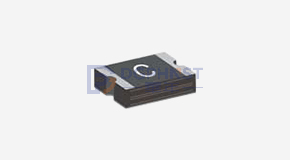
PPTC Surface-Mount Resettable Fuse
六大核心参数 for Selection
Selection cannot simply refer to the rated current; six parameters must fully match the actual circuit conditions. The following are the definitions and hard requirements for each parameter:
1. Holding Current Ihold
Definition: The maximum current that the fuse can continuously operate without triggering a protection trip in a standard ambient temperature of 25°C. It is also the first reference parameter for selection.
Selection Requirements: The rated holding current of the component must be greater than the maximum steady-state working current of the circuit, with sufficient margin. In high-temperature environments or pulse circuits, additional current margin is required.
2. Trip Current Itrip
Definition: The minimum fault current that can quickly trigger a trip protection under standard environmental conditions of 25°C. Industry standard: the trip current is approximately twice the holding current.
Selection Requirements: The circuit's overload warning current and slight overload current must be below the trip current. The short-circuit fault current of the line must be higher than the trip current to ensure rapid tripping after a fault occurs, preventing protection delay failure.
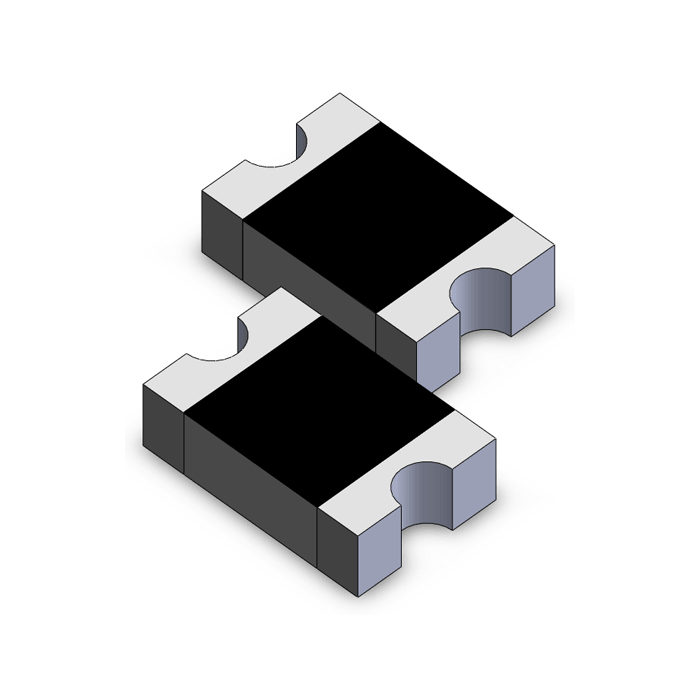
PPTC Surface-Mount Resettable Fuse
3. Maximum Voltage Vmax
Definition: The highest bus voltage that the fuse can long-term withstand after tripping and disconnecting. Exceeding this voltage specification will cause the component to be directly broken down, catching fire, and permanently damaged.
Selection Requirements: The maximum voltage of the component must be higher than the circuit's rated operating voltage. For DC circuits and vehicle high-voltage transient circuits, a safety margin of 1.2-1.5 times the voltage is required. It is strictly prohibited to use low-voltage specification fuses in high-voltage circuits.
4. Maximum Fault Breaking Current Imax
Definition: The maximum short-circuit current that the fuse can safely break under the rated voltage without exploding or suffering permanent damage.
Selection Requirements: The measured maximum short-circuit current of the circuit must be less than the breaking current of the component. For high-power power supplies and low internal resistance bus short-circuit currents, which have extremely high values, high-breaking-current models must be selected to prevent the fuse from exploding and being damaged.
5. Environmental Temperature Derating Factor
PPTC is a thermal-sensitive component. The higher the ambient temperature, the worse the heat dissipation effect of the component, and the lower the actual available holding current. For every 10°C rise in ambient temperature, the actual current carrying capacity of the component drops significantly, which is a common oversight for hardware engineers during selection.
6. Initial Resistance Rini, Voltage Drop, and Reset Time
The internal resistance of the component directly determines the line power consumption and voltage drop. For low-voltage small-power devices such as Bluetooth earphones and USB power supplies, low-resistance models must be selected. The reset time needs to match the device restart logic. Industrial control devices prioritize long-reset-time models, while consumer digital products prefer fast-reset models.

Frequent Selection Mistakes and Incorrect Solutions for PPTC
Mistake One: Selecting Based Only on the Rated Current at Room Temperature Without Considering Temperature Derating
Failure Symptoms: In long-term high-temperature environments, the resettable fuse frequently triggers false protection and trips without reason.
Correct Solution: Calculate the temperature derating factor based on the highest operating temperature inside the device housing and select a higher-rated current specification accordingly.
Mistake Two: Matching the Voltage Rating Only to the Line Operating Voltage Without Safety Margin
Failure Symptoms: After the line overcurrent protection trips and cuts off the power, the component continues to break down and carbonizes, leading to permanent failure.
Correct Solution: Leave a 1.2~1.5 times redundancy of the bus voltage for the voltage rating. Low-voltage specification products must not be used in high-voltage circuits.
Mistake Three: Using Fast-Acting PPTC for Inductive Loads Like Motors
Failure Symptoms: The surge current at power-on directly triggers false protection, preventing the device from starting normally.
Correct Solution: Replace it with a time-delayed resettable fuse to adapt to the current sequence characteristics of motor startup.
Mistake Four: Ignoring the Imax Parameter for Short-Circuit Breaking Current, Leading to Insufficient Short-Circuit Current Tolerance
Failure Symptoms: When a short-circuit fault occurs in the line, the PPTC explodes, and the PCB copper foil is burned by high temperatures.
Correct Solution: Measure the maximum short-circuit current of the circuit and select a component with corresponding high-breaking capacity.
Mistake Five: Mismatch Between Component Reset Time and Overall Control Logic
Failure Symptoms: After the fault is cleared, the component quickly resumes conduction, causing the device to repeatedly start and stop, damaging the downstream precision chips.
Correct Solution: Combine the main control board's restart control logic and select a PPTC with medium or slow reset characteristics.
Final Words
To avoid failure and meet the long-term operational conditions of the equipment, it is crucial not to select PPTC resettable fuses based solely on a single parameter. Instead, a multi-dimensional match with factors like operating temperature, load type, short-circuit current, and overall program logic is essential to solve a series of circuit protection challenges, including false protection, component breakdown, equipment downtime, and chip damage, while ensuring product stability and optimizing post-maintenance costs.
As a professional fuse authorized agent, Shunhai Technology has been deeply involved in the circuit protection component supply chain for many years, offering a full range of one-time surface-mount fuses, plug-in fuses, and all-series PPTC resettable fuses, accurately matching industry circuit design requirements.
 a59b3a6e2947cea7c3e57910b0e55a.png" alt="" />