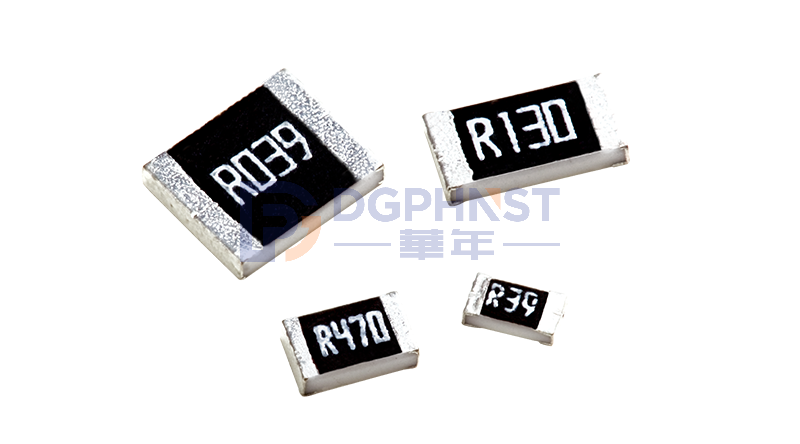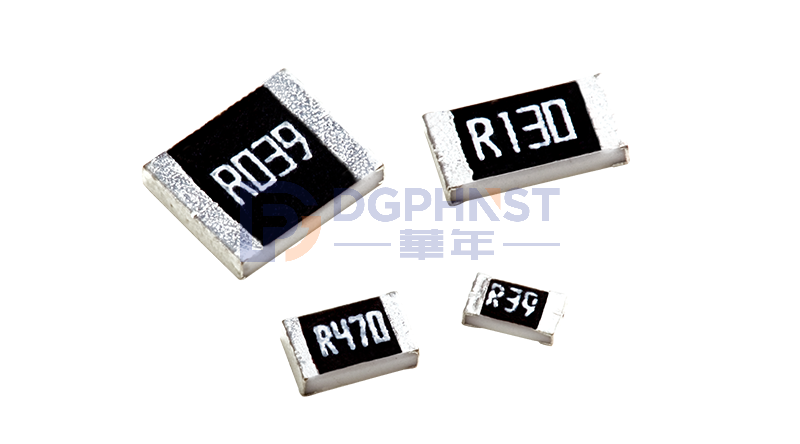
SMD resistors are the most widely used basic passive components in PCB circuit board design. Their package specifications, electrical parameters, and structural characteristics directly determine the circuit's application scenarios and operational stability.
Shunhai Technology will systematically sort out the package specifications, power rating parameters, accuracy resistance value standards, and mainstream package classifications of SMD resistors, providing comprehensive technical references for circuit selection, component procurement, and circuit design.
SMD Resistor Package Size and Power Correspondence Table
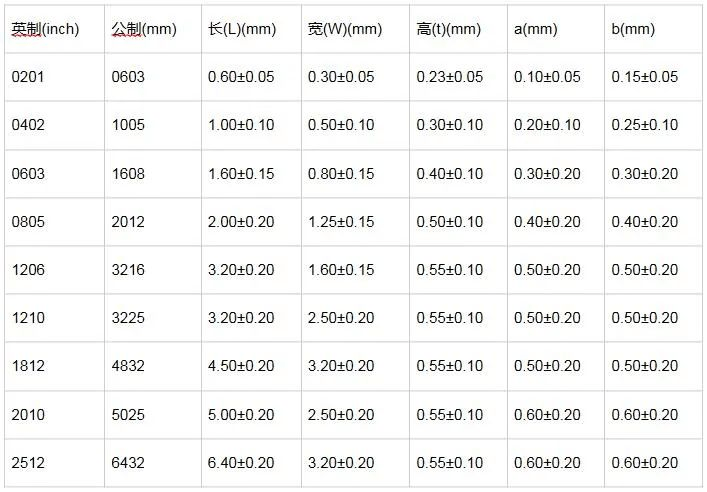
There are nine types of mainstream SMD resistor packages, divided into two marking systems: imperial and metric. Both specifications use a four-digit code to identify them.
The commonly mentioned 0201, 0402, 0603, 0805, 1206, 1210, 1812, 2010, and 2512 are all imperial package codes, with units in inches; the other system is metric, with units in millimeters.
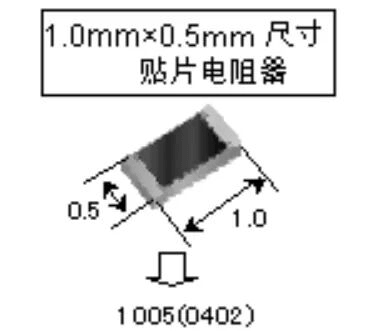
SMD resistor imperial and metric relationships and detailed size comparison table:
Correspondence between SMD resistor power and size:
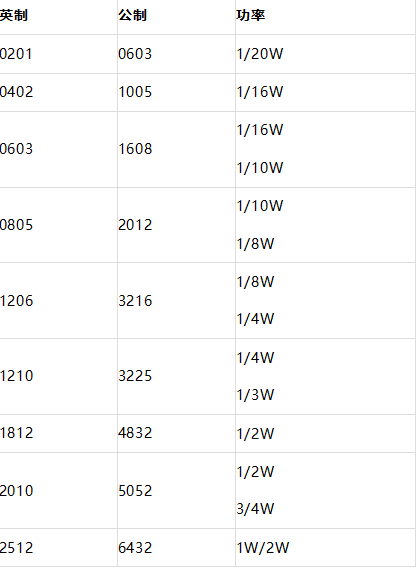
Supplementary note: The larger the package size, the higher the power and voltage rating it can withstand. Small-size 0201 is mostly used in small portable devices, while large-power 2512 packages are suitable for power supplies and high-power load circuits.
SMD Resistor Accuracy, Resistance Value, and Core Advantages
1. Accuracy Level Code
The industry uses letters to distinguish resistance value tolerance. The two most common are:
J = ±5%: General-purpose standard type, default specification for purchase without special requirements.
F = ±1%: High-precision type, must be selected for instruments, sampling circuits, and precision signal circuits.
Other tolerances such as ±2% and ±10% also exist, but they are less commonly used in the market.
2. Resistance Value Coverage Range
Standard SMD resistor resistance range: 0R (zero-ohm resistor) to 100MΩ, covering all circuit needs including power, signal, pull-up/pull-down, current limiting, and voltage division.
Core Advantages
SMD resistors can fully replace traditional through-hole resistors and have become the mainstream component on PCBs. Their core advantages include:
- Compact size and light weight, suitable for miniaturized and thin electronic products;
- Compatible with both reflow soldering and wave soldering, convenient for mass production;
- Stable electrical performance, low temperature drift, and high long-term reliability;
- Adaptable to automated placement equipment, significantly reducing manual assembly costs;
- High mechanical strength, small parasitic parameters in high-frequency circuits, and excellent high-frequency performance.
Package Classification
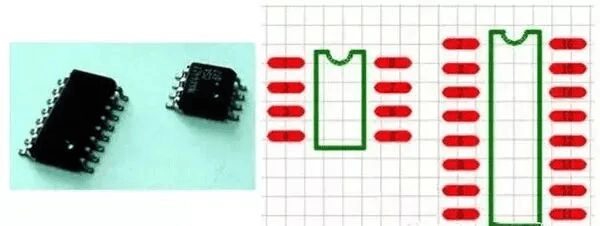
Packages are generally divided into two categories: DIP through-hole and SMD surface mount.
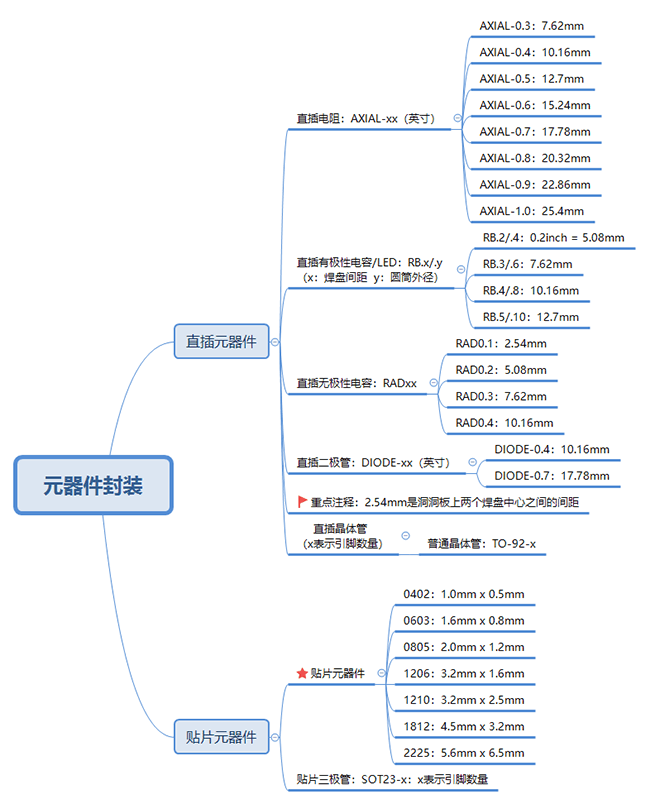
Through-Hole Component Packaging
Through-hole component packaging usually has pads that go through the entire circuit board, from the top layer to the bottom layer, where the component leads are soldered, as shown in the figure.
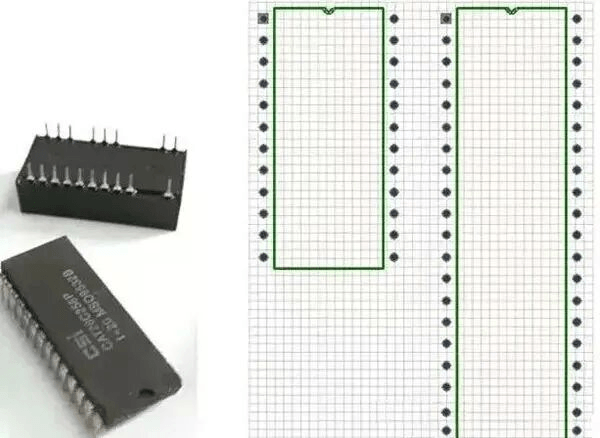
Surface-Mount Component Packaging
Surface-mount components refer to those whose pads are only attached to the top or bottom layer of the circuit board, and the soldering of the components is done on the working layer where the components are mounted.
In Conclusion
Parameters such as the package, power, voltage rating, and resistance accuracy of SMD resistors are interrelated and are essential references for circuit design and component selection.
Compared to traditional through-hole resistors, SMD resistors offer better overall performance and have now become the mainstream passive component in electronic circuits. As electronic products continue to develop toward compactness, precision, high frequency, and mass production, mastering SMD resistor parameters and understanding the application scenarios of each package can reduce circuit failures, improve product stability, and extend its service life.