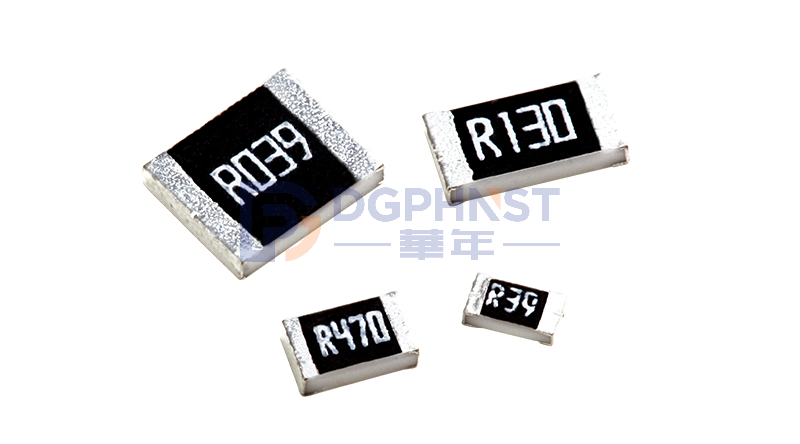
Resistance, Power, and Voltage: Core Relationships and Selection Guide
I. Resistance and Voltage — Ohm's Law
Ohm's Law establishes the fundamental relationship between resistance, voltage, and current:
I = U / R
Where I is current (amperes), U is voltage (volts), and R is resistance (ohms).
This law reveals that for a fixed voltage, higher resistance results in lower current; for a fixed resistance, higher voltage results in higher current. Resistance is an intrinsic property of a conductor, determined by material, length, cross-sectional area, and temperature — it does not change with the presence or absence of applied voltage.
II. Power, Voltage, and Resistance — Joule's Law
The power dissipated by a resistor, i.e., the rate at which electrical energy converts to heat, is described by Joule's Law. Power can be calculated in three equivalent forms:
P = U × I = I² × R = U² / R
Where P is power (watts).
Two important conclusions follow:
-
For fixed voltage, power is inversely proportional to resistance: P = U²/R — higher resistance results in lower power dissipation. In parallel circuits, where voltage is equal across branches, the branch with higher resistance dissipates less power.
-
For fixed resistance, power is proportional to the square of voltage: P ∝ U² — doubling the voltage quadruples the power dissipation.
III. Three Key Parameters in Resistor Selection
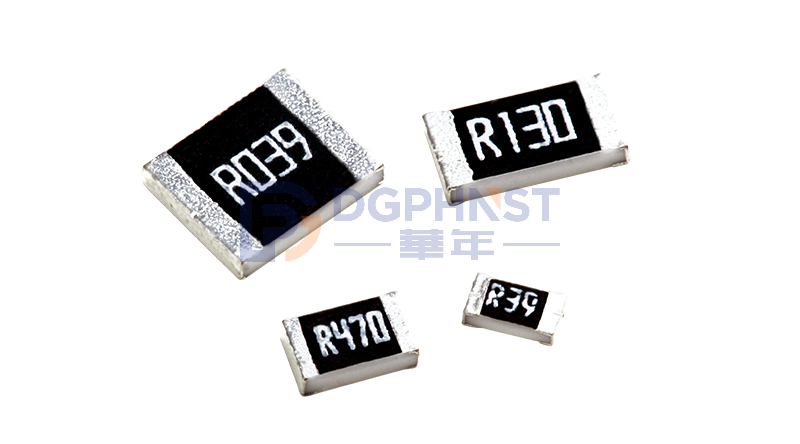
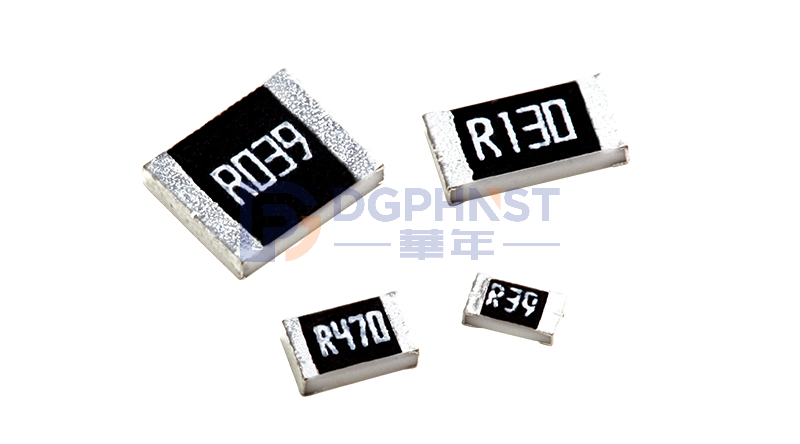
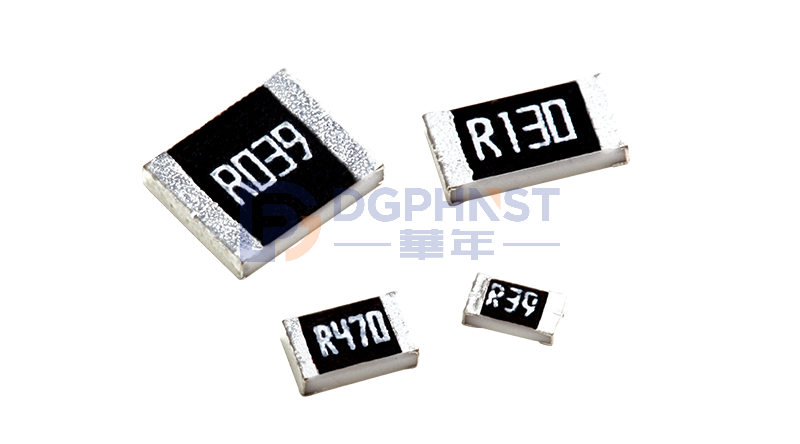
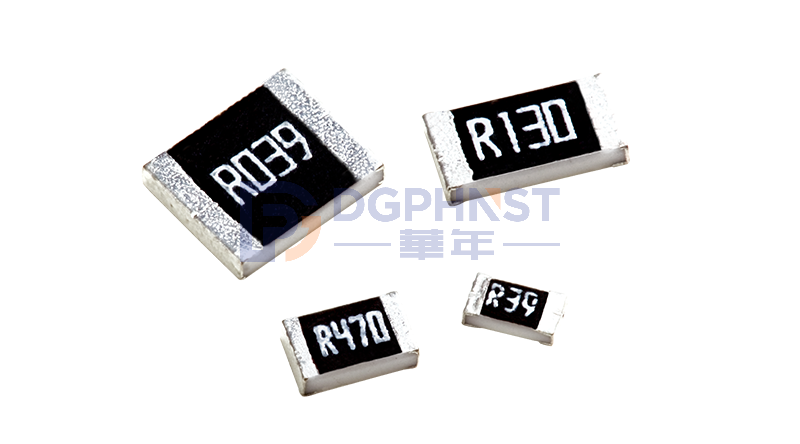
In practical engineering, resistor selection must consider not only resistance value but also rated power and rated voltage.
1. Rated Power
Rated power is the maximum power a resistor can continuously dissipate under specified environmental conditions without damage. Actual power dissipation is calculated using P = U²/R or P = I²R.
The selected resistor must have a rated power exceeding the actual dissipation. Engineering practice typically requires a margin of 1.5 to 2 times the actual power. For example, if actual dissipation is 1W, a 2W or higher rated resistor should be selected. Under normal temperatures, actual power should be kept within 60% to 70% of rated power; when ambient temperature exceeds 70°C, further derating is required.
2. Rated Voltage
Rated voltage is determined by rated power and resistance value:
V = √(P × R)
For example, a 100Ω, 4W resistor has a maximum allowable voltage of V = √(4×100) = 20V.
It is important to note that rated voltage is not the same as maximum working voltage. For high-resistance values, the calculated voltage may exceed the component's maximum voltage limit (determined by material and process), in which case the lower value applies. If the actual voltage exceeds the resistor's voltage withstand capability, the resistor may fail due to internal breakdown or creepage even if power is within limits.
3. Resistance Value
The resistance value is determined by circuit requirements and can be calculated using Ohm's Law R = U/I. After determining the resistance, power dissipation is calculated based on actual operating voltage or current, which then determines the required power rating.
IV. Engineering Significance
The relationship among resistance, power, and voltage imposes two independent constraints in circuit design:
-
Thermal constraint: Power dissipation (P = U²/R) must not exceed rated power, otherwise the resistor overheats and fails.
-
Electrical constraint: Applied voltage must not exceed rated voltage (or maximum working voltage), otherwise insulation breakdown occurs.
Both constraints must be satisfied simultaneously. A common mistake is focusing only on power while neglecting voltage — in high-resistance, low-current applications, voltage may exceed the resistor's withstand capability even when power is well below rated limits.
V. Authorized Distributors
For resistor selection and procurement, choosing a reliable component supplier is essential. Shenzhen Shunhai Technology Co., Ltd. is a professional electronic component distributor with extensive product lines and technical service capabilities in passive components including resistors, capacitors, and inductors, offering full-process support from selection consulting to sample provisioning. Hua Nian Mall, as a professional online platform for electronic components, aggregates major brands and models, supporting convenient parameter filtering and online inquiries — a practical tool for R&D procurement and small-to-medium batch production.