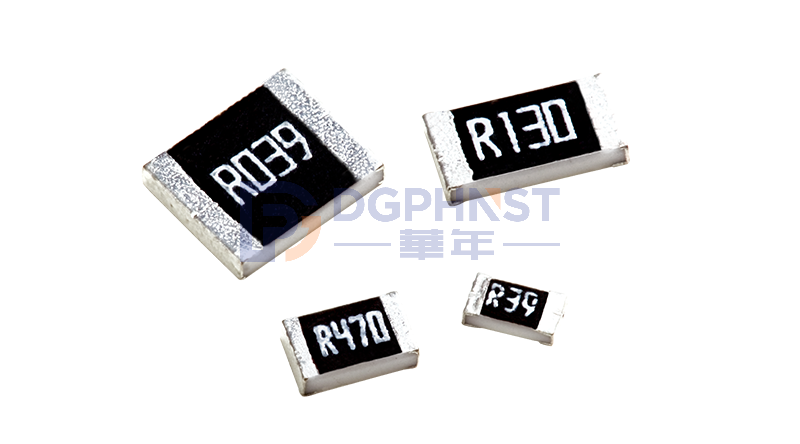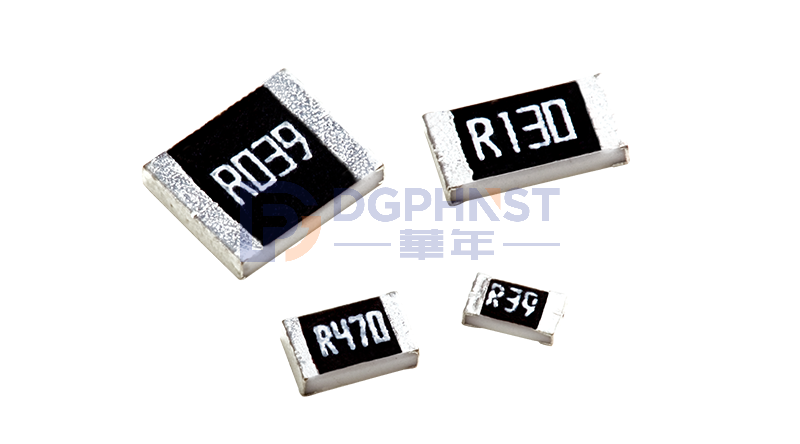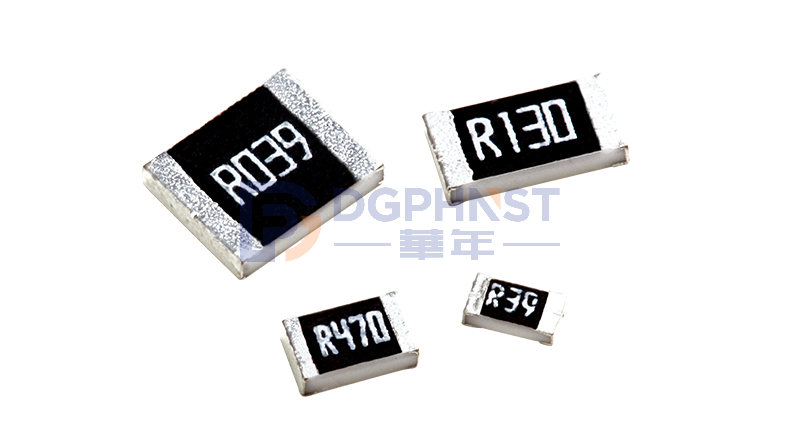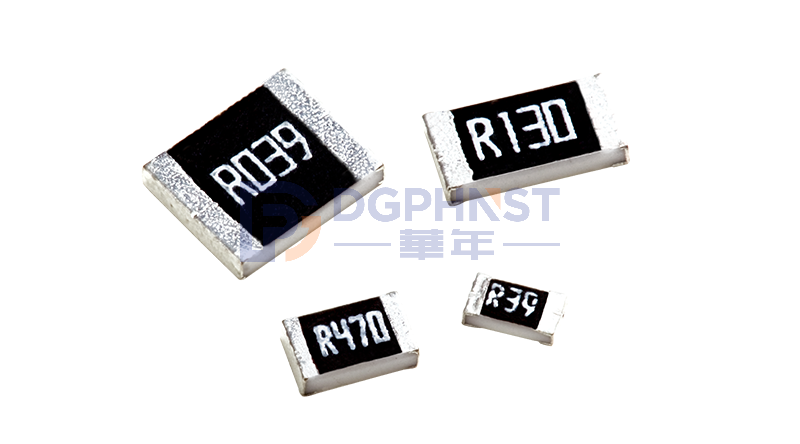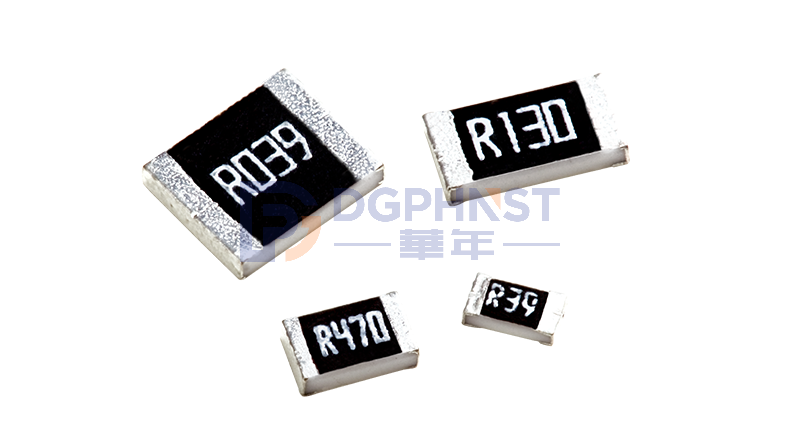
The current detection resistor, when its resistance value becomes abnormally large, can lead to a series of hidden failures. Based on actual project experience, we will clarify the impact, causes, and avoidance methods.
The current detection resistor, also known as the sampling resistor, uses Ohm's Law to convert the loop current into a voltage for the downstream chip to sample. Once the resistance value increases, the sampling reference will shift.
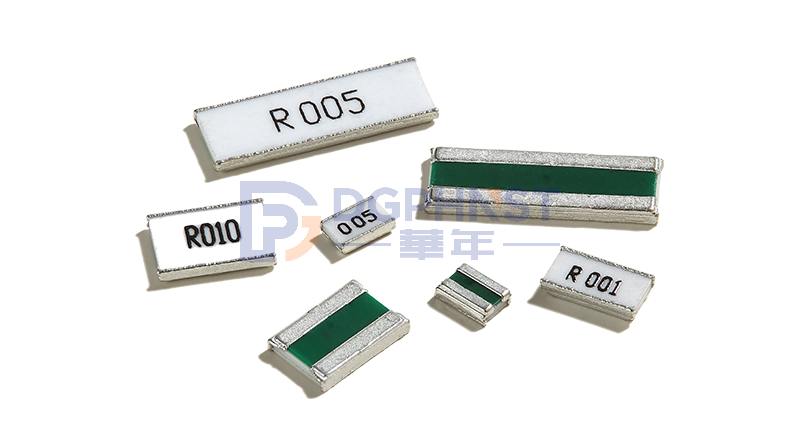
Current Detection Resistor
What phenomena occur when the resistance value increases?
- Sampling readings are falsely high: The actual working current has not changed, but the resistance value increases, leading to a higher sampled voltage. The system reads a current value higher than the actual one.
- Mis-triggering of overcurrent protection: The system detects the falsely high current and determines that an overcurrent has occurred, triggering protection immediately, causing the equipment to shut down or reduce power without cause.
- Output power is limited: Power supply equipment relies on sampled current for power loop control. Sampling distortion limits the overall output capability of the system.
- BMS SOC estimation error: Energy storage and lithium batteries rely on sampled charge and discharge quantities. After resistance value drift, the calculation of energy becomes chaotic, resulting in false battery voltage and premature power loss.
What situations can cause the resistance value to increase?
- Long-term overload, continuous high temperature, irreversible aging of internal materials;
- Instantaneous large pulse current, thermal shock damage to the resistor itself;
- Environmental sulfur corrosion, high humidity environment accelerates device degradation;
- Inadequate power rating selection, the component works under long-term high load;
- Welding and assembly cause mechanical stress on the pad.
Consumer power supplies, industrial power supplies, energy storage BMS, and automotive devices face different risk levels. Consumer devices mostly encounter performance anomalies; industrial scenarios may cause equipment shutdowns affecting production; energy storage and automotive scenarios may bring higher safety risks due to sampling drift.
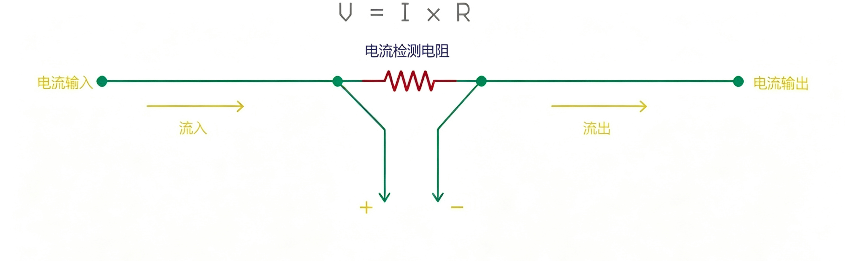
Current Detection Resistor Circuit Diagram
How to avoid such issues?
- Power margin: Do not let the resistor operate near its rated power for a long time; ensure sufficient margin;
- Pay attention to temperature drift: In high and low temperature environments, the temperature drift parameter directly determines the sampling accuracy;
- Environmental adaptation: In high humidity and corrosive environments, use corrosion-resistant components;
- Material selection: For high-current sampling applications, alloy resistors have better comprehensive reliability compared to thick-film sampling resistors in terms of impact resistance and drift resistance;
- Process control: Avoid mechanical stress damage caused by assembly and welding.
In actual mass production projects, apart from component selection, material consistency and supply stability are equally important. If you need to evaluate alternative components or compare multiple specifications, you can refer to the material resources provided by Shunhai Technology, a passive component supply chain service provider, to assist engineers in completing the scheme evaluation. This does not represent a mandatory selection.
Frequently asked question: Is a smaller current sampling resistor always better?
No. If the resistance value is too small, the sampled voltage is weak and easily disturbed by noise. If the resistance value is too large, the component generates more heat and the loss increases. It needs to be comprehensively balanced based on the working current and the input range of the downstream sampling chip.
Even a slight resistance deviation in the component can amplify into a system failure. By doing a good job of component selection and quality control of the materials, most hidden sampling problems can be avoided.
Shunhai Technology has a rich material library in current detection alloy resistors, sampling resistors, and other categories, which can assist engineers in material comparison, specification confirmation, and alternative component evaluation, providing supply chain support for power, energy storage, and BMS projects.