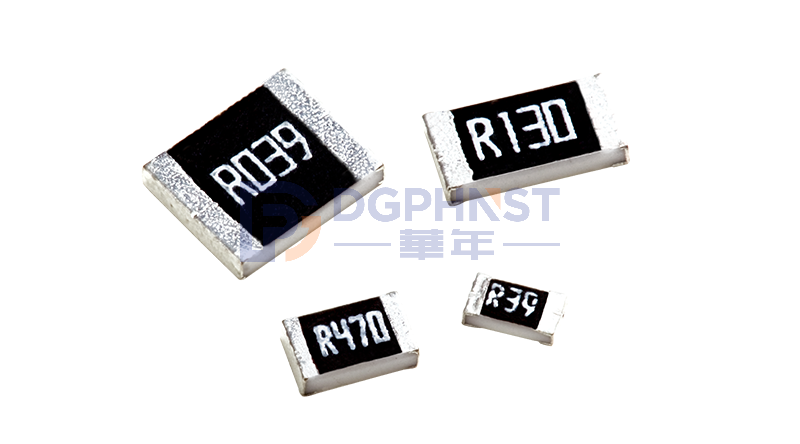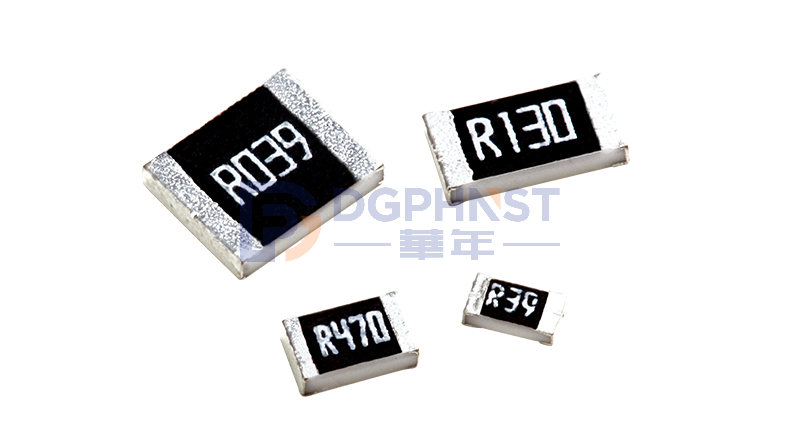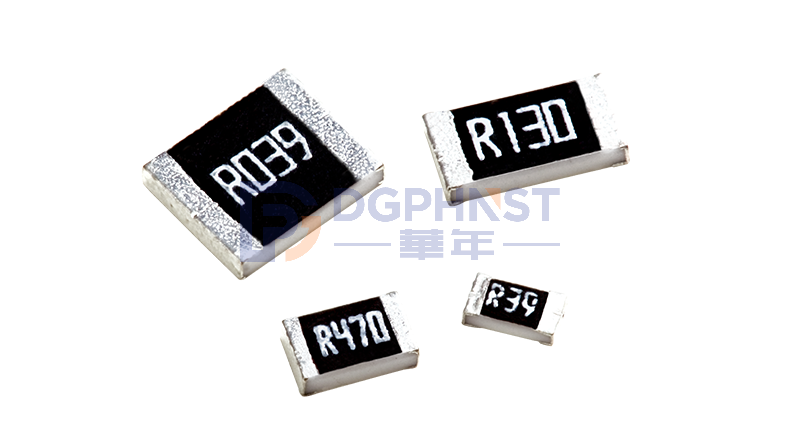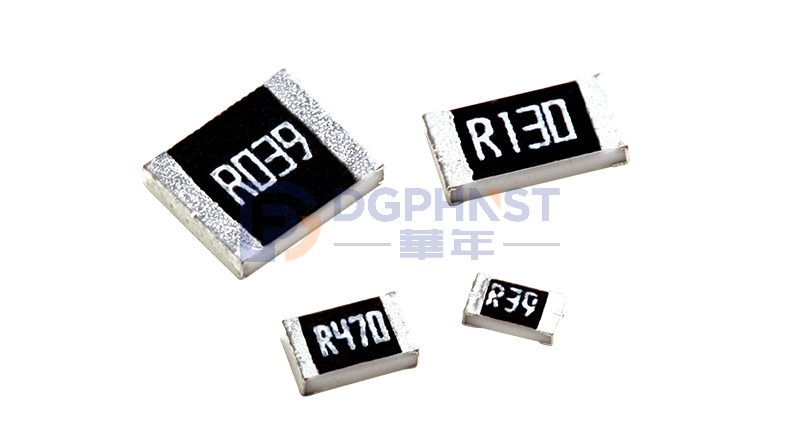
Using a 2512 package 2W resistor in place of a 1W rated one is, in most cases, not a mistake but a step towards a more robust and reliable design. However, it's not a universal "better" choice; its impact must be analyzed from several angles.
Core Conclusion: Power Margin and Thermal Management
The power rating of a resistor defines the maximum heat it can safely dissipate at a specific temperature. Substituting a 2W resistor into a circuit designed for 1W means the component has double the power handling capacity. This directly translates into a much larger power margin.
For instance, if a circuit dissipates 0.8W, a 1W resistor has only a 20% margin, while a 2W resistor enjoys a 60% margin. This larger margin directly results in a lower operating temperature: under the same 1W load, a 1W resistor's surface temperature might approach its 155℃ limit, whereas a 2W part might only reach around 100℃.
In-Depth Impact: Temperature and Derating Curves
The key to understanding this lies in the power derating curve. The rated power (e.g., 1W or 2W) for chip resistors is typically specified at an ambient temperature of 70℃. Above 70℃, the allowable power must be derated according to the curve.
This means:
-
The advantage of a 2W resistor is more pronounced in high-temperature environments. For example, at 85℃, a nominal 3W 2512 resistor might need to be derated to about 2.4W. Similarly, a derated 2W resistor will still likely offer more usable power than a derated 1W part under the same elevated temperature.
-
PCB heat dissipation is a critical variable. The power dissipation of a 2512 resistor heavily relies on the PCB pads and copper pours for heat sinking. Poor PCB thermal design can severely limit the actual power a 2W resistor can handle.
Long-Term Reliability and Lifespan
Temperature is the primary enemy of electronic component lifespan. A 2W resistor, operating at a lower temperature, generally offers superior long-term reliability and a longer lifespan compared to a 1W part. It also handles pulses and surges better, providing critical protection against instantaneous voltage spikes.
Recommended similar products:
| Part Number | Parameter |
| CRH2512F150RE04Z | 2512 150R 2W 1% |
| CRH2512F15K0E04Z | 2512 15K 2W 1% |
| CRH2512F15R0E04Z | 2512 15R 2W 1% |
| CRH2512F16R0E04Z | 2512 16R 2W 1% |
| CRH2512F180KE04Z | 2512 180K 2W 1% |
| CRH2512F180RE04Z | 2512 180R 2W 1% |
| CRH2512F18R0E04Z | 2512 18R 2W 1% |
| CRH2512F1K00E04Z | 2512 1K 2W 1% |
| CRH2512F1K20E04Z | 2512 1.2K 2W 1% |
Impact on Surrounding Circuits
A 2W resistor generates less heat, meaning reduced thermal radiation impact on the PCB and nearby components, contributing to overall system stability. It's worth noting that 2W and 1W versions share the exact same physical footprint (6.4mm x 3.2mm), making them directly interchangeable.
Cautious Considerations
Despite the advantages, careful evaluation is needed in certain situations:
-
Protection Circuits: If the original 1W resistor acts as a "fuse" for current limiting or overcurrent protection, replacing it with a 2W part might weaken its protective function.
-
High-Frequency/RF Circuits: Beyond power, parasitic parameters must be considered to avoid affecting signal integrity.
-
Cost-Sensitive Projects: 2W resistors are generally more expensive than 1W parts, so cost-benefit analysis is necessary for high-volume production.
Recommended Reliable Sourcing Channels
Ensuring component quality and source reliability is paramount. For sourcing 2512 2W resistors, consider these authorized channels:
-
Shenzhen Shunhai Technology Co., Ltd. : A professional electronic component distributor offering various solutions, including high-power 2512 resistors.
-
Huanian Mall: The online platform of Shunhai Technology, providing convenient access to product queries, purchasing, and detailed technical specifications.
Conclusion
Using a 2512 2W resistor in a 1W circuit is essentially an application of the "derating" principle. It enhances stability and extends lifespan by providing a larger power margin and operating at a lower temperature. As long as core parameters like resistance and tolerance match, it is generally a more reliable and superior choice. However, the final decision should always factor in the specific circuit function, operating ambient temperature, and PCB thermal design.