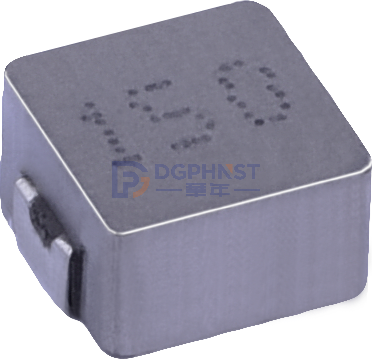
Comprehensive Analysis of Power Resistors
Power resistor is a resistor specifically designed to withstand high power (high voltage, high current). Its core function is to convert electrical energy into heat energy and release it stably, while ensuring long-term reliable operation in high temperature and high load environments. Compared with ordinary resistors, its structure, materials, and heat dissipation capabilities are optimized for high-power scenarios. Below is a detailed analysis from multiple dimensions:

1、 Basic structure and core characteristics
Physical Structure
Material selection: High temperature resistant and highly stable materials are used, such as ceramic substrates, metal alloys (such as nickel chromium, constantan), metal oxides (such as aluminum oxide), etc.
Heat dissipation design:
Packaging forms: common axial inserts, surface mount (large-sized SMD), aluminum shell packaging (with heat sink), etc.
Auxiliary heat dissipation: Some models have built-in thermal conductive fillers (such as cement, silicone) or external heat sinks to improve thermal conductivity efficiency.
Electrode process: Thick film printing or metalized electrodes are used to reduce contact resistance and enhance current carrying capacity.
Core Features
High power density: The rated power range is wide, from a few watts (such as 5W surface mount resistors) to several kilowatts (such as industrial brake resistors).
Low temperature coefficient (TCR): typically ± 50~± 200 ppm/° C, ensuring stable resistance at high temperatures.
High voltage and surge resistance: The working voltage can reach several thousand volts, and some models can withstand short-term impacts of several times the rated current.
2、 Main classification and technical parameters
Classified by structure
|Type | Characteristics | Typical Applications|
|Wire wound power resistor | Alloy resistance wire winding, with high accuracy (± 1%~± 5%), but poor high-frequency performance and parasitic inductance. |Power filtering, precision instrument calibration|
|Metal oxide resistor | High temperature resistance (up to 300 ℃), oxidation resistance, wide resistance range (1 Ω~10M Ω), suitable for harsh environments. |Industrial power supply, motor drive|
|Cement resistance | Ceramic shell filled with cement, good heat dissipation, low cost, but large volume, resistance range 1 Ω~10k Ω. | Power adapter, LED driver|
|Aluminum shell resistor | metal shell+heat dissipation fins, with a power of over 100W, supporting forced air cooling or water cooling. |Inverter, welding machine, new energy inverter|
|Thick film/thin film resistor | surface mount (such as 2512 package), power of 1W~5W, good high-frequency characteristics, suitable for compact design. |Automotive electronics and communication base stations|
Classified by purpose
Load resistance: Simulate real loads, used for power testing and aging tests (such as 1000W water-cooled load resistance).
Braking resistor: consumes the regenerative energy of the motor to prevent overvoltage (such as the 50 Ω/500W resistor in the frequency converter).
Current detection resistor: low resistance (m Ω level), high precision (± 1%), used in power management circuits (such as electric vehicle BMS).
Voltage divider/current limiting resistor: Divides or limits surge current in high voltage scenarios (such as megaohm level high voltage resistors).
Key parameters
Rated power (P): The maximum power that can be continuously operated at a specified temperature (requires derating for use).
Resistance range: from milliohms (current detection) to megaohms (high voltage division).
Voltage withstand level: maximum withstand voltage (such as 10kV high voltage resistor).
Temperature derating curve: When the ambient temperature exceeds 70 ℃, the power consumption should be reduced (for example, a 100W resistor can only use 60W at 100 ℃).
3、 Typical application scenarios
Industrial power system
Inverter braking: absorbs the reverse electromotive force of the motor and protects the IGBT module.
Welding machine: current limiting and energy dissipation to ensure welding stability.
Power electronics testing: As a dummy load, test the output capability of the power supply.
Automobiles and New Energy
Electric vehicle charging station: Buffer resistor in DCDC converter.
BMS (Battery Management System): Current sampling resistor (e.g. 0.5m Ω/5W).
Photovoltaic inverter: voltage division and filtering in MPPT circuit.
Consumer Electronics and Communication
Power adapter: surge suppression and output current limiting (such as cement resistors).
5G base station: RF power amplifier matching resistor (such as 50 Ω/10W).
4、 Selection and usage precautions
Key selection points
Power margin: The actual power used shall not exceed 50%~70% of the rated value (further derating is required in high-temperature environments).
Heat dissipation design: Calculate the temperature rise based on the thermal resistance (℃/W), and install a radiator or forced cooling if necessary.
Installation method: Avoid enclosed spaces and reserve ventilation gaps; High power resistors should be kept away from heat sensitive components.
Common Failure Modes
Overheating and burnout: Insufficient heat dissipation or continuous overload operation.
Mechanical damage: Pin breakage caused by vibration (seismic resistant models should be selected for automotive scenarios).
Moisture corrosion: Choose moisture-proof packaging (such as epoxy resin encapsulation) for high humidity environments.
Certification and Standards
Industrial grade: UL, CE certified, compliant with IEC 60115 standard.
Automotive grade: AECQ200 certified, meets ISO 16750 vibration and temperature cycling requirements.
High voltage safety: Complies with the IEC 60664 insulation withstand voltage standard.
5、 Comparison with ordinary resistors
|Characteristics | Power Resistance | Ordinary Resistance|
|Power carrying capacity | from several watts to several kilowatts | usually ≤ 1W|
|Heat dissipation design | Enhanced heat dissipation structure (heat sink, sealing material) | No special design|
|Temperature rise tolerance | Supports high temperature operation (above 150 ℃) | Generally ≤ 70 ℃|
|Cost | High (complex materials and processes) | Low (standardized production)|
|Application scenarios | High power, high stability requirements | Low power signal circuits|