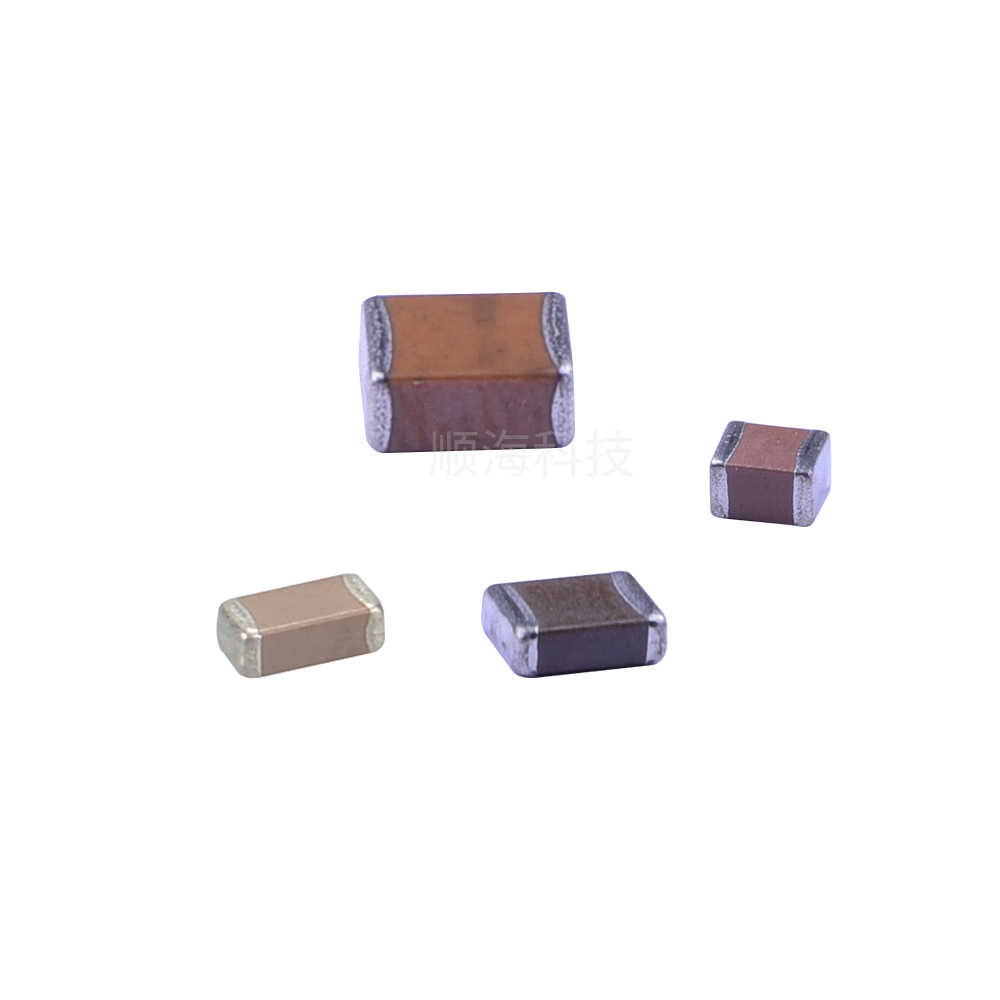
What is CBB capacitor?
CBB capacitor (full name Metallized Polypropylene Film Capacitor, English name Metallized Polypropylene Film Capacitor) is a non-polar capacitor with polypropylene film as the dielectric and surface metallization treatment. It is widely used in AC filtering, high-frequency pulses, and precision circuits due to its stable high-frequency performance, strong self-healing ability, and long lifespan.
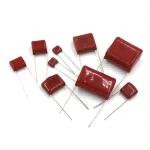
Basic Structure and Principle
Dielectric material: Polypropylene (PP) film, with a low dielectric constant (about 2.2-2.5) but extremely low loss (tan δ ≈ 0.0002).
Electrode: A nanoscale metal layer (aluminum or zinc aluminum alloy) is formed on the surface of a thin film through vacuum evaporation technology to achieve self-healing function.
Winding structure: alternating stacking and winding of thin film and metal layers, followed by electrode extraction and packaging (commonly cylindrical or flat packaging).
Self healing principle:
When the authorities break down, the high temperature at the breakdown point causes the metal layer to evaporate, forming an insulating zone to prevent short circuit failure.
core features
|Characteristics | CBB capacitor | Compared to other capacitors|
|Polarity | Non polarity | Electrolytic capacitors have polarity, while ceramic/film capacitors have no polarity|
|Capacity range | 0.001 μ F~10 μ F (common) | Electrolytic capacitor (1 μ F~1F); Ceramic capacitors (pF~μ F)|
|Voltage endurance range | Typically 50V~2000V (high voltage models can reach tens of thousands of volts) | Ceramic capacitors have lower voltage endurance (generally<100V)|
|Frequency characteristics | Low high-frequency loss (applicable to 10kHz~MHz level) | Electrolytic capacitors have poor high-frequency performance, while ceramic capacitors have better high-frequency performance|
|Temperature stability | Low temperature coefficient (250ppm/℃~+100ppm/℃) | Better than electrolytic capacitors, but weaker than C0G ceramics|
|Long lifespan (100000 hours+, no electrolyte aging) | Short lifespan of electrolytic capacitors (2-5 years)|
|Self healing | Local breakdown can be self repaired | Ceramic/electrolytic capacitors have no self-healing ability|
Main classification
(1) Classified by packaging form
CBB21 (axial lead):
Cylindrical package with two end leads, suitable for power frequency AC circuits (such as motor starting).
CBB22 (Box Package):
Square plastic shell, strong anti-interference and high voltage resistance, used for filtering switch power supplies.
CBB81 (high-frequency pulse type):
Special structure reduces ESL and is suitable for high-frequency pulse circuits (such as induction cooker resonance).
CBB13 (seamless winding):
Non inductive winding method with extremely low ESL, used for RF matching circuits.
(2) Classified by application scenario
AC filtering capacitor: high voltage withstand (such as 400V~630V), used for power input filtering.
Pulse energy storage capacitor: high-frequency and low loss, such as laser pulse generator.
Resonant capacitor: Used in conjunction with an inductor for oscillating circuits (such as frequency converters).
Typical application scenarios
Switching power supply:
Input/output filtering (replacing electrolytic capacitors to improve lifespan).
Motor control:
Single phase motor starting capacitor (such as air conditioning compressor).
High frequency circuit:
Induction cooker LC resonance, inverter high-frequency transformer coupling.
Lighting equipment:
The X capacitor of the LED driver power supply (suppresses EMI).
Audio equipment:
Coupling capacitor (low distortion, high fidelity).
Key parameters for selection
|Parameter | Description|
|Rated voltage | should be 1.5~2 times the actual working voltage (such as 220V AC peak 311V, select ≥ 630V model). |
|Capacity accuracy | Generally ± 5%~± 10%, for precision circuits ± 1% (customization required). |
|The lower the tangent of the loss angle (tan δ), the better (the typical value of CBB is 0.0002, much lower than the 0.1-0.2 of electrolytic capacitors). |
|Self healing performance | High frequency pulse scenarios require high self-healing ability (choose the model with metalized zinc aluminum layer). |
|Temperature range | Standard type 40 ℃~+85 ℃, high temperature type can reach+105 ℃. |
Comparison with CL capacitors (polyester capacitors)
|Characteristics | CBB capacitor (polypropylene) | CL capacitor (polyester)|
|Dielectric material | Polypropylene (PP) | Polyester (PET)|
|Dielectric constant | Low (~2.2) | High (~3.3)|
|Loss tangent | Extremely low (0.0002) | High (0.005~0.02)|
|Temperature stability | Excellent (small capacity variation) | Poor (large capacity fluctuation with temperature)|
|High frequency performance | Suitable for high frequency (MHz level) | Suitable for mid low frequency (kHz level)|
|Cost | High | Low|
|Typical applications | High frequency filtering, pulse circuits | DC filtering, low-frequency coupling|
Precautions for use
Voltage margin:
In AC circuits, the rated voltage should be ≥ 1.414 times the peak AC voltage (such as selecting a 630V capacitor for 220V AC).
Installation environment:
Avoid long-term exposure to high temperatures (>85 ℃) or humid environments to prevent insulation degradation.
High frequency applications:
Attention should be paid to equivalent series inductance (ESL), and a non inductive structure (such as CBB13) should be selected.
Self healing limit:
Frequent self-healing will reduce the effective electrode area, resulting in a decrease in capacity, and continuous overvoltage should be avoided.
CBB capacitors have the core advantages of high frequency, low loss, strong self-healing, and long lifespan, making them an ideal choice for AC filtering, high-frequency pulses, and precision circuits. Despite its smaller capacity and higher cost than CL capacitors, its stability and reliability are irreplaceable in switching power supplies, motor control, and high-end audio equipment. When selecting, special attention should be paid to voltage resistance, frequency characteristics, and temperature range to ensure compatibility with actual application scenarios.