Filter capacitors are key components used in electronic circuits to filter out noise and smooth voltage fluctuations. Their classification involves multiple dimensions, including dielectric materials, structural forms, application scenarios, and safety levels. The following is a detailed explanation of the classification of filtering capacitors:
1、 Classified by medium material
Electrolytic capacitor
Definition: Using electrolyte as a medium, usually combined with metal foil or conductive polymer.
Characteristics: Large capacity, high voltage resistance, but relatively large ESR (equivalent series resistance), limited lifespan.
Application: Power filtering, energy storage, commonly used in industrial control, power electronics and other fields.
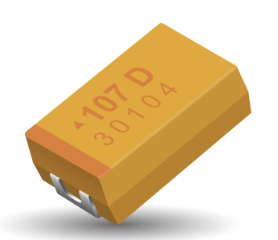
Common models: aluminum electrolytic capacitors (such as CD294, CD135), conductive polymer tantalum capacitors (such as TPS, TPM series).
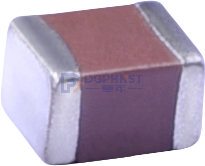
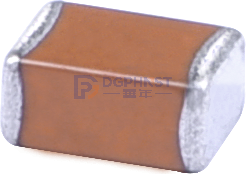
Definition: Using ceramic materials as the medium.
Features: Good high-frequency characteristics, high temperature stability, small size, but relatively small capacity.
Application: High frequency filtering, decoupling, commonly used in communication equipment, medical equipment and other fields.
Common models: C0G, X7R, Y5V, etc.
Thin film capacitor
Definition: Using plastic film (such as polyester, polypropylene) as a medium.
Features: low loss, high insulation resistance, good temperature stability, and frequency characteristics.
Application: General filtering, coupling, bypass circuits, commonly used in home appliances, industrial control and other fields.
Common models: Polyester film capacitors (such as CL11, CL21), polypropylene film capacitors (such as MKP-X2, MKP-Y2).
Polymer capacitors
Definition: Using conductive polymers as electrodes or electrolytes.
Features: ultra-low ESR, high ripple current tolerance, long lifespan.
Application: High frequency filtering, high current filtering, commonly used in consumer electronics, automotive electronics and other fields.
Common models: Conductive polymer tantalum capacitors (such as TPS, TPM series), conductive polymer aluminum capacitors (such as PAN, PAS series).
2、 Classified by structural form
Direct insertion filter capacitor
Features: The pins are soldered through the circuit board, suitable for traditional designs.
Application: Industrial control, maintenance and replacement scenarios.
Surface mount filter capacitor (SMD)
Type: such as 1206, 1210, 1812, etc. (size code, in inches).
Features: Small size, light weight, suitable for automated mounting.
Application: High density circuit boards for smartphones, laptops, 5G base stations, and other devices.
Stacked filtering capacitors (such as MLCC, MLPC)
Features: Composed of multiple layers of media and electrodes alternately stacked, with a compact size and excellent high-frequency characteristics.
Application: High frequency circuits, precision instruments, commonly used in fields such as 5G base stations and medical equipment.
3、 Classified by application scenario
Power filter capacitor
Features: Large capacity, high voltage resistance, low ESR, used to filter out noise at the power input end.
Application: Switching power supply, LED driver, charger, etc.
Signal filtering capacitor
Features: Good high-frequency performance, low loss, used to filter out noise on signal lines.
Applications: communication devices, audio devices, sensor interfaces, etc.
Decoupling filter capacitor
Features: Placed close to integrated circuits, used to filter out the impact of power fluctuations on chips.
Applications: digital circuits, microprocessors, memory, etc.
EMI filtering capacitor
Features: Compliant with safety standards (such as X2/Y2), used to suppress electromagnetic interference.
Applications: Home appliances, industrial equipment, power adapters, etc.
4、 Classified by safety level (for safety filter capacitors)
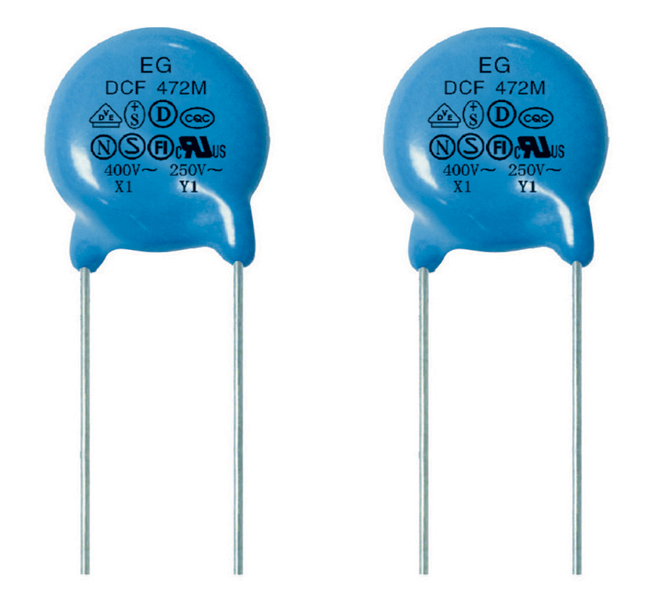
X capacitor (X1/X2/X3)
Definition: Spanning between power lines (L-N) to suppress differential mode interference.
Applications: power filtering, switching power supply, etc.
Y capacitor (Y1/Y2/Y3/Y4)
Definition: Spanning between the power line and ground (L-PE/N-PE) to suppress common mode interference.
Applications: Electromagnetic Compatibility (EMC) filtering, medical equipment, etc.
5、 Key selection points
When selecting filter capacitors, the following key parameters and factors should be considered:
Rated voltage: It needs to be 1.25 times higher than the actual working voltage to ensure that the capacitor can still operate safely under abnormal conditions.
Capacity: Choose according to filtering requirements. If it is too large, it may increase costs, while if it is too small, it may affect the filtering effect.
ESR: High frequency circuits should choose models with lower ESR to reduce energy loss and heat generation.
Temperature range: Select the appropriate temperature range according to the application scenario to ensure that the capacitor can still operate stably in extreme environments.
Package size: Choose the appropriate package size based on the space of the circuit board to meet installation and heat dissipation requirements.
Safety certification: If used in the fields of home appliances, industrial equipment, etc., it is necessary to ensure that the selected capacitors comply with relevant safety certification standards (such as UL, ENEC, CQC, etc.).