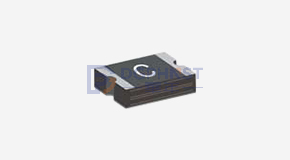
Surface mount antenna is a widely used miniaturized antenna in modern wireless communication systems, with various classification methods. The following analysis will be conducted from five dimensions: operating frequency band, feeding method, polarization characteristics, structural form, and application scenarios, to ensure that the density of the keyword "patch antenna" is reasonable and logically clear:
1、 Classified by working frequency band
Microwave frequency patch antenna
Frequency range: 300MHz~300GHz (wavelength 1mm~1m).
Technical features: high gain, low profile, easy integration, supporting millimeter wave communication.
Typical applications: 5G base station, satellite communication terminal, vehicle mounted radar.
Terahertz frequency patch antenna
Frequency range: 0.1~10THz (wavelength 30 μ m~3mm).
Technical features: Potential for ultra high speed data transmission, but high material loss.
Research progress: In the laboratory stage, applied to high-speed wireless communication and security testing.
2、 Classified by feeding method
Microstrip line fed patch antenna
Structural features: Directly excite the radiation patch through microstrip transmission lines.
Technical advantages: Simple structure, low cost, but narrow bandwidth (usually<5%).
Typical applications: Bluetooth module, Wi Fi router.
Coplanar waveguide fed patch antenna
Structural features: The feeder and radiation patch are coplanar, reducing parasitic parameters.
Technical advantages: Improve impedance matching and expand bandwidth to 10%~20%.
Typical application: Integration of high-frequency circuit boards.
Aperture coupled feeding patch antenna
Structural features: The coupling between the feeder and the radiation patch is achieved through the ground level aperture.
Technical advantages: Improve bandwidth (up to 30% or more) and suppress surface waves.
Typical applications: phased array radar, satellite communication.
3、 Classified by polarization characteristics
Linearly polarized patch antenna
Polarization direction: The electric field vector vibrates along a fixed linear direction (such as vertical or horizontal).
Technical advantages: Simple structure, suitable for mobile communication base stations.
Typical applications: 4G/5G macro base stations, handheld terminals.
Circularly polarized patch antenna
Polarization direction: The endpoint trajectory of the electric field vector is circular, divided into left and right rotation.
Technical advantage: reduces multipath interference and is suitable for satellite communication.
Typical applications: Beidou navigation terminal, unmanned aerial vehicle image transmission.
Bipolar patch antenna
Polarization direction: Supports two orthogonal polarization directions (such as ± 45 °).
Technical advantages: Improve spectrum utilization and support MIMO technology.
Typical applications: 5G Massive MIMO base station, indoor distribution system.
4、 Classified by structural form
Rectangular patch antenna
Structural features: The radiation patch is rectangular, and the resonant frequency is determined by the aspect ratio.
Technical advantages: Mature design formulas and easy mass production.
Typical applications: IoT devices, wireless sensor networks.
Circular patch antenna
Structural features: The radiation patch is circular and has symmetrical radiation characteristics.
Technical advantage: Omnidirectional radiation mode, suitable for indoor coverage.
Typical applications: Wi Fi access points, Bluetooth speakers.
Stacked patch antenna
Structural features: Multi layer dielectric substrate stacking, expanding bandwidth.
Technical advantage: The bandwidth is increased by 2-3 times, but the process is complex.
Typical applications: high-frequency radar, satellite communication terminal.
5、 Classified by application scenario
Communication patch antenna
Subdivision types: base station antenna, terminal antenna, relay antenna.
Technical indicators: frequency band coverage, gain, efficiency.
Typical case: 5G millimeter wave patch antenna array.
Radar patch antenna
Subdivision types: Vehicle mounted radar antenna, security radar antenna.
Technical specifications: beamwidth, scanning speed, anti-interference ability.
Typical case: 77GHz vehicle collision avoidance radar patch antenna.
Navigation antenna
Subdivision types: GPS patch antenna, Beidou patch antenna.
Technical indicators: positioning accuracy, multipath suppression, anti-interference performance.
Typical case: Smartphones have built-in multi-mode navigation patch antennas.