The storage time of capacitors is significantly affected by the type, storage conditions, and packaging process, with significant differences among different types. The following is a storage guide that integrates the characteristics of various capacitors:
1、 Storage time limit and conditions for common capacitor types
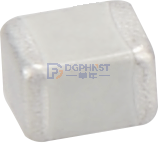
Surface mount capacitors (MLCC)
Storage conditions: temperature 5-40 ℃, humidity ≤ 70%, avoid corrosive gases.
Deadline: Can be stored for 1 year under standard conditions (25 ℃± 5 ℃, 65% ± 10% humidity); The recommended Pd/Ag electrode type is ≤ 6 months.
Risk: Insulation performance decreases when humidity exceeds 90%, and welding is prone to virtual welding.
Polypropylene film capacitor (such as CBB22)
Storage conditions: Constant temperature and humidity (25 ℃± 5 ℃, humidity 30% -60%), sealed away from light.
Deadline: The theoretical lifespan is long, but the industry requires testing every 12 months, and if it exceeds 24 months, it needs to be scrapped.
Case: The 5-year inventory capacitor capacity is still normal, but the pins may oxidize.
Safety capacitor
X-type capacitor: Temperature ≤ 35 ℃, humidity ≤ 60%, original packaging can be stored for 1 year. Pin oxidation is the main issue, and the cold tin plating process is more resistant to oxidation.
Y-shaped capacitor: Strictly control humidity (≤ 75%), recommended for use within 1 year. Ceramic media can age and cause capacity degradation, requiring heating (above Curie temperature) for recovery.
Aluminum electrolytic capacitor
Storage conditions: temperature 5-35 ℃, humidity 40-75%, horizontally placed to prevent uneven distribution of electrolyte.
Term: 1-2 years. After exceeding the expiration date, the electrolyte activity decreases and the leakage current increases, requiring activation treatment (1/2 rated voltage for 48-96 hours).
Failure characteristics: bulging, leakage, pin oxidation, requiring direct disposal.
2、 Risks and Countermeasures of Overdue Storage
Pin oxidation: a common problem of long-term storage of various capacitors, leading to poor soldering. It can be repaired by sanding with sandpaper or extending the welding time.
Dielectric aging: Ceramic/electrolytic capacitors are prone to capacity decay, Y capacitors need to be heated to recover, and electrolytic capacitors need to be activated.
Environmental loss of control: The high humidity and high temperature environment in the south accelerates oxidation, and warehouses need to be equipped with temperature and humidity monitoring and dehumidification equipment.
3、 Universal Storage Specification
|Requirement | Specific Measures|
|Environmental control | Temperature range of 5-35 ℃, humidity ≤ 75%, avoid light and corrosive gases. |
|Packaging management | Keep the original sealed packaging and reseal the unused capacitors; Roll up materials should be stored away from light. |
|Inventory cycle | Implement "first in, first out" policy, with regular capacitors ≤ 1 year and electrolytic capacitors ≤ 6 months being optimal. |
|Regular inspection | If the inventory exceeds 1 year, the capacity, ESR, and pin status need to be tested. Abnormal capacitors should be scrapped or repaired. |
4、 Summary and Suggestions
Priority procurement plan: Purchase on demand to avoid hoarding, especially electrolytic capacitors and Y-safety capacitors.
Warehouse upgrade: Invest in constant temperature and humidity equipment, especially in high humidity areas.
Overdue processing:
Pin oxidation: Polish and solder test;
Capacity decay: electrolytic capacitor activation, Y capacitor heating recovery;
Abnormal appearance (bulging/leaking): scrapped directly.
The essence of the "shelf life" of capacitors is the result of the game between materials and the environment - sealing, constant stability, and minimal disturbance, in order to last long. Industrial standards are actually risk control lines, and their actual usability needs to be verified through actual testing.