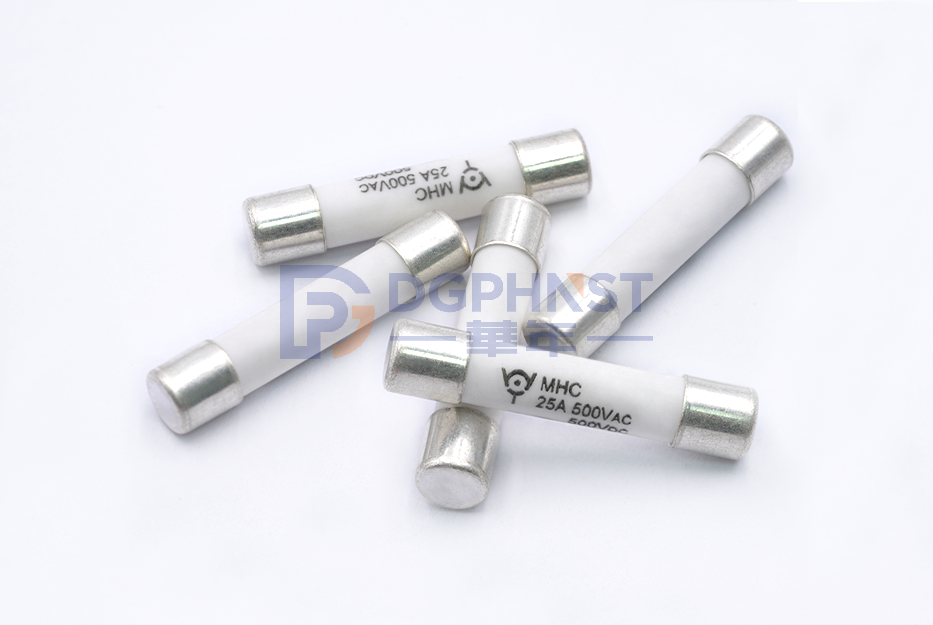
In disposable fuses, the higher the I ² T value, the slower the melting speed, rather than the faster. I ² T (Joule integral) is a key parameter for measuring the thermal energy required for a fuse to melt, representing the amount of pulse energy that the fuse can withstand during the melting process.
Simply put, the I ² T value reflects the anti pulse capability of a fuse. When overload or short-circuit current occurs in the circuit, the fuse needs to accumulate enough heat to melt. Fuses with higher I ² T values require longer time or greater energy to reach the melting point, so their melting response is relatively slow. This type of fuse is commonly used in circuits with normal surge currents (such as motor start-up and capacitive loads), which can avoid unnecessary false melting.
On the contrary, fuses with lower I ² T values are more sensitive to heat accumulation, can respond to overcurrent in a shorter time, and melt faster. This type of fuse is commonly used for precision circuits that require quick protection.
Therefore, when choosing a fuse, the I ² T value is a parameter that requires careful consideration. If there is a normal pulse current in the circuit, a fuse with a higher I ² T value should be selected to resist interference; If it is necessary to quickly cut off the fault, a fuse with a lower I ² T value is more suitable. Understanding the relationship between I ² T value and melting speed can help select appropriate protective components for different circuits, ensuring a balance between safety and reliability.
HNST WELCOME! 0755-23173910
English |中文

Cart
{{cartCount}}
你当前的浏览器版本过低或不支持。请升级或更换浏览器。推荐浏览器 Chrome Edge。