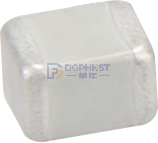
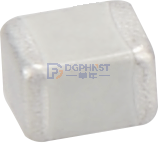
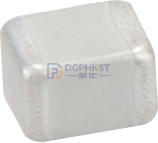
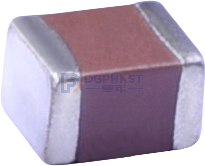
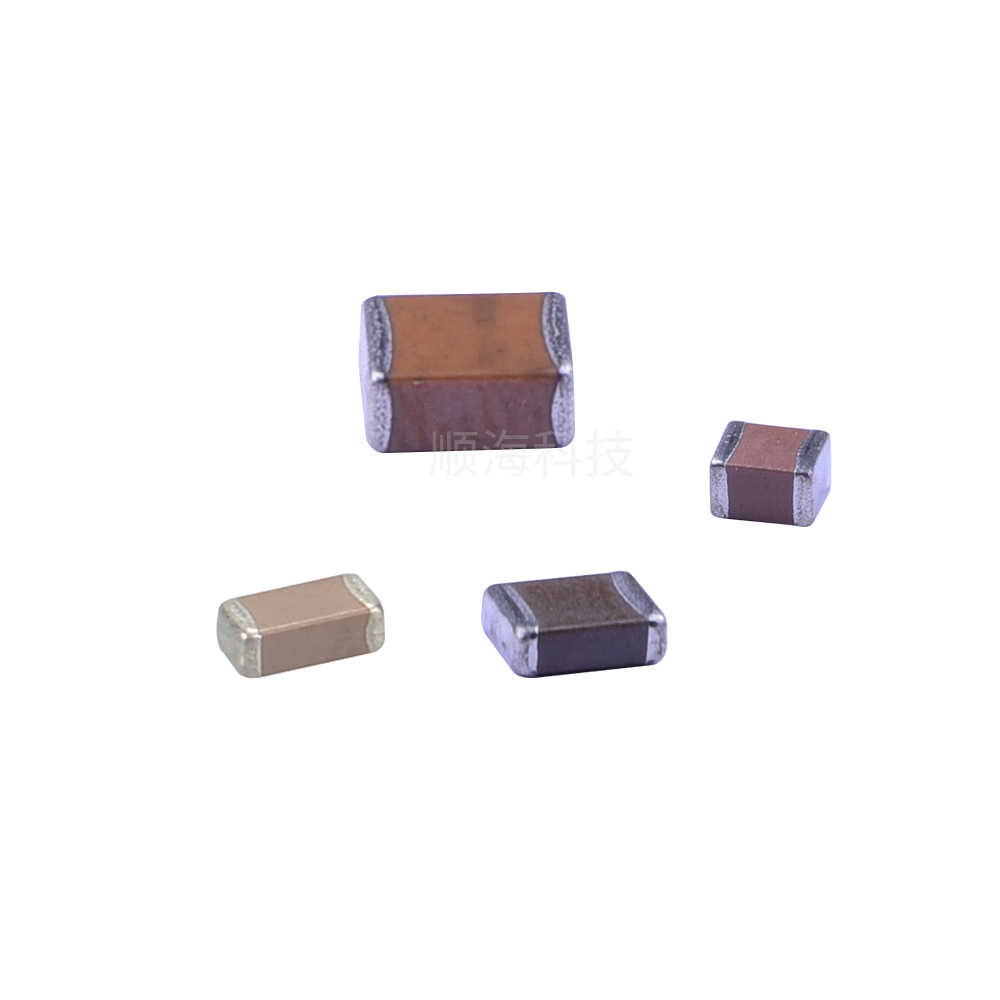
Deep analysis of X6S material for surface mount capacitors: characteristics, advantages, and application selection
Among numerous surface mount capacitor dielectric materials, X6S material occupies an important position in specific application fields due to its unique performance balance. This article will provide you with a clear overview of the key characteristics of X6S material for surface mount capacitors, helping you make more suitable choices in practical design.
Basic definition and core characteristics of X6S material
X6S is a Class II ceramic dielectric code defined according to EIA standards. Among them, "X" represents its lowest working temperature of -55 ℃, "6" represents its highest working temperature of+105 ℃, and "S" represents its capacity change rate within the range of reference temperature (usually 25 ℃) to the highest working temperature not exceeding ± 22%. This material is usually based on barium titanate based ceramics and achieves relatively stable temperature capacity characteristics through modification.
Compared with common X7R or X5R materials, the X6S material of surface mount capacitors has better capacity stability at high temperatures. Although its temperature range (-55 ℃ to+105 ℃) is slightly narrower than X7R (-55 ℃ to+125 ℃), its capacity decay is significantly smaller than X5R material at a high temperature of 105 ℃, making it an ideal choice for many medium temperature industrial applications.
Main electrical performance and application scenarios
Surface mount capacitors made of X6S material typically have a medium dielectric constant, which allows them to provide good volumetric efficiency while maintaining a moderate rate of capacitance change. Its capacity range is wide, commonly between 10nF and 2.2 μ F, suitable for circuits with non extreme DC bias characteristics but clear requirements for temperature stability.
In practical applications, surface mount capacitor X6S material products are commonly used in input and output filtering, decoupling, and signal coupling of power circuits. Especially in scenarios where the environmental temperature inside the electronic cabin of automobiles, industrial control boards, network communication equipment, etc. may be high but usually does not exceed 105 ℃, choosing X6S material can achieve a good balance between cost and performance. Compared to higher specification materials, X6S material surface mount capacitors provide a more cost-effective solution.
Selection considerations and brand considerations
When choosing the surface mount capacitor X6S, engineers need to pay close attention to its DC bias characteristics. Like all Class II ceramic capacitors, the actual capacity of X6S material capacitors will decrease after applying the rated DC voltage, which must be included in the calculation of high-voltage filtering design. Meanwhile, the characteristic of its capacitance varying with the amplitude of the AC signal also needs to be evaluated in precision circuits.
Many well-known brands in the market offer high-quality X6S material surface mount capacitors. Different brands of products have their own emphasis on craftsmanship, size specifications (such as 0402, 0603, 0805, etc.), rated voltage series, and capacity accuracy. It is recommended to refer to specific data manuals from multiple brands during the design phase, compare their DC bias loss curves and temperature characteristic charts, and make the final selection based on the actual operating voltage, ambient temperature, and capacity accuracy requirements of the circuit.
In summary, the X6S material of surface mount capacitors has become an important bridge between ordinary consumer and demanding industrial applications due to its reliable capacity stability in the temperature range of -55 ℃ to+105 ℃. Correctly understanding and applying this material is of great significance for improving the reliability and cost control of electronic products.
HNST WELCOME! 0755-23173910
English |中文

Cart
{{cartCount}}
你当前的浏览器版本过低或不支持。请升级或更换浏览器。推荐浏览器 Chrome Edge。