
The unit of resistance is ohms, abbreviated as ohms, with the symbol Ω. This name is in honor of the contributions of German physicist George Simon Ohm in the study of circuit theory.
In physical terms, when the voltage across a conductor is 1 volt and the current passing through it is 1 ampere, the resistance of the conductor is 1 ohm. This unit is one of the fundamental electrical units in the International System of Units. In practical applications, the magnitude of resistance varies greatly, so larger units such as kiloohms (k Ω, equal to 1000 Ω) and megaohms (M Ω, equal to 1000000 Ω) are often used to represent higher resistance. On the contrary, smaller resistances can be expressed in milliohms (m Ω).
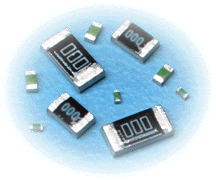
Understanding and correctly using the unit of resistance is crucial for circuit design, electronic equipment maintenance, and physics learning. Whether analyzing a simple circuit or configuring a complex electronic system, resistance value is an essential basic parameter. It can be said that the ohm unit is one of the fundamental tools for us to understand and control the application of electrical energy.