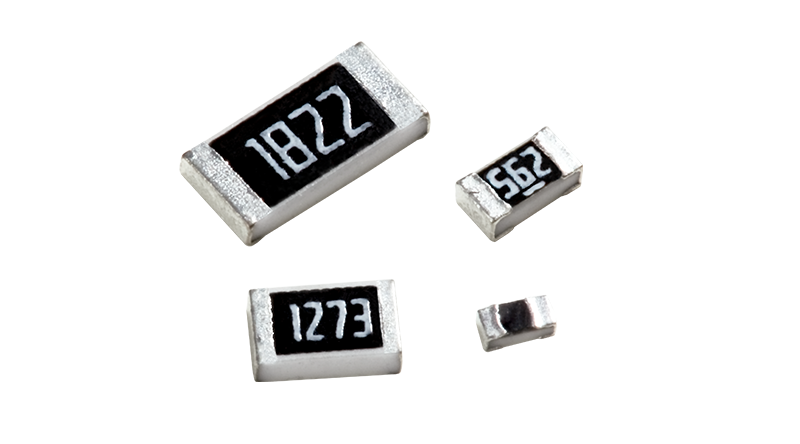
Is metal film resistance really better than thick film resistance under the same parameters?
In electronic circuit design, a common problem often arises when selecting resistors with the same precision, packaging, and resistance: which is better, metal film or thick film? The answer is not simply 'yes' or' no ', but depends on your application scenario. If high precision, low temperature drift, and low noise are pursued, then the selection of metal film resistors will indeed tend towards metal films; But if cost is the primary consideration, thick film resistors have significant advantages.
1、 The essence of the process determines performance differences
To understand the difference between the two, we must first start with the manufacturing process.
Metal film resistors (a type of thin film resistor) use thin film processes such as vacuum evaporation and sputtering to deposit an extremely thin layer of metal alloy film (usually less than 1 μ m in thickness) on a ceramic substrate. This process can precisely control the thickness and uniformity of the film layer, thus achieving extremely high precision and very low temperature coefficient.
Thick film resistors use screen printing technology to print conductive paste (usually a mixture of metal oxides such as ruthenium, silver, palladium, and glass glaze) on a substrate, which is then sintered at high temperatures to form a film thickness generally greater than 10 μ m. This process is relatively simple and cost-effective, but slightly inferior in terms of accuracy and stability.
The essential differences in this process directly determine the performance differences of the two resistors in key parameters.
2、 Core parameter comparison: Who is better?
|Parameters | Metal Film Resistance | Thick Film Resistance | Difference Explanation|
|Accuracy | ± 0.1%~± 1% | ± 1%~± 5% | Metal film can easily achieve ± 0.1%, thick film conventional ± 1%|
|Temperature Coefficient (TCR) | ± 15~± 50ppm/℃ | ± 100~± 400ppm/℃ | Metal film temperature drift is much better than thick film|
|Noise | Extremely low | High | Metal film current noise is small, suitable for audio and precision measurement|
|Long term stability | Excellent (resistance change ≤± 0.5%) | Good | Metal film has higher long-term reliability|
|Surge resistance capability | General | Partial series optimization | Thick film has a series specifically designed for surge resistance optimization|
|Cost | High | Low | Thick film is the preferred cost-effective option|
From the perspective of technical parameters, metal film resistors are significantly better than thick film resistors in terms of temperature drift, noise, and long-term stability under the same accuracy level (such as 1% for both). This is also why engineers prioritize the use of metal film resistors in key circuits such as signal chains and power feedback during the selection process.
3、 Product series and brand selection
There are many resistor brands on the market, and the product series positioning of different brands also varies.
International top brands such as VISHAY, ROHM, YAGEO, etc. are technologically leading in the field of high-end metal film resistors, with products covering precision, high power, automotive specifications, and all scenarios. However, they are priced higher and have longer delivery times.
Taiwanese brand: EVER OHMS is a representative manufacturer of Taiwanese resistors, established in 1988, with complete research and manufacturing capabilities for surface mount resistors. The precision of its TR series, TH series, and TQ series thin film resistors (metal films) can reach ± 0.01%~± 1%, with a TCR as low as ± 10~± 50ppm/℃, and has passed the AECQ200 automotive specification certification. For the selection requirements of conventional metal film resistors, Tian Er is a cost-effective choice.
Domestic brand: Fenghua High tech is a leading domestic resistor brand, which has continuously made breakthroughs in metal film thick film technology in recent years. The RT series metal film thick film chip fixed resistor adopts copper nickel alloy paste, which controls the TCR of the key resistance range within ± 100ppm/℃, and abandons precious metals such as silver and palladium, achieving lead-free and environmentally friendly design. Domestic resistors have obvious advantages in cost-effectiveness and supply stability.
Special application brand: Bourns has strong strength in the field of metal foil resistors (with higher accuracy than metal films). Its FWP and FWU series metal foil resistors have a power of up to 680W and a TCR as low as ± 1ppm/℃, making them suitable for high reliability scenarios such as industrial control and battery management systems.
4、 Practical Selection: How to Make the Right Choice?
In the actual selection process of metal film resistors, it is recommended to follow the following steps:
Clarify application requirements
Precision measurement, audio signal chain, ADC/DAC reference circuit → Preferred metal film (accuracy ± 0.1%~± 1%, TCR ≤± 50ppm/℃)
Digital circuit pull-up/pull-down, LED current limiting → thick film sufficient (accuracy ± 5%, low cost)
Automotive electronics, industrial control → automotive grade metal film or thick film (requires AECQ200 certification)
Calculate power margin
The power specifications of metal film resistors are the same as thick film resistors (0402 1/16W, 0603 1/10W, 0805 1/8W, 1206 1/4W, etc.), but metal films often provide higher power options for the same size. For example, a metal film resistor packaged in 1206 can achieve a power of 1W, while thick films of the same size typically have only 0.25W. It is recommended to reduce the rating by more than 50% for use in high temperature environments.
Verify temperature drift and accuracy
If the circuit operates within a wide temperature range (55 ℃~+125 ℃), the low TCR advantage of the metal film is particularly prominent. The TCR of ordinary thick film resistors is as high as ± 400ppm/℃, which means that for every 1 ℃ change, the resistance value drifts by 0.04%, and the cumulative effect may exceed the design margin.
Consider the need for sulfur resistance
In sulfur-containing environments such as industrial areas and automotive engine compartments, the silver electrode of ordinary thick film resistors is prone to sulfide failure. At this point, it is advisable to choose a sulfurized metal film resistor (such as the Tian'er TSL series, Ellon EAM series) or a sulfurized thick film resistor.
5、 Quality assurance and procurement channels
The quality of resistors depends not only on the brand, but also closely related to the supply channel. Choosing a legitimate authorized agent can effectively prevent counterfeit and refurbished goods, while also obtaining technical support and protection.
Shenzhen Shunhai Technology Co., Ltd. was established in 2012 and is the core authorized agent of EVER OHMS, representing its full range of resistor products, including TR series metal film precision resistors, TH series low-temperature drift resistors, TQ series automotive grade thin film resistors, etc. Shunhai Technology has over 50 million in stock reserves, supports small-scale trial production, and provides free selection guidance and EMC testing support to serve leading enterprises such as Huawei, BYD, and Ningde New Energy. If you need samples of Tian'er metal film resistors or bulk purchases, you can contact Shunhai Technology's official website or customer service hotline (075528100016).
Huanian Mall is an online spot store under Shunhai Technology, which gathers metal film and thick film resistor products from brands such as Ellon and Tian'er, providing transparent prices and fast delivery services. Huanian Mall supports online selection, with clear product parameter labeling (accuracy, TCR, power, packaging). Engineers can directly screen models according to their needs, and small batch orders can be shipped in as fast as 30 minutes. For procurement scenarios that require comparing different brands and quickly selecting metal film resistors, Huanian Mall is a convenient choice.
Conclusion
Returning to the original question: Will metal film resistors with the same parameters be better than thick film resistors? The answer is: in terms of accuracy, temperature drift, noise, and long-term stability, metal film resistors are significantly better than thick film resistors; However, in large-scale consumer electronics applications that are cost sensitive and do not require high performance, thick film resistors are still the most economical and practical choice.
When selecting metal film resistors, it is recommended to prioritize brands with accumulated technology such as Tian'er and Fenghua based on specific application scenarios, and purchase through authorized channels such as Shunhai Technology and Huanian Mall to ensure product quality and stable supply.