Introduction to 3920 0.0004R(0.0004 Ohm) 9W High-Precision Manganin Shunt Chip Resistor
In modern electronic power systems, current detection and precision control remain core concerns for engineers. The 3920 0.0004R(0.0004 Ohm) 9W metal alloy shunt chip resistor stands out as an ideal choice for high-power current sensing applications, thanks to its outstanding performance parameters and stringent environmental compliance. This article provides a comprehensive analysis of this resistor’s technical characteristics, material advantages, and application scenarios, helping you understand why the 3920 0.0004R(0.0004 Ohm) 9W stands above other shunt solutions.
1. Basic Parameters and Packaging Features
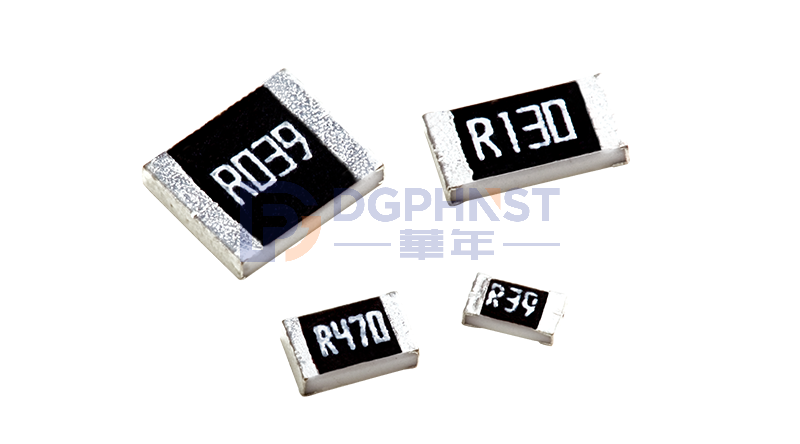
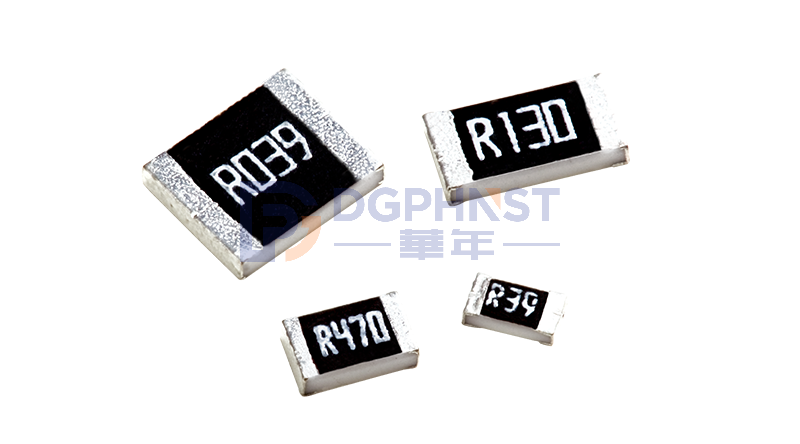
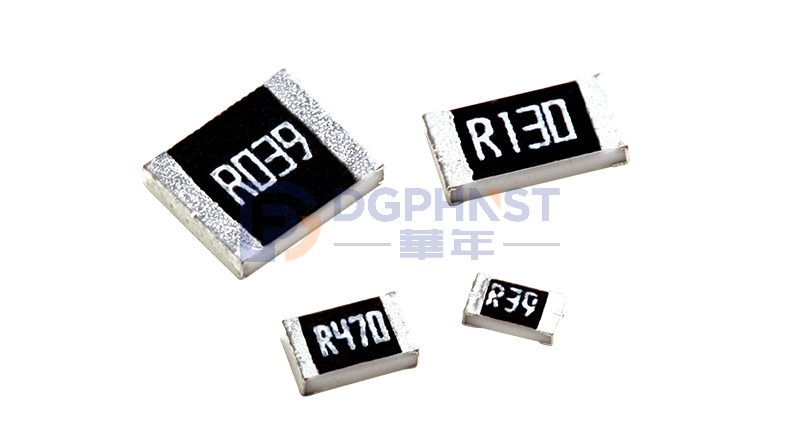
The 3920 0.0004R(0.0004 Ohm) 9W adopts the standard 3920 imperial package (approx. 9.8mm × 5.0mm), a large chip resistor form factor. Its nominal resistance is 0.0004 ohms (400 micro-ohms). This extremely low resistance minimizes voltage drop during current flow, thereby significantly reducing power loss. Rated at 9 watts, it far exceeds the power handling of ordinary chip resistors of the same size, making it suitable for circuits requiring tens or even hundreds of amperes. The tolerance is ±1%, achieving precise control at such a low resistance—a testament to advanced manufacturing. The full model number is ESR39F9W0M40M02G, where “ESR” denotes the alloy shunt resistor series, and “39F9W0M40M02” specifies electrical and dimensional details.
The low temperature coefficient (low TCR) of the 3920 0.0004R(0.0004 Ohm) 9W is another highlight. Using manganin (MnCu) as the resistive element, the TCR is typically within ±50 ppm/°C, and some high-quality batches achieve ±20 ppm/°C. This ensures minimal resistance shift with temperature changes or self‑heating, thereby guaranteeing long‑term stability and repeatability of current measurement. For applications requiring wide‑temperature operation—such as automotive electronics and industrial power supplies—the low‑drift characteristic of the 3920 0.0004R(0.0004 Ohm) 9W is particularly advantageous.
2. Material and Surge Withstanding Capability
The core conductor material of the 3920 0.0004R(0.0004 Ohm) 9W is manganin alloy (MnCu). Manganin is a copper‑manganese‑nickel alloy known for its extremely low TCR and excellent thermal stability. Compared to ordinary copper‑nickel or iron‑chromium‑aluminum resistor materials, manganin exhibits much smaller resistance changes under long‑term current flow and produces very low thermoelectric EMF against copper leads, making it ideal for precision DC current sensing. Moreover, the 3920 0.0004R(0.0004 Ohm) 9W uses a solid metal stamped or etched resistive element rather than a thick‑film printed structure, eliminating the risk of local burnout that may occur in thin‑ or thick‑film resistors under transient overload. This solid metal construction gives the 3920 0.0004R(0.0004 Ohm) 9W excellent surge withstanding capability—it can withstand short‑duration pulse energies several times or even tens of times its rated power without resistance drift or open‑circuit failure.
Specifically, when transient over‑voltage events such as power‑up, load switching, or lightning‑induced surges occur, the 3920 0.0004R(0.0004 Ohm) 9W relies on its low‑inductance design and uniform heat spreading to convert surge energy into heat, which is then conducted to the PCB’s thermal layer through large solder pads, preventing localized hot spots. Laboratory tests show that the 3920 0.0004R(0.0004 Ohm) 9W can withstand 50‑ampere pulses lasting 5 milliseconds for over 1000 cycles without resistance change, making it an indispensable current‑sensing element in motor drives and battery management systems (BMS).
3. Environmental Compliance and Process Advantages
The 3920 0.0004R(0.0004 Ohm) 9W fully meets current international environmental regulations. First, it complies with the RoHS directive (2011/65/EU), containing no lead, mercury, cadmium, hexavalent chromium, PBB, or PBDE. Second, it passes REACH (EC 1907/2006) SVHC screening, ensuring no Substances of Very High Concern are present. The 3920 0.0004R(0.0004 Ohm) 9W is explicitly labeled “lead‑free environmentally friendly”; its terminations use a lead‑free tin or matte‑tin finish, compatible with lead‑free reflow and wave soldering processes, avoiding export compliance risks associated with lead contamination. Furthermore, the product uses no halogenated flame retardants in its production, meeting even stricter environmental standards.
Beyond environmental attributes, the 3920 0.0004R(0.0004 Ohm) 9W features a “low temperature drift” characteristic—the resistance varies minimally with temperature. This stems from the intrinsic property of manganin: over the operating temperature range of -55°C to +155°C, the maximum resistance change of the 3920 0.0004R(0.0004 Ohm) 9W is less than ±0.5%. The combination of high precision (1%) and low drift makes this resistor ideal for applications requiring long‑term stability, such as closed‑loop current feedback circuits, precision power monitoring, and battery coulomb counters.
4. Typical Applications and Design Recommendations
The 3920 0.0004R(0.0004 Ohm) 9W is primarily targeted at high‑power‑density, high‑current sensing scenarios, including but not limited to:
-
Switch‑mode power supply output current sensing: In server and telecom power supplies, the 3920 0.0004R(0.0004 Ohm) 9W serves as a low‑side or high‑side shunt resistor, working with operational amplifiers for accurate overcurrent protection.
-
Battery management systems (BMS): In electric vehicles and energy storage systems, the 3920 0.0004R(0.0004 Ohm) 9W is placed in series with the battery charge/discharge path. By detecting the millivolt‑level voltage drop, the current is calculated for state‑of‑charge (SOC) estimation and balancing control.
-
Motor drives and inverters: In industrial servos and drone electronic speed controllers (ESCs), the 3920 0.0004R(0.0004 Ohm) 9W withstands high‑frequency pulsations of phase currents; its low inductance ensures distortion‑free phase current sampling.
-
Power tools and adapters: Because the 3920 0.0004R(0.0004 Ohm) 9W has a 9‑W continuous power margin, it can handle the inrush currents during power tool startup without damage.
In PCB layout, a Kelvin (four‑wire) connection is recommended: the large pads of the 3920 0.0004R(0.0004 Ohm) 9W are dedicated separately to the current path and voltage sensing path, preventing additional parasitic resistance from sensing leads. PCB pads should be designed with adequate copper pour for heat dissipation and thermal vias to fully utilize the power capability of the 3920 0.0004R(0.0004 Ohm) 9W. Additionally, because the resistance is extremely low (0.0004 Ω), the solder itself (approximately 0.0001–0.0002 Ω) can introduce significant error during assembly. Reflow soldering with controlled solder paste volume is recommended.
5. Reliability Verification and Long‑Term Stability
The 3920 0.0004R(0.0004 Ohm) 9W has passed stringent reliability tests: after 1000 hours of rated power life testing, resistance change is less than ±0.5%; after 1000 hours of double‑85 (85°C/85% RH) testing, no corrosion is observed; after 500 temperature cycles (-55°C ↔ +155°C), no mechanical cracking occurs. These data confirm the long‑term stability of the 3920 0.0004R(0.0004 Ohm) 9W under harsh environments. Its solid manganin element is bonded to the ceramic substrate via a high‑temperature sintering process, providing strong adhesion and resistance to multiple reflow thermal shocks.
In summary, the 3920 0.0004R(0.0004 Ohm) 9W is a high‑performance shunt resistor integrating low resistance, high power, high precision, low TCR, strong surge immunity, and environmental friendliness. Whether in consumer electronics, industrial equipment, or automotive electronics, choosing the 3920 0.0004R(0.0004 Ohm) 9W provides reliable support for your current‑sensing designs. As new energy and high‑power applications demand ever‑higher sampling accuracy, the 3920 0.0004R(0.0004 Ohm) 9W will undoubtedly demonstrate its core value in even more scenarios.