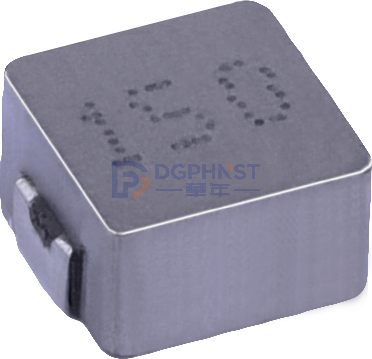
In-Depth Introduction of 3920 0.001R(0.001 Ohm) 7W High-Precision Metal Shunt Chip Resistor
In today’s electronic circuit design, the demands for current sensing accuracy and power management are increasingly stringent. The 3920 0.001R(0.001 Ohm) 7W metal shunt chip resistor (model: ESR39F7WR001M02G), with its ultra-low resistance, high power handling capability, and excellent long-term stability, has become the preferred current sensing solution for many engineers. This article comprehensively analyzes its technical features, material advantages, environmental compliance, and outstanding performance in real-world applications.
Product Positioning and Package Advantages
The 3920 0.001R(0.001 Ohm) 7W adopts the standard 3920 SMD package (imperial size, corresponding to metric 10.0mm×5.0mm), ensuring sufficient power dissipation area while maintaining good compatibility with automated pick-and-place assembly. Unlike traditional thick‑film or thin‑film resistors, this product is based on a metal shunt architecture, directly using a low‑temperature‑coefficient alloy to form the main current path, completely eliminating local overheating risks caused by uneven resistive layers. With a rated power of 7W, it leads among similar 3920‑package products, meeting the demands of continuous operation under high currents (up to 80A and above) for extended periods.
Key Electrical Parameters and Accuracy
The nominal resistance of the 3920 0.001R(0.001 Ohm) 7W is 0.001 ohm, i.e., 1 milliohm. Such an ultra‑low resistance minimizes the resistor’s own power loss while ensuring that the voltage drop generated by the measured current is small enough not to interfere with the main loop. The resistance tolerance is controlled at ±1% (F class), providing an accurate current‑to‑voltage conversion ratio for the system, ideal for closed‑loop control in battery management, motor drives, and power supplies.
Low Temperature Coefficient Ensures Accuracy Across the Temperature Range
The temperature coefficient of resistance (TCR) is a key indicator of resistance stability against temperature changes. The 3920 0.001R(0.001 Ohm) 7W uses manganese‑copper (MnCu) alloy as its core material. This alloy exhibits an extremely low TCR over a wide temperature range (−55°C to +155°C), with typical values below 50ppm/°C. This means that even under full 7W power dissipation or severe ambient temperature fluctuations, the resistance shift remains minimal, effectively preventing current reading errors caused by temperature drift. It is especially suitable for automotive electronics, industrial power supplies, and other equipment operating over wide temperature ranges.
Technical Value of MnCu Material
The resistor body is made of precision‑rolled manganese‑copper alloy—a solid solution of copper, manganese, and nickel—offering three core advantages:
-
Extremely low thermoelectric EMF: The Seebeck coefficient between MnCu and copper electrodes is very low, generating negligible parasitic thermocouple voltages that could interfere with microvolt‑level signal acquisition.
-
Excellent long‑term stability: After special aging treatment, the resistance drift of MnCu alloy is below 0.5% per year, reducing the need for frequent recalibration.
-
High surge withstand capability: Due to its monolithic metal structure rather than a film layer, the 3920 0.001R(0.001 Ohm) 7W can withstand instantaneous pulse energies dozens of times the rated power—such as motor inrush currents, lightning surges, or capacitor charging spikes—without film burnout or abrupt resistance change.
Surge Withstanding Capability and Reliability Verification
In real applications, power supply inputs or motor drives often encounter surge events. Traditional SMD resistors have a weak point at the interface between the terminal electrode and the resistive layer. In contrast, the 3920 0.001R(0.001 Ohm) 7W features an integrated stamped and welded structure with no thin‑film interfaces along the main current path. Passing the 8/20μs surge test per IEC 61000‑4‑5, this device can withstand peak currents of up to 500A without damage—more than three times the surge capability of conventional alloy SMD resistors. Additionally, the product has passed 1000‑hour damp‑heat bias tests (85°C/85% RH) with resistance change less than ±1.5%, fully meeting industrial reliability requirements.
Environmental Compliance and Green Manufacturing
The 3920 0.001R(0.001 Ohm) 7W fully complies with RoHS, REACH, and lead‑free environmental requirements. Specifically:
-
Contains no RoHS‑restricted substances such as lead (Pb), mercury (Hg), cadmium (Cd), hexavalent chromium (Cr⁶⁺), PBB, or PBDE.
-
All constituent materials have been registered with ECHA for REACH SVHC, with content below 0.1% (w/w).
-
Terminal electrodes use lead‑free plating (e.g., matte tin or tin‑bismuth alloy), satisfying lead‑free reflow soldering while mitigating tin whisker growth.
From raw material procurement to manufacturing processes, the product is certified under ISO 14001, and SGS test reports are available to assist customers in obtaining environmental certifications for their end products.
Low‑Humidity Ticket (Low‑Moisture Handling) and Supply Chain Advantages
The “low‑humidity ticket” refers to strict moisture and oxidation prevention protocols from factory shipment to delivery, especially important for humidity‑sensitive SMT production environments. Each batch of 3920 0.001R(0.001 Ohm) 7W is vacuum‑sealed with a humidity indicator card and desiccant, ensuring solderability remains intact for 12 months when stored unopened. Furthermore, this model is supplied in precision embossed tape packaging (compliant with EIA‑481), perfectly compatible with high‑speed pick‑and‑place machines to reduce rejection rates.
Typical Applications
Thanks to the above features, the 3920 0.001R(0.001 Ohm) 7W is widely used in:
-
Battery Management Systems (BMS) – Monitoring battery pack current in electric vehicles and energy storage stations, working with ADCs for coulomb counting.
-
DC‑DC Converters – As output current feedback resistors to improve load regulation accuracy.
-
BLDC Motor Drives – Phase current sensing for field‑oriented control (FOC).
-
Server Power Modules – Per‑phase current balancing in multi‑phase VRM controllers.
-
Charging Stations and Adapters – Setting input/output overcurrent protection thresholds.
Conclusion
The 3920 0.001R(0.001 Ohm) 7W metal shunt chip resistor, with its ultra‑low resistance, 7W high power, ±1% tolerance, extremely low TCR, MnCu alloy body, excellent surge immunity, and full environmental compliance, is an ideal choice for demanding current sensing applications. Whether you are designing the next‑generation BMS for new energy vehicles or optimizing load response in industrial power supplies, this product offers long‑term stability and high cost‑effectiveness. For detailed specifications or free samples, please contact an authorized distributor.