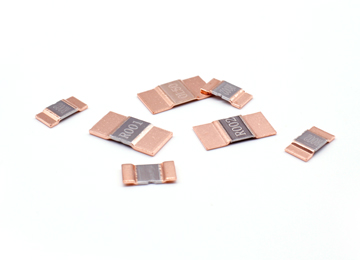
ESR25F6WR001M04G: Comprehensive Analysis of High-Performance 2512 0.001R(1m Ohm) 6W Metal Shunt Chip Resistor
In the field of precision electronic measurement and high-current sensing, the performance of resistive components directly determines system stability and reliability. This article focuses on the ESR25F6WR001M04G metal shunt chip resistor, which features a package size of 2512 0.001R(1m Ohm) 6W, ±1% tolerance, high-quality MnCu (manganese-copper) alloy material, and full compliance with RoHS, REACH, and lead-free environmental requirements. With its low temperature coefficient of resistance (TCR), high accuracy, and excellent surge withstand capability, this resistor has become an ideal choice for power management, battery protection, motor drive, and many other applications. The following sections provide a detailed analysis from five perspectives: technical parameters, material characteristics, environmental compliance, application advantages, and usage recommendations.
1. Core Technical Parameters and Package Advantages
The 2512 0.001R(1m Ohm) 6W resistor has a nominal resistance of 0.001 ohm (1 milliohm), a rated power of up to 6 watts, and a standard 2512 package size (metric 6432: 6.4mm × 3.2mm). Achieving 6W power dissipation in such a compact footprint is made possible by its metal shunt structure. This design increases the internal heat‑conducting cross‑section and optimizes electrode layout, allowing heat to be transferred quickly from the resistor body to the PCB copper foil, thereby effectively reducing temperature rise. The ±1% tolerance ensures that current‑sensing errors are kept within ±1%, which is critical for systems requiring high dynamic response and control precision (e.g., server VRMs, automotive DC‑DC converters). Additionally, the operating temperature range typically spans -55℃ to +170℃, making it suitable for harsh industrial environments.
2. MnCu Material and Low TCR Characteristics
The core material of ESR25F6WR001M04G is manganese‑copper (MnCu) alloy. MnCu is a classic material for precision resistors, renowned for its extremely low TCR, generally reaching ±50 ppm/℃ or lower. This means that even with significant ambient temperature variations, the resistance value of the 2512 0.001R(1m Ohm) 6W changes very little, ensuring long‑term stability of current sensing. Compared to conventional thick‑film resistors (which typically have TCR of ±200 to ±500 ppm/℃), the MnCu‑based shunt resistor exhibits clear accuracy advantages under temperature fluctuations. Moreover, MnCu offers good solderability and corrosion resistance, maintaining electrical performance in humid or sulfur‑containing environments. The low TCR directly translates into lower system calibration costs, especially for products that operate over a wide temperature range, such as power tools and drones.
3. Surge Withstand Capability and Reliability Design
Electronic systems often face surge current shocks, such as hot‑plugging of power supplies, switching of inductive loads, or lightning‑induced transients. Ordinary resistors may suffer from burnt film layers or resistance drift under such instantaneous high currents. In contrast, the 2512 0.001R(1m Ohm) 6W, with its bulk MnCu metal structure (no brittle conductive glass layer like thick‑film resistors), can withstand extremely high transient energy uniformly across its metal body. Experimental data shows that this resistor can endure surge currents of several hundred amperes peak without open‑circuit failure or significant resistance shift. This excellent surge immunity makes it the preferred sensing element for power battery protection boards (BMS), charging pile shunts, and industrial inverters. Together with the 6W continuous power rating, the resistor exhibits outstanding robustness under overload conditions, greatly reducing system failure rates.
4. Environmental Compliance and Manufacturing Process
As environmental requirements become increasingly stringent in global electronics manufacturing, the ESR25F6WR001M04G has passed RoHS certification, ensuring that harmful substances such as lead (Pb), mercury, cadmium, and hexavalent chromium are below the limit values in all homogeneous materials. It also complies with REACH regulation (EC 1907/2006), containing no Substances of Very High Concern (SVHC) above 0.1% by weight. The product adopts a lead‑free process, with electrode plating of pure or matte tin, compatible with high‑temperature lead‑free reflow soldering. Additionally, the manufacturing process follows green principles, using no conflict minerals, and the entire supply chain from raw material to finished product is traceable. By choosing the 2512 0.001R(1m Ohm) 6W, companies can easily meet the environmental access requirements for exporting to European and American markets, avoiding the risks of returns or fines due to non‑compliance.
5. Typical Applications and Design Recommendations
Leveraging the four major advantages of low resistance, high power, low TCR, and strong surge immunity, the 2512 0.001R(1m Ohm) 6W is widely used in the following fields:
-
Battery Management Systems (BMS): Connected in series with the negative terminal of the battery pack, the voltage drop across this milliohm‑level resistor is used to calculate charge/discharge current, enabling overcurrent protection and state‑of‑charge (SOC) estimation.
-
DC‑DC Converters: Acts as a current‑sensing element, feeding back load current to the control IC for constant‑current or current‑limiting regulation.
-
Motor Drivers: Used for phase current sampling, cooperating with MCUs to implement field‑oriented control (FOC) algorithms.
-
Power Supply Modules: Provides output short‑circuit protection and current‑sharing control.
Design considerations: PCB pads should follow the recommended dimensions in the datasheet, and increased copper area should be added for heat dissipation. A Kelvin connection eliminates additional errors caused by lead resistance. The maximum rated power should be derated according to the ambient temperature; when operating above 100℃, it is advisable to derate to 80% of the rated value. Furthermore, the reflow soldering profile should comply with lead‑free process standards (peak 260℃ ±5℃), and repeated soldering cycles should be avoided to prevent internal stress changes.
6. Conclusion
In summary, the ESR25F6WR001M04G 2512 0.001R(1m Ohm) 6W metal shunt chip resistor, featuring MnCu material for low TCR and high accuracy, a bulk metal structure for excellent surge withstand capability, and full compliance with RoHS, REACH, and lead‑free environmental standards, is a high‑quality component for high‑performance current‑sensing scenarios. Whether it is fast‑charging protocol identification in consumer electronics or high‑current monitoring in industrial equipment, this product provides long‑term reliable, stable, and accurate measurement assurance. For designers pursuing high power density, strict environmental requirements, and low temperature coefficient, this resistor is undoubtedly an ideal choice.