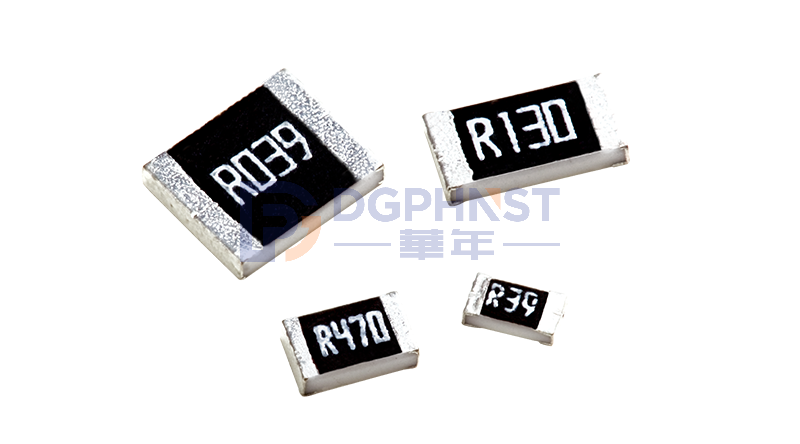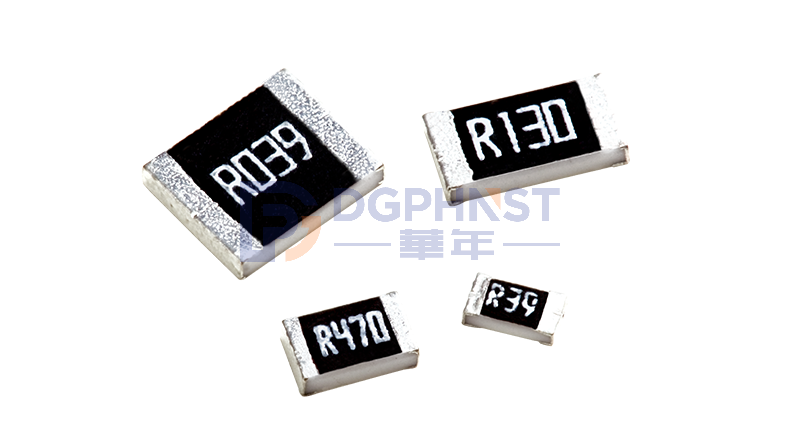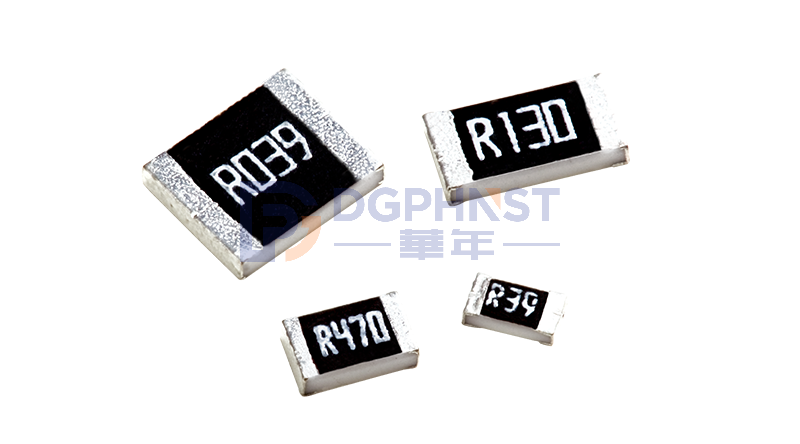
Chip resistors we commonly refer to mainly include thick-film chip resistors and thin-film resistors.
Thick-film and thin-film types are classified by raw materials and manufacturing processes. A resistor can be both thick-film and chip-style, fabricated via thick-film screen printing technology, which is also applied to manufacture thick-film hybrid circuits. Meanwhile, chip resistors can also be produced using thin-film processes.
Structural Diagram of Thick-Film Chip Resistor
Alloy resistors have vastly different performance characteristics from thick-film resistors. Using alloy conductors as current-carrying media, alloy resistors feature low resistance values, high precision, low temperature coefficient of resistance (TCR), strong impulse current resistance and high power capacity. They are widely deployed in various electronic products, primarily for circuit applications such as current sensing and short-circuit protection.
Most mainstream alloy resistors on the market adopt chip packaging. Their substrates are mainly copper, blended with other metals to form alloys like constantan and manganin. High-precision alloy resistors mostly adopt nickel-based high-temperature alloys. The core merits of alloys for high-precision resistors are ultra-low TCR and copper thermoelectromotive force, delivering outstanding resistance stability and overall reliability.
Structural Diagram of Alloy Chip Resistor
So what are the differences between thick-film resistors and alloy resistors?
1. Raw Materials
The two adopt different substrate materials, leading to distinct performance gaps. The alloys used in precision alloy resistors deliver far superior heat resistance and stability compared to standard resistors. Conventional thick-film resistors typically offer tolerances of ±10%, ±5% and ±1%, while precision alloy resistors can reach ±0.1% tolerance or better, with minimal resistance deviation across operating temperature ranges.
2. Manufacturing Processes
Thick-film resistors are produced by screen printing; thin-film resistors rely on coating techniques such as vacuum evaporation and magnetron sputtering. Both achieve far lower standard precision than alloy resistors.
3. Market Cost & Pricing
Special alloy raw materials for precision alloy resistors incur higher costs, resulting in higher overall selling prices than standard thick-film resistors.
4. Application Scenarios
Benefiting from core strengths of high precision and high reliability, alloy resistors are extensively matched to high-end sectors including military equipment, intelligent industrial control devices, precision instruments and avionics. Standard thick-film resistors stand out for cost performance, widely used in household appliances and general consumer electronics.
How to Distinguish Alloy Chip Resistors from Thick-Film Chip Resistors
1. Appearance & Color
Thick-film chip resistors are built on ceramic substrates, with protective coating printed only on the top surface. The side and bottom surfaces reveal the natural ceramic color, usually white or off-white. Alloy chip resistors have no ceramic substrate support; the entire resistive core is fully encapsulated in epoxy resin, presenting a solid black appearance except for the two metal terminal ends.
2. Bending Performance Test
Constructed on brittle ceramic substrates, thick-film chip resistors break easily under bending stress. Alloy chip resistors are composed of ductile metallic alloy resistive bodies; they merely deform when bent without cracking or breaking.
Thick-film Resistor
Alloy Resistor
Closing Remarks
Thick-film and alloy chip resistors each have respective advantages and disadvantages in substrate material, production process, precision and cost, fitting completely separate application fields. Complex testing equipment is unnecessary for routine incoming quality inspection — quick identification can be completed via two simple steps: checking base color and gentle bending test. Selecting components matching actual demands to balance cost and equipment performance is the core principle.