Global Market Trends for Passive Components (2020–2025)
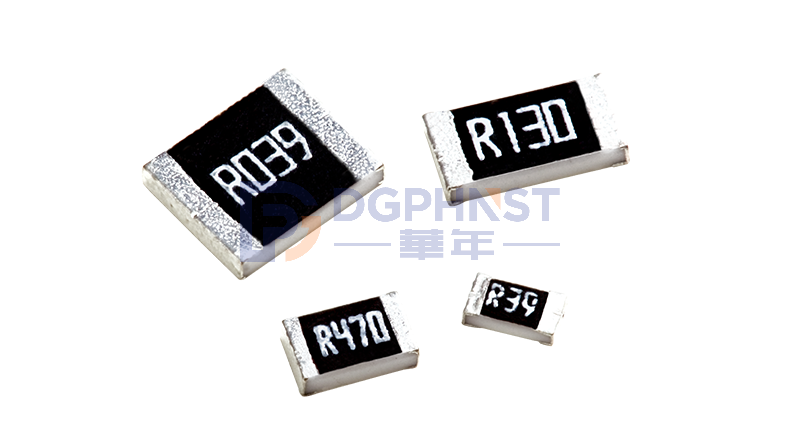
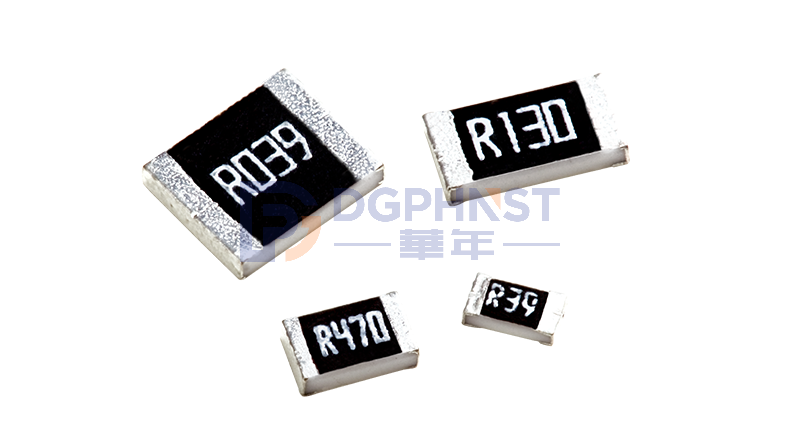
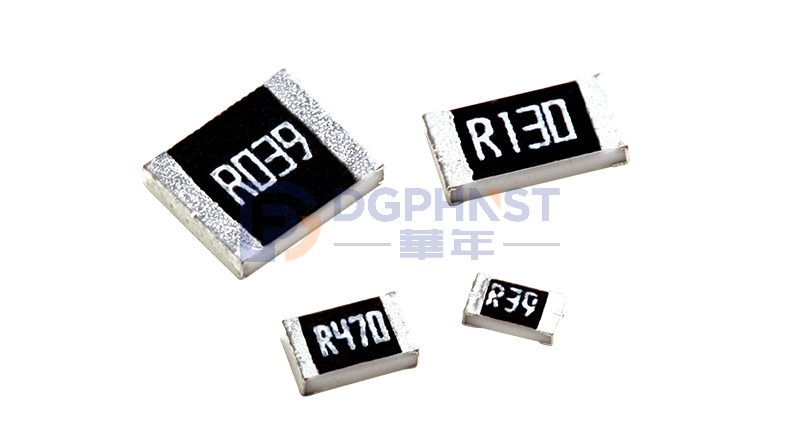
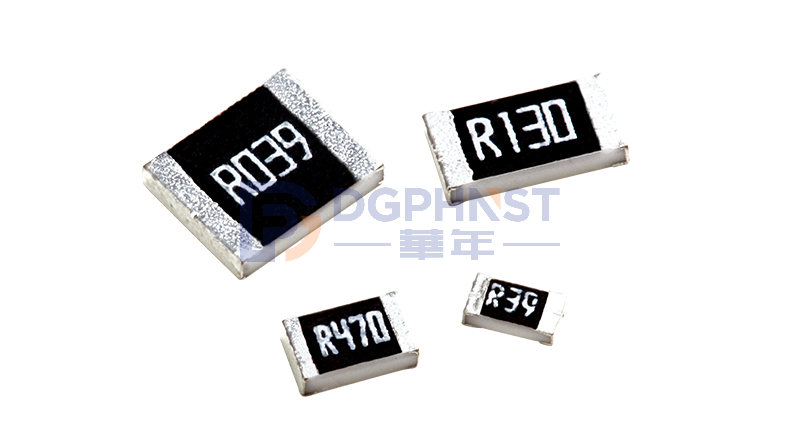
Global market statistics for passive components from 2020 to 2025 clearly reveal steady industry expansion for five consecutive years, with a compound annual growth rate (CAGR) of 8.1% affirming the long-term upward expansion trend. Currently, technological innovation is accelerating at a rapid pace, with miniaturization, high-frequency & high-power performance, automotive-grade high reliability, and integrated modularization forming the four core pillars of product iteration. A large cohort of domestic manufacturers is ramping up efforts to achieve leapfrog progress in both technology and market presence.
Four Core Evolution Pillars of Passive Components
1. Downsizing and Miniaturization
Driven by the trend of slimmer and lighter consumer electronics, miniaturization has become an indispensable competitive battlefield across the sector.
In the MLCC segment, leading Japanese manufacturers have achieved stable mass production of ultra-miniature specifications including 0201 and 01005. Domestic enterprises are catching up rapidly: by mastering ultra-thin dielectric layer technology and enabling stacking of over a thousand layers, they have secured independent mass-production capacity for all mainstream full-size specifications. Meanwhile, chip inductors adopt innovative magnetic materials to adapt to high-frequency communications, while thin-film resistors leverage nanoscale processes to drastically optimize temperature coefficient of resistance (TCR). The localization rate across the entire industrial chain is rising steadily.
2. High Frequency and High Power
The explosive rollout of AI servers and high-performance computing (HPC) equipment has triggered surging demand for high-capacitance, high-voltage MLCCs and high-power inductors. Inductor technology is shifting from traditional ferrite materials to metal soft magnetic powder molded processes, which boost saturation current and cut power loss.
For instance, NVIDIA’s newly launched coupled inductors feature optimized dedicated magnetic flux paths, delivering an ultra-compact footprint and exceptional energy efficiency. This effectively addresses two critical pain points of high-density AI servers: limited power supply space and insufficient power conversion efficiency.
3. High Reliability and Automotive-Grade Compliance
New energy vehicles (NEVs) and intelligent driving serve as the industry’s second major growth engine. Stringent automotive qualification standards such as AEC-Q impose extremely high requirements on component stability and service life under extreme operating conditions.
This high threshold has swiftly weeded out numerous small, low-tier manufacturers with weak capabilities. Enterprises holding full automotive certifications and stable mass-production capacity gain pricing leverage, boasting fatter profit margins and more consistent order books. The automotive segment boasts distinct competitive moats, with leading players widening their advantages year by year, making it a pivotal breakthrough arena for premium domestic manufacturers.
4. Integration and Modularization
As circuit architectures grow increasingly complex and internal device space remains constrained, discrete standalone components can no longer meet compact design requirements. Resistor-capacitor composite units and multi-functional passive integrated modules are seeing rapid adoption. They reduce surface-mount placement points, streamline production workflows and lower manufacturing costs. Additionally, they shorten circuit traces, suppress signal interference, and comprehensively elevate the electrical performance of end devices. Modular solutions are penetrating diverse scenarios spanning consumer electronics, industrial control, and computing infrastructure.
Four Core Growth Drivers
1. Comprehensive AI Empowerment for Component Innovation
Passive components are evolving beyond basic passive hardware toward intelligent hardware with self-learning capabilities, spawning brand-new application models including contextual sensing and real-time measurement. Hardware intelligence unlocks unprecedented upside for product added value.
2. Dual Growth Engines: New Energy Vehicles + AI Computing
Two trillion-scale markets are booming simultaneously. NEVs drive demand for high-voltage connectors, automotive power devices, and in-vehicle passive components. AI computing servers generate massive orders for high-power inductors, high-speed optical modules, and high-voltage MLCCs. This dual demand cushions cyclical volatility inherent to any single industry.
3. Fundamental Shift in Domestic Substitution Dynamics
Early localization relied heavily on policy subsidies; today, top downstream OEMs actively shore up supply chain security by prioritizing domestic suppliers. End giants including BYD, Huawei, and Xiaomi proactively adopt local passive components. Automotive-grade products carry lengthy certification cycles and steep entry barriers; once partnerships are established, customer stickiness remains robust, locking in long-term order pipelines.
4. Strategic Upgrade of Supply Chain Layout
Amid persistent global supply chain volatility, dual-sourcing and joint domestic-overseas manufacturing facilities have become standard practice for industry leaders. Mature domestic industrial clusters have taken shape, with the Yangtze River Delta, Pearl River Delta, and Chengdu-Chongqing region forming three distinct component manufacturing hubs with differentiated strengths. Regional collaboration strengthens the completeness of the local industrial supporting ecosystem.
2026 Industrial Chain Analysis for Passive Components (Upstream, Midstream, Downstream)
1. Upstream Raw Material Supply
Key upstream inputs for passive components are metals, ceramics, and plastics. Raw material quality and pricing directly determine component performance and production costs. In 2026, stricter environmental regulations will phase out high-energy, high-pollution conventional ceramics in favor of eco-friendly advanced ceramic alternatives. Price swings for metals and other feedstocks will directly inflate manufacturing expenses and erode product competitiveness. Manufacturers must closely monitor raw material markets and deploy alternative materials to control costs and boost operational efficiency.
2. Midstream Manufacturing Processes
Midstream production covers material processing, forming, electroplating, assembly and other procedures, where process proficiency dictates end-product quality. In 2026, intelligent and automated production line upgrades will lift throughput and minimize manufacturing errors. Ultra-precise micro and nano fabrication will advance component miniaturization and high-performance design, while additive 3D printing enables customized manufacturing. Collectively, process innovation curtails costs and sharpens product competitiveness.
3. Downstream Application Sectors
Consumer electronics, automotive electronics, and communications equipment constitute the core downstream markets, whose demand shapes the industry’s growth rhythm. In 2026, 5G, the Internet of Things (IoT), and AI will continue expanding use cases: 5G fuels demand for high-frequency filters and oscillators; IoT drives uptake of miniature low-loss components; intelligent connected vehicles continuously require innovative surface-mount devices. Enterprises must align R&D pipelines with downstream trends to launch tailored new products.
Closing Remarks
Powered jointly by AI and new energy industries, passive components have become a foundational core that governs the performance and reliability of all electronic equipment. Only by persisting in independent innovation and embracing open collaboration can enterprises seize initiative amid the restructuring of global industrial chains, fulfilling the historic transition from a global manufacturing powerhouse to a technology powerhouse.
This is far more than a technological race — it represents a strategic contest over industrial chain sovereignty and future market discourse power. And this contest has only just begun.