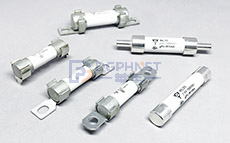
Walter Resistors (Suzhou Walter) – Complete Product Series Analysis
I. Brand Background and Development History
Walter is the core resistor brand of Suzhou Walter Electronics Co., Ltd., a wholly owned subsidiary of Junwei Electronics Technology Co., Ltd. Founded in 2000 and headquartered in Wujiang District, Suzhou, Jiangsu Province, the company has focused on the R&D and manufacturing of fuses and alloy resistors since its inception. In 2006, it received technical support from a major Japanese manufacturer in current‑sensing resistor technology, officially entering the resistor component field.
With over 50 years of accumulated industry experience, the Walter group has also integrated premium resources from the American brand TFT and the Japanese brand YED. Today, Walter is a global leader in precision current‑sensing resistors. According to QYResearch 2024 data, the Walter brand ranks third globally in the precision current‑sensing resistor market, with a market share of 8.52%, and holds the top position among domestic Chinese brands. In the automotive‑grade resistor segment, Walter has supplied in volume to leading companies such as BYD and Xinwangda, capturing approximately 7% of the domestic market.
Walter’s product portfolio covers five major categories: alloy current‑sensing resistors, shunt resistors, general‑purpose SMD chip resistors, leaded resistors, and automotive‑grade resistors. The brand is widely recognized for high reliability, high precision, and a diverse range of package sizes.
II. Detailed Introduction to Core Product Series
Walter’s resistor series follow a systematic naming convention. Understanding the part numbering helps quickly identify key specifications. Below is a comprehensive breakdown of each major series.
(A) HTE / HTC Series – Wide‑Terminal Current‑Sensing Resistors
Part Number & Naming Rules:
Example: HTE2512M3W0R025F
-
“HTE” = wide‑terminal current‑sensing resistor series
-
“2512” = package size (dimension code 1225)
-
“M” = manganese‑copper alloy material
-
“3W” = rated power
-
“0R025” = resistance value 0.025 Ω (25 mΩ)
-
“F” = tolerance ±1%
The HTC series is a derivative of HTE with extended terminal design.
Key Characteristics:
The HTE/HTC series features a wider bottom electrode, which significantly improves heat dissipation and enhances solder‑joint reliability during SMT assembly. Resistance range: 0.001 Ω to 0.2 Ω; rated power: 1 W to 5 W. Temperature coefficient of resistance (TCR) is controlled within ±50 ppm/°C; precision up to ±1%. The wide‑terminal design and alloy materials effectively reduce parasitic inductance, avoiding measurement errors in high‑frequency applications.
Applications:
Widely used in BMS battery management systems, EPS (electric power steering) for new energy vehicles, current sensing in industrial inverters, and feedback control in server and telecom power supplies. In industrial automation, they are commonly found in motor drives, servo controllers, and other equipment requiring precise current monitoring.
Advantages:
Three core benefits from the wide‑terminal design: optimized current‑flow path, improved solder‑joint reliability, and enhanced heat dissipation. For example, the HTE2512M3W0R025F (1225 package) can handle up to 3 W of power dissipation and support continuous current of approximately 11 A.
Market Positioning:
Mid‑to‑high‑end high‑current sensing market, targeting applications that demand high power and superior thermal performance, such as new energy vehicles, industrial controls, and server power supplies.
(B) STE Series – Classic Metal‑Foil Alloy Resistors
Part Number & Naming Rules:
Example: STE1206M1W0R010F
-
“STE” = standard‑pad metal‑foil alloy SMD resistor
-
“1206” = package size
-
“M” = manganese‑copper alloy
-
“1W” = rated power
-
“0R010” = 0.010 Ω
-
“F” = ±1% tolerance
Key Characteristics:
Manufactured using metal‑foil technology, the STE series offers resistance from 0.003 Ω to 0.7 Ω and rated power from 0.5 W to 4 W. Package sizes are extremely abundant, ranging from 0603 to 4527. TCR is ±50 ppm/°C, with tolerance options of 0.5% or 1%.
Applications:
Widely used in consumer electronics power supplies, portable device charging management (where small sizes like STE0603 save PCB space), general‑purpose sensing, and power management modules.
Advantages:
The most extensive package selection among all Walter alloy resistor series – from ultra‑compact to high‑power – making it the most versatile series. Walter recently launched two new sub‑series: STE‑C3921 (4 W) and STE‑C4527 (5 W).
Market Positioning:
General‑purpose alloy resistor market, covering a broad spectrum from consumer electronics to industrial applications. This is one of the highest‑volume series in the Walter portfolio.
(C) HFCL / HFPL Series – 4‑Terminal Precision Resistors
Part Number & Naming Rules:
Example: HFCL2512M2W0R002F
-
“HFCL” = 4‑terminal metal‑film alloy resistor
-
“2512” = package
-
“M” = material
-
“2W” = power
-
“0R002” = 0.002 Ω
-
“F” = ±1% tolerance
Key Characteristics:
The HFCL series employs a Kelvin 4‑terminal structure. Resistance range: 0.001 Ω to 0.25 Ω; rated power: 0.33 W to 4 W. The HFPL series is a compact version with resistance from 0.0025 Ω to 0.0055 Ω and power from 0.33 W to 1 W. Low thermoelectric EMF < 0.5 μV/°C effectively eliminates parasitic resistance errors caused by PCB trace routing.
Applications:
Primarily used in high‑precision lab power supplies, medical instruments, high‑end BMS solutions, precision instrumentation, and industrial control equipment where measurement accuracy is paramount.
Advantages:
The 4‑terminal structure allows simultaneous current and voltage sensing, enabling ultra‑precision measurement of milliohm‑level or even micro‑ohm‑level resistances with strong noise immunity.
Market Positioning:
High‑end precision measurement market, serving industries such as medical devices and precision instruments that demand extreme accuracy.
(D) MSH / PMSH Series – Pure Metal Alloy Resistors
Part Number & Naming Rules:
Example: MSH2512M2W00M50F
-
“MSH” = pure metal alloy resistor series
-
“2512” = package
-
“M” = material
-
“2W” = power
-
“00M50” = 0.5 mΩ
-
“F” = ±1% tolerance
Key Characteristics:
The MSH series uses pure manganese‑copper alloy with rated power from 1 W to 3 W, resistance as low as 0.5 mΩ, TCR of ±150 ppm/°C, and tolerance ±1%.
The PMSH series is an upgraded version with broader resistance coverage (0.0005 Ω to 0.5 Ω), all rated at 3 W, featuring low inductance and high power handling.
Applications:
PMSH is widely applied in frequency inverters and other power products. MSH is suitable for very high‑current sensing scenarios.
Advantages:
Extremely low resistance values make them ideal for large‑current detection. The PMSH series offers an attractive price‑performance ratio for general power supply markets.
Market Positioning:
High‑current sensing and cost‑effective power supply markets. PMSH focuses on value‑for‑money, while HTE targets superior thermal and soldering performance.
(E) MSTC / MHTC Series – Ultra‑Small / Ultra‑Thin Alloy Resistors
Key Characteristics:
The MSTC series uses FR4 process technology and can be as small as 0201 and 0402 packages. Ultra‑thin profiles are designed for portable products like smartphones, tablets, and Bluetooth devices. The MSTC1206M1W0R001FLV offers performance comparable to international brands and even exceeds them in certain parameters.
Applications:
Mainly used in consumer electronics where space is extremely constrained – smartphones, tablets, Bluetooth headsets, and other portable devices.
Advantages:
Small footprint and thin profile significantly reduce PCB space compared to conventional thick‑film current‑sensing resistors at the same power rating. Their cost competitiveness makes them an attractive solution for high‑volume applications.
Market Positioning:
Miniaturized consumer electronics market, focusing on space‑limited portable devices.
(F) Automotive‑Grade Resistor Series
Key Characteristics:
Compliant with AEC‑Q200 automotive qualification standards, with model suffixes carrying an “Auto” designation. Includes STE Auto, HTE Auto, and other variants. Designed to withstand extreme temperature cycling, vibration, and humidity. Operating temperature range: –55 °C to +150 °C.
Applications:
Engine control units, battery management systems, airbag systems, electric power steering (EPS), on‑board chargers, and other critical automotive modules.
Advantages:
Reliability far exceeds industrial‑grade specifications. AEC‑Q200 certification ensures they meet the stringent safety requirements of automotive electronics.
Market Positioning:
High‑end new‑energy and traditional automotive electronics markets.
(G) Thick‑Film Chip Resistor Series & Leaded Resistor Series
Walter offers a complete range of general‑purpose thick‑film chip resistors for signal processing, voltage division, and basic circuit protection. Packages from 0402 to 2512 are available, with tolerances of 1% and 5%. The TFE semi‑alloy metal‑film series features excellent TCR and low noise, suitable for audio equipment and precision instruments.
The leaded resistor series covers through‑hole mounting applications, including precision metal‑film leaded resistors, power‑type leaded resistors, and porcelain‑tube resistors, with power ratings from 0.5 W to 10 W.
III. Summary of Product Advantages
Reliability:
Walter resistors are highly dependable, passing the 2000‑hour US military standard Mil‑202 Method 107G test. The triple‑protective‑layer design improves heat dissipation and extends service life.
High Precision & Low TCR:
Some products achieve tolerances as low as ±0.01%. TCR is typically controlled within ±50 ppm/°C, and certain models can reach ±10 ppm/°C. Low thermoelectric EMF < 0.5 μV/°C.
Diverse Package Options:
Available in 0201, 0402, 0603, 0805, 1206, 2010, 2512, as well as 0306, 0612, 1225, and other special formats.
Rich Material Selection:
Includes manganese‑copper, nickel‑copper, iron‑chromium‑aluminium, and other alloy materials.
Excellent Price‑Performance Ratio:
Compared to high‑end international resistor brands, Walter offers better cost‑effectiveness, shorter lead times, and faster after‑sales support.
IV. Market Positioning & Target Customer Base
Walter holds a stable share in the domestic mid‑to‑high‑end resistor market, with particular strength in alloy current‑sensing resistors and automotive‑grade resistors. Major customer groups include:
-
Smartphone OEMs (e.g., A‑brand, Samsung, Xiaomi, Lenovo, OPPO, vivo)
-
Computer and peripheral manufacturers
-
Home appliance brands (Gree, Midea, Daikin)
-
Battery and power‑bank producers
-
Fast‑charging and power‑supply vendors
-
Industrial equipment makers (Hikvision, Dahua, Sungrow)
-
Automotive and energy‑storage companies (BYD, Xinwangda, Delta)
Monthly production capacity for current‑sensing precision resistors has reached 360 million units, with total overall capacity exceeding 200 million pieces per month, ensuring stable, high‑volume supply capability.