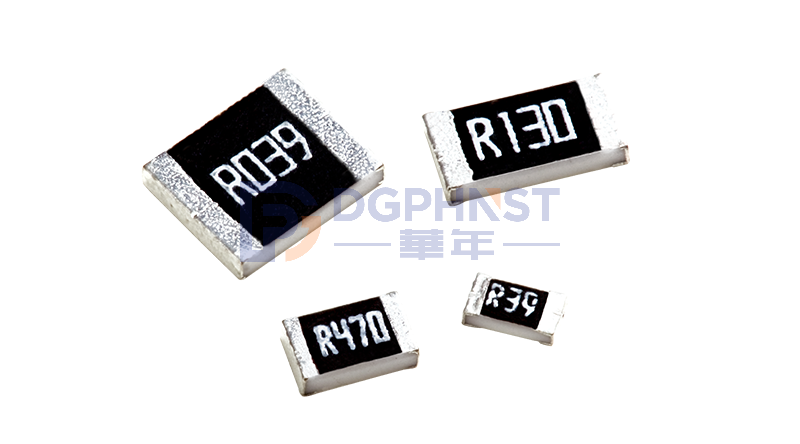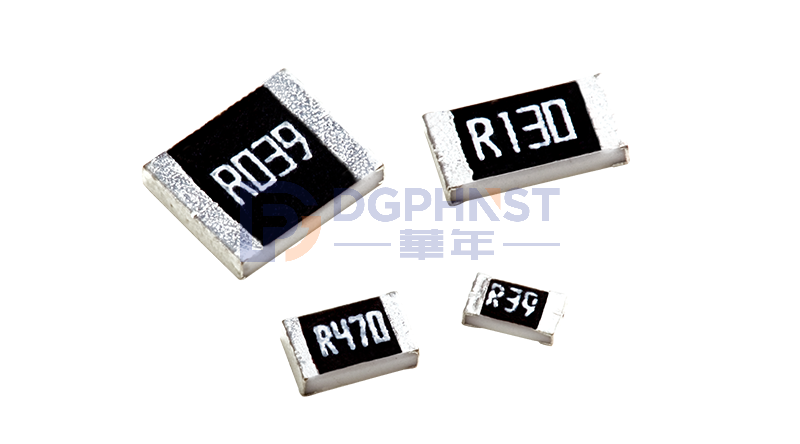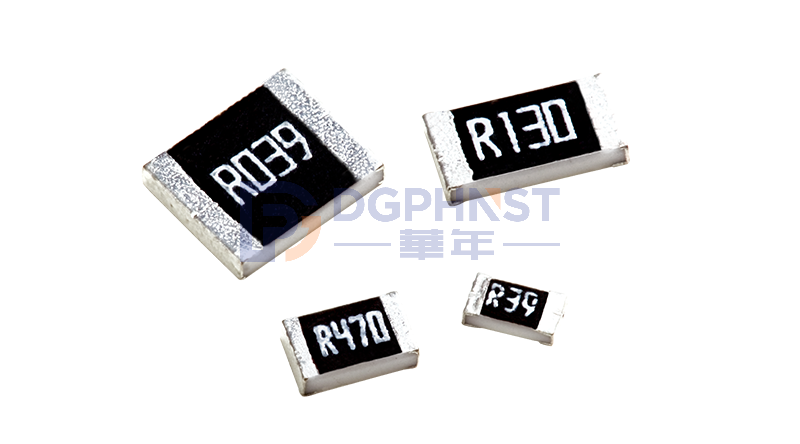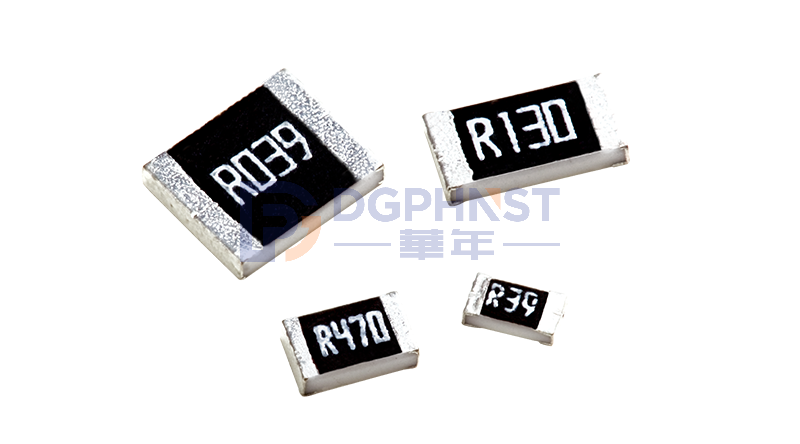
Based on resistance characteristics and structure, resistors are generally divided into two major categories: fixed resistors and variable resistors. Fixed resistors have a constant resistance value and are the most widely used components in circuits; variable resistors have adjustable resistance values or change with environmental parameters, mainly used for calibration, sensing, and circuit protection.
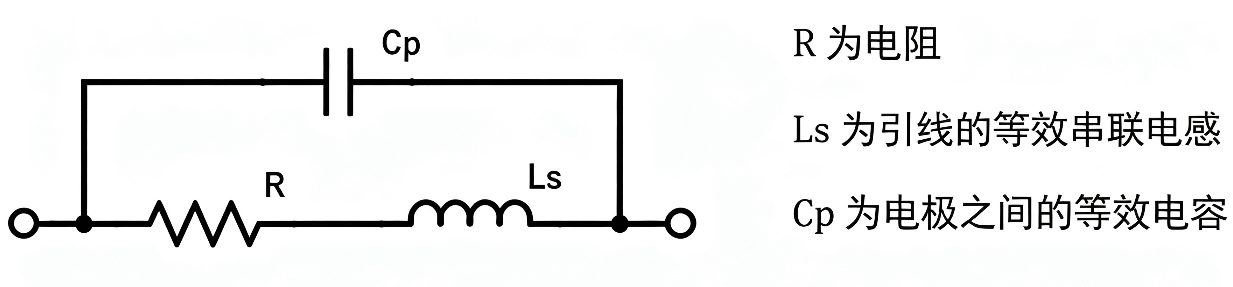
Equivalent model of actual resistors
(1) Fixed Resistors (Two Major Forms: Through-Hole and Surface-Mount)
1. Axial Through-Hole Cylindrical Resistors
Wirewound Resistors: Made by winding nichrome wire on a ceramic base, their core advantage is ultra-high precision (as low as 0.005%), low temperature drift, and high power capacity. Disadvantages include large parasitic inductance, making them unsuitable for high-frequency applications, and they are only suitable for low-frequency, high-power circuits.
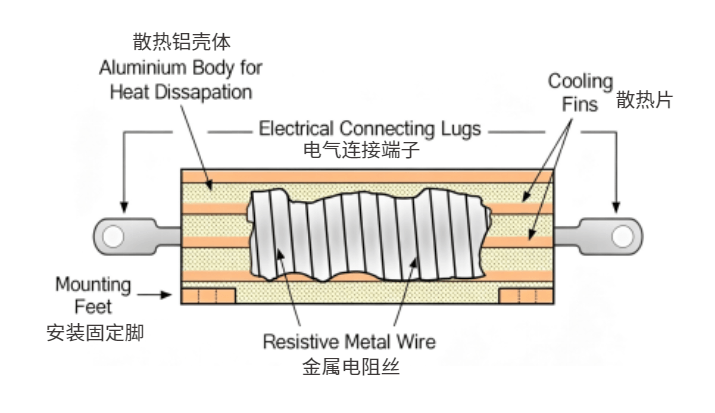
Wirewound Resistor
Carbon Composition Resistors: Manufactured using carbon powder sintering technology, they have the lowest cost among all resistors. However, they have large tolerance, high noise, and poor temperature drift performance. Their advantages include strong voltage resistance and resistance to burning, making them suitable for low-end general-purpose circuits.
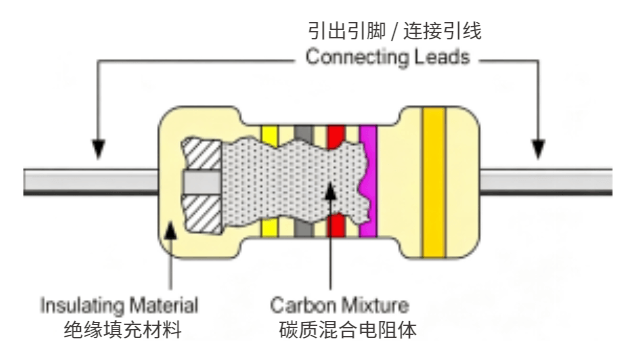
Carbon Composition Resistor
Carbon Film Resistors: Carbon film is deposited on a ceramic base, and resistance can be adjusted by spiral grooving. They can produce conventional precision resistors but have poor temperature stability and moderate cost-performance ratio.
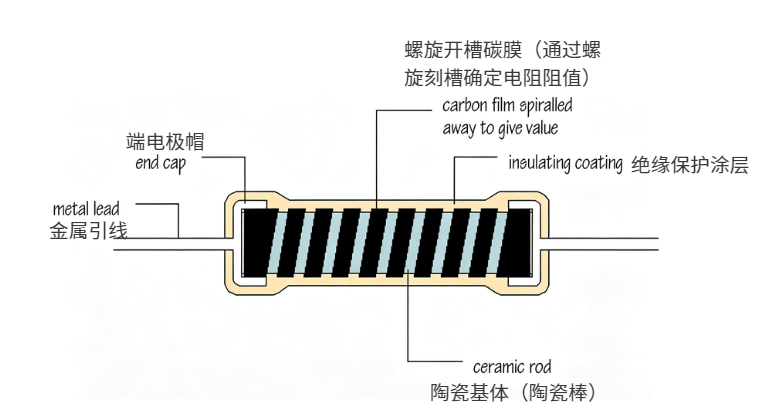
Carbon Film Resistor
Metal Film Resistors: Made using vacuum deposition of nickel-chromium alloy, they can reach E192 ultra-precision levels. They offer high precision, low noise, and stable temperature drift, making them the preferred choice for precision analog circuits.
Metal Oxide Film Resistors: Made using tin/antimony oxide coating, their core feature is high heat resistance, making them suitable for high-temperature working conditions.
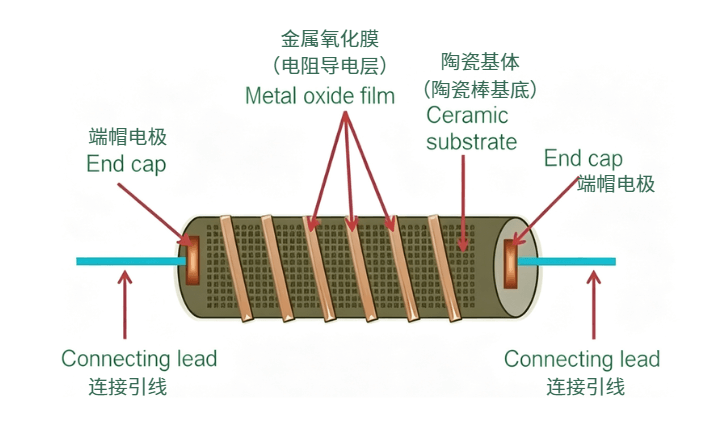
Metal Oxide Film Resistor
2. Surface-Mount Chip Resistors
Thick Film Resistors: The absolute mainstream in the market, made by screen printing ruthenium dioxide resistive layer, with a thickness of about 100μm. They cover precision levels of 5% and 1%, offering excellent cost-effectiveness and suitable for most general-purpose PCBs.
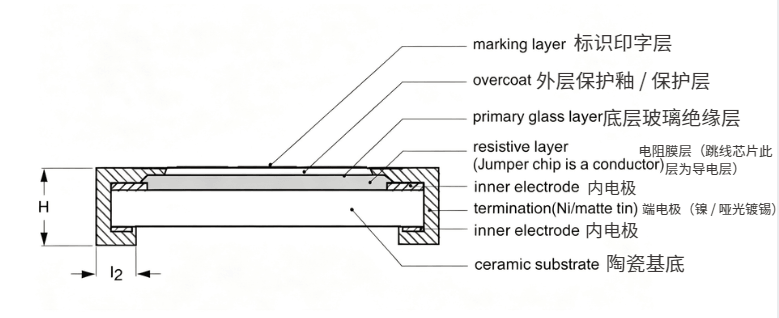
Thick Film Resistor
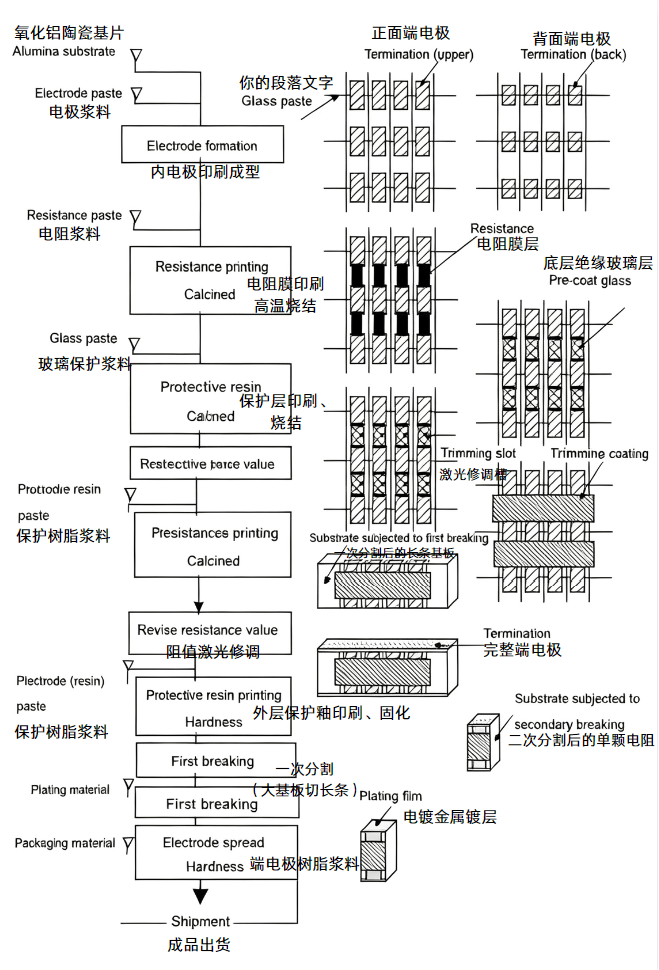
Full production process of thick film chip resistors
Thin Film Resistors: Made by vacuum deposition of nickel-chromium thin film (only 0.1μm thick, one thousandth of thick film), then patterned through photolithography. They have excellent high-frequency and precision performance, suitable for high-frequency and high-precision circuits.
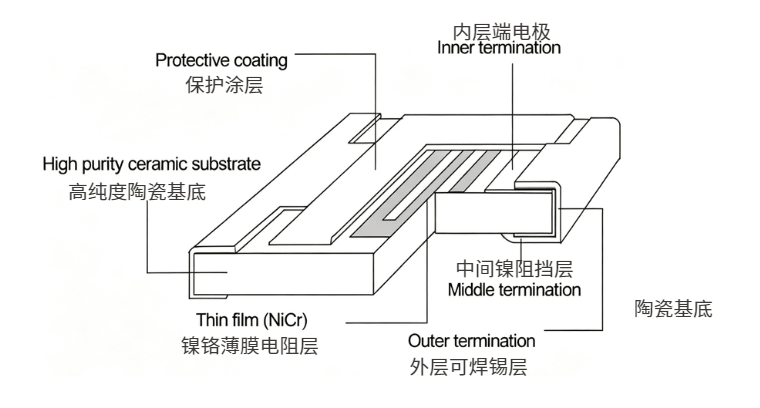
Thin Film Resistor
Metal Foil Resistors: Made by photolithography of nickel-chromium foil, they offer the best overall electrical performance, and are the core choice for high-end precision equipment and high-frequency instruments.
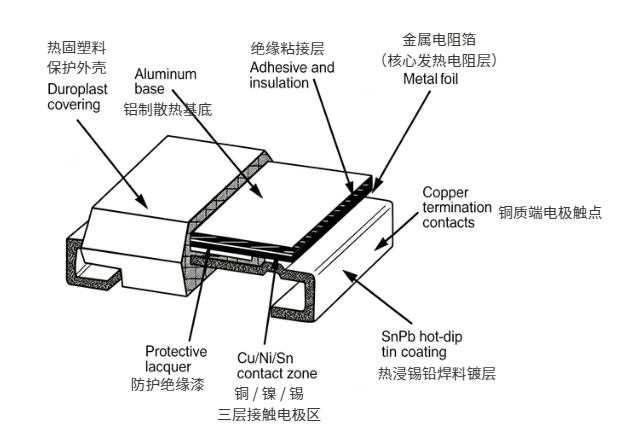
Metal Foil Resistor
(2) Variable Resistors
1. Manually Adjustable Resistors
Potentiometer (Three terminals): Mainly used for circuit voltage division adjustment;
Resistor (Two terminals): Used only for adjusting the resistance value of the circuit;
Trimmer: Requires a special tool for adjustment, often used for factory parameter calibration of devices.
2. Sensing Resistors (Nonlinear Sensing/Protection Type)
These resistors have resistance values that vary with environmental physical quantities, without a fixed resistance value, mainly used for circuit protection and physical quantity detection.
Thermistors: Divided into PTC (Positive Temperature Coefficient) and NTC (Negative Temperature Coefficient). After exceeding the threshold temperature, PTC resistance increases sharply, providing self-resetting overcurrent protection. CPTC ceramic type is suitable for high-voltage and high-current applications, while PPTC polymer type is suitable for low-voltage and low-current applications. NTC is mainly used for circuit temperature measurement and temperature compensation.
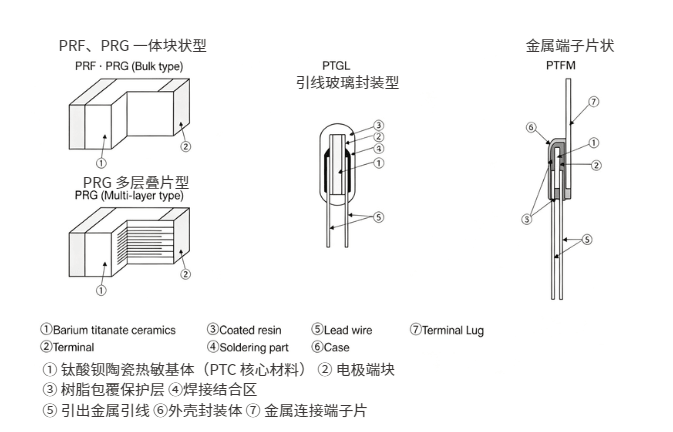
Thermistor
Varistor (MOV/MLV): MOV is made by sintering zinc oxide, and its impedance drops rapidly when the voltage exceeds the threshold, allowing surge voltage to be dissipated, thus achieving overvoltage protection. MLV is a multi-layer sheet-type variant, compact in size, suitable for low-voltage DC applications. Its core disadvantage is large parasitic capacitance and slow response speed, so it must not be used in high-speed signal lines.
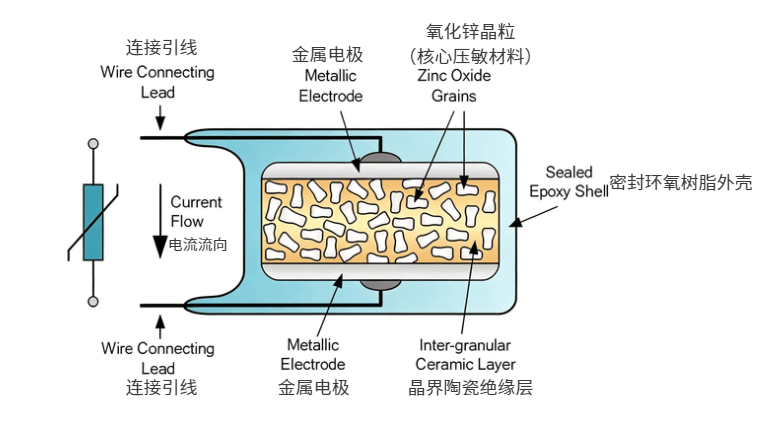
Varistor
Other Sensing Resistors: Photoresistors, hygrosensitive resistors, and magnetoresistors, which can detect light, humidity, and magnetic fields, respectively, and are widely used in various sensor circuits.
In Conclusion
In practical circuit design, based on factors such as accuracy, frequency, temperature, protection requirements, and cost budget, corresponding resistor models with specific manufacturing processes can be selected to ensure the stability, accuracy, and safety of circuit operation.