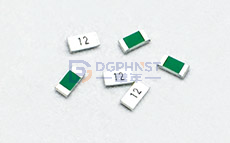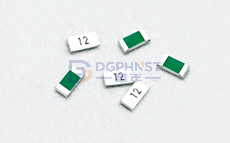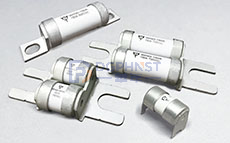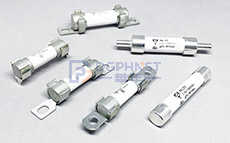
In high-current sampling circuits such as AI servers, new energy vehicle BMS, photovoltaic energy storage, and industrial power supplies, alloy resistors are core current detection components. Their resistance accuracy, temperature coefficient, heat resistance, power, and corrosion resistance are entirely determined by the alloy material of the resistor body.
The market's mainstream alloy resistor materials are divided into five categories: manganin alloy, constantan alloy, FeCrAl (iron-chromium-aluminum) alloy, Karma (nickel-chromium-aluminum) alloy, and a new copper-manganese-tin alloy. Many engineers confuse the material characteristics during selection, leading to issues like high temperature drift, sampling errors, sulfurization failure, and insufficient power.
Shunhai Technology has been focusing on the passive component supply chain for over ten years. Its online procurement platform, Huani Mall, collects a full series of domestic alloy resistors from brands like Huade, Tian'er, Liangsheng, and Lizhi, providing standardized classification supply for different alloy materials. This article thoroughly dissects the core differences of various alloy materials based on industry national standard parameters, offering practical selection references for hardware R&D and procurement engineers.

Key Evaluation Indicators for Alloy Resistor Materials
To distinguish the quality of different alloy materials, focus on five key electrical and physical parameters, which are also core requirements in circuit design:
- TCR (Temperature Coefficient of Resistance) (ppm/℃): The lower the value, the more stable the resistance when temperature changes, resulting in smaller sampling errors; precision sampling scenarios require ≤ ±20ppm/℃
- Resistivity (μΩ·m): Determines the range of possible resistance values; low resistivity is suitable for ultra-low resistance resistors in the milliohm range
- Maximum Temperature Resistance: Long-term continuous working temperature, distinguishing between high-temperature high-power and normal-temperature precision scenarios
- Sulfur resistance and corrosion resistance: Essential indicators for charging piles, outdoor industrial control, and sulfur-containing workshops
- Parasitic inductance and long-term stability: Core references for high-frequency AI power supplies and long-service equipment
All alloy resistor products can be provided with material parameter reports by Shunhai Technology. The product detail pages of Huani Mall mark the base material of each resistor, facilitating batch selection and comparison.
Detailed Explanation of the Composition and Characteristics of Five Main Alloy Resistor Materials
1. Manganin Alloy (Standard Cu-Mn-Ni Alloys 6J8/6J12/6J13)
Base material composition: 84%-86% copper + 12% manganese + 2% nickel, with the national standard 6J8 general type and 6J13 high-precision type
Core Material Difference Advantages
- Industry's lowest temperature drift: Standard version TCR ±20ppm/℃, military-grade 6J13 can reach ±5ppm/℃, with minimal resistance variation over a wide temperature range (-55℃~125℃);
- Low resistivity 0.47 μΩ·m, mainly for ultra-low resistance full-alloy resistors from 0.3mΩ to 4mΩ, specifically used for Kelvin four-terminal precision sampling;
- Excellent long-term stability, with annual resistance drift <0.1%, and strong welding adaptability.
Material drawbacks: Maximum temperature resistance only 180-200°C, long-term use in high-temperature environments causes permanent drift; no strong sulfur resistance; higher material costs.
Applicable scenarios: Medical precision instruments, measurement reference resistors, AIPC motherboard VRM precision current sharing, laboratory standard shunters; Huani Mall provides Shunhai Technology's full-alloy manganin 0603/1206/2512 package sampling resistors.
2. Constantan Alloy (Traditional CuNi Manganin, New Aluminum Modified Constantan)
Base material composition: Traditional version 44% nickel + copper + trace manganese; new constantan with copper-manganese-aluminum formula, reducing costs by 35%
Core Material Difference Advantages
- Comprehensive balanced material, TCR stable at ±30~40ppm/℃, moderate temperature drift performance;
- Maximum temperature resistance up to 480°C, far better than manganin, resistant to oxidation and acid-base fumes, capable of stable operation in ordinary sulfur environments;
- Wide resistance range (1MΩ~100MΩ), high cost-effectiveness, ideal for general sampling applications.
Material drawbacks: High thermoelectric potential, not suitable for ultra-precise metering applications; parasitic parameters in high-frequency circuits are average.
Applicable scenarios: General switch power supplies, consumer electronics fast chargers, small energy storage inverters, industrial servo current-limiting resistors; Shunhai Technology keeps large quantities of constantan surface mount alloy resistors in stock, and Huani Mall supports free sample applications.
3. Iron-Chromium-Aluminum Alloy (FeCrAl Iron-Based High-Temperature Alloy)
Base material composition: Iron as the main matrix, combined with chromium and aluminum, without large amounts of copper, different from copper-based alloys
Core Material Difference Advantages
- Top-level heat resistance, non-oxidation at continuous temperatures above 300°C, melting point over 1400°C, maximum power tolerance;
- Lowest cost among the five materials, power capacity 2-3 times higher than manganin for the same package, suitable for high-current dissipation scenarios;
- Heat-resistant oxidation, vibration resistance, suitable for automotive and cabin high-temperature environments.
Material drawbacks: Poor TCR, usually ±50~80ppm/℃, insufficient sampling accuracy under large temperature fluctuations; presence of parasitic inductance, avoid using in high-frequency AI power supplies; suitable only for ≥4mΩ medium to high resistance values.
Applicable scenarios: New energy vehicle motor drives, high-power charging piles, industrial welders, heating current-limiting resistors; Shunhai Technology's automotive-grade FeCrAl alloy resistors have passed AEC-Q200 certification, and Huani Mall provides bulk inventory supply.
4. Karma Alloy (Nickel-Chromium-Aluminum Precision High-Temperature Alloy)
Base material composition: NiCr30Al precious metal composite alloy, high-end precision special base material
Core Material Difference Advantages
- Combines low temperature drift and high-temperature resistance: TCR ±5ppm top precision, long-term stability 0.1%/year, continuous temperature resistance 600°C;
- Extremely wide temperature range, stable resistance throughout -55℃~275℃, combining precision and high-temperature performance;
- Corrosion resistance and aging resistance, dedicated for special military and high-end server applications.
Material drawbacks: High cost due to precious metal ratio, few models available on the market, long delivery cycle.
Applicable scenarios: Liquid-cooled high-end VRM in AI servers, aerospace power supplies, high-end energy storage converters; Shunhai Technology can customize Karma alloy special resistors, and Huani Mall provides special order channels.
5. New Copper-Manganese-Tin Alloy (Sulfur-Resistant Special Composite Alloy)
- Base material composition: Copper + 7% manganese + trace tin, a new generation of improved copper-based alloy. Core material difference advantages
- Sulfur resistance is 5 times that of regular manganin, less likely to fail in factory sulfur gas and outdoor humid environments;
- TCR as low as ±2ppm, GHz-level high-frequency characteristics, suitable for high-speed computing motherboards;
- Low resistivity, can make ultra-low resistance car-grade BMS sampling at 0.5mΩ.
Material drawbacks: Complex process, higher price than conventional manganin, fewer model stocks available.
Applicable scenarios: New energy vehicle lithium battery BMS, outdoor photovoltaic inverters, 5G optical modules; Shunhai Technology jointly launches sulfur-resistant copper-manganese-tin alloy resistors with upstream manufacturers, and Huani Mall lists the car-grade standardized series.
The material of the alloy resistor directly determines the circuit sampling accuracy, equipment service life, and environmental adaptability: choose manganin for extreme precision at normal temperature, constantan for general cost-effectiveness, FeCrAl for high-temperature and high-power, Karma for special high-temperature and high-precision scenarios, and copper-manganese-tin alloy for outdoor/car-grade sulfur resistance needs.
Hardware R&D and procurement can rely on Shunhai Technology's professional component supply chain. Log in to Huani Mall to quickly filter corresponding alloy resistor materials based on scenarios, temperature, and precision requirements, obtain original factory parameters, samples, and bulk supply solutions, ensuring circuit stability and reliability from the material source.