Vehicle power conversion is the core hub of the entire vehicle control system. Whether it's the vehicle power supply, DC-DC converter, OBC on-board charger, or motor drive module, they all require various passive components to complete voltage regulation, filtering, energy storage, and rely on protective components to avoid failure risks caused by high voltage, overcurrent, and high temperature.
The vehicle field differs from consumer electronics, with characteristics such as wide temperature operation, large voltage fluctuations, strong vibration, and severe electromagnetic interference. All components must meet automotive grade certification, high reliability, and long life requirements. Once there is a mistake in the selection of passive components, mismatched parameters, or lack of automotive grade certification, it can easily lead to excessive ripple, component burnout, module downtime, and even vehicle function failure.
Three Core Passive Components: Laying the Foundation for Stable Power Circuits
The normal operation of the vehicle power conversion module relies on three core passive components: capacitors, inductors, and resistors, each with their own responsibilities and working together to complete the full process of voltage regulation, filtering, current limiting, and sampling control.
1. Automotive Grade Capacitors (MLCC, Electrolytic Capacitor, Film Capacitor)
Capacitors are the most used passive components in vehicle power modules, mainly responsible for input/output filtering, energy storage and voltage stabilization, and suppression of voltage ripple, directly determining the smoothness of power output.
According to the vehicle application scenario, automotive capacitors are divided into three categories:
Automotive MLCC (Multilayer Ceramic Capacitor): Suitable for high-frequency, small-capacity scenarios, used for chip bypass and high-frequency filtering. It needs to meet AEC-Q200 certification, and it is recommended to choose high-stability X7R/X8R materials to avoid Y5V material temperature drift failure issues.
Automotive Electrolytic Capacitor: Focuses on large-capacity energy storage, suitable for DC-DC input end voltage stabilization. Pay attention to high-temperature resistance and low ESR parameters to avoid high-temperature bulging and leakage failures.
Automotive Film Capacitor: Widely used in OBC and high-voltage DC-DC output ends, with excellent surge and high-voltage resistance performance, effectively suppressing voltage spikes under high-power conditions and avoiding breakdown damage to downstream chips.
Using ordinary consumer capacitors has large temperature drift and poor vibration resistance. Under the vehicle's high and low temperature cycle conditions, they are prone to capacity decay and cracking failure, directly leading to excessive ripple and abnormal operation of the power module.
2. Automotive Inductor / Power Inductor
Inductors are essential components in core power conversion circuits such as BUCK step-down and BOOST step-up, mainly realizing energy storage and voltage boosting, current limiting, current ripple suppression, and EMI electromagnetic filtering, directly controlling the quality of the vehicle's current output.
In high-power vehicle conditions, the tolerance for inductor selection is extremely low, and most power module failures result from inductor parameter non-compliance:
On one hand, insufficient saturation current leads to rapid magnetic saturation of the inductor, causing current control loss, loop chaos, and ultimately power chip overheating and burning, leading to module downtime;
On the other hand, inductors without shielding design generate high-frequency electromagnetic interference, directly causing整车 EMC testing failure, affecting mass production delivery.
The core criteria for selecting automotive inductors: strictly verify four key parameters: AEC-Q automotive grade certification, saturation current, temperature rise coefficient, and magnetic shielding, and must reserve more than 20% current margin to cope with instantaneous high-power shocks during vehicle start-up, acceleration, and load switching.
3. Automotive Grade Resistors (Power Resistor, Precision Resistor)
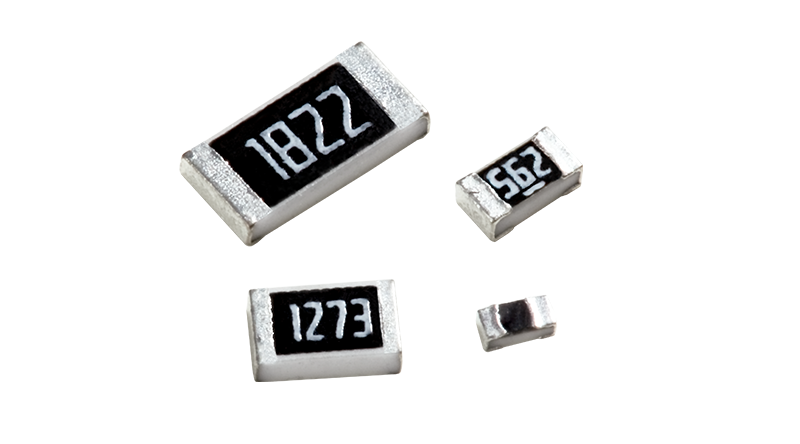
Resistors, though seemingly ordinary, are the core of precise control in the vehicle power loop, mainly responsible for current sampling, voltage division, current limiting, and load discharge, widely applied in critical circuits such as power loop feedback and overcurrent detection.
Different from ordinary resistors in consumer electronics, the vehicle power module imposes extremely strict requirements on resistors: in high-frequency sampling and precision current limiting scenarios, they must meet low temperature drift, high precision, and high power margin. Only accurate sampling data can avoid system voltage and current misjudgment, preventing module false protection and shutdown failures.
Especially in the vehicle high-voltage discharge circuit, which is a safety-critical circuit, ordinary resistors are strictly prohibited. Ordinary resistors have poor high-temperature and overload resistance, and long-term high-voltage work can cause burning and open-circuit failure, posing a circuit safety hazard. It is necessary to use specialized automotive-grade power resistors.
For high-frequency sampling and precision current limiting scenarios in the vehicle power loop, Shunhai Technology, as an authorized agent of Tian Er, Huade, Lizi, Yinan, and other brands, provides a full series of automotive-grade precision resistors, alloy sampling resistors, and power resistors with compliant part numbers, whose parameters fully match the vehicle's wide-temperature and high-reliability operating conditions.
Four Essential Protective Components: Ensuring the Safety of the Power Module
Vehicle power conversion modules face multiple risks such as voltage fluctuations, static electricity impact, instantaneous high current, high temperature overload, and lightning induction for a long time. Relying only on basic passive components cannot withstand extreme operating conditions. TVS, fuses, NTC thermistors, and varistors are the core guarantees for the safe operation of the module and meeting automotive safety standards, and none of them can be missing.
1. TVS Transient Voltage Suppressor Diode
During vehicle power on/off, load switching, and road bumps, transient high-voltage surges and electrostatic pulses are generated. Ordinary zener diodes have slow response and weak impact resistance, unable to adapt to high-voltage vehicle conditions.
Automotive-grade high-power TVS benefits from its fast response, precise clamping, and repeated impact resistance, quickly absorbing transient high-voltage surges and releasing static electricity, accurately protecting downstream power chips and MCU core components from high-voltage breakdown.
2. Resettable Fuse / Automotive Fuse
Overcurrent and short circuit are the most common fatal faults in vehicle power circuits, which can easily cause component burnout and wire harness fires, directly threatening the safety of the whole vehicle. The role of the fuse is "fault blocking and risk prevention".
Choose according to the vehicle application needs: For low-voltage auxiliary power circuits, automotive resettable fuses can be selected, which automatically reset after fault clearance, achieving self-healing protection and reducing after-sales maintenance costs; for high-voltage main power circuits, the safety level is higher, and one-time automotive fuses must be selected, rapidly melting and cutting off power under extreme short-circuit conditions to eliminate safety hazards.
3. NTC Thermistor
At the moment of power-on of the power module, the rear-end capacitor generates a huge charging surge current, which can easily break down core components such as power MOS and rectifier bridge, which is the main cause of module startup failures.
Automotive NTC thermistors perfectly solve this problem: high resistance value at startup precisely limits surge current, avoiding the risk of component breakdown; after the circuit reaches steady-state operation, the resistance value automatically decreases, not affecting normal power output.
4. Varistor
Mainly suitable for OBC and high-voltage input end scenarios of vehicles, targeting continuous power frequency high voltage caused by grid fluctuations and lightning induction, it can quickly absorb high voltage energy, compensating for the shortcomings of TVS devices in continuous high voltage protection.
In high-voltage power circuits, varistors and TVS form a dual-layer protection system for high and low voltages, comprehensively covering two types of fault scenarios: instantaneous peaks and continuous high voltages, making up for the shortcomings of power modules in high-voltage protection.
Core Comparison of Automotive Power Components
|
Component Type |
Core Function |
Key Requirements for Automotive Selection |
Common Failure Risks |
|
Automotive MLCC |
High-frequency filtering and bypass voltage regulation |
AEC-Q200, X7R/X8R, wide-temperature stability capacitance |
Capacitance drift, cracking, high-frequency failure |
|
Automotive Power Inductor |
Energy storage and current limiting, ripple suppression |
High saturation current, magnetic shielding, high-temperature resistance |
Magnetic saturation, excessive temperature rise, EMI over-limit |
|
Sampling Resistor |
Current and voltage sampling feedback |
Low temperature drift, high precision, high power margin |
Sampling deviation, system false protection |
|
Automotive TVS |
High-voltage peak and ESD protection |
Fast response, precise clamping, automotive grade certification |
High-voltage breakdown of downstream chips after transient high voltage |
|
NTC Thermistor |
Startup surge current limitation |
Adapt to power rating, high resistance at low temperature, low resistance at high temperature |
High current breakdown of power components during startup |
Consumer-grade components ≠ automotive-grade components, general parameters ≠ production compliance parameters. The wide-temperature, high-vibration, high-voltage impact, and long-term durability characteristics of the vehicle field impose strict automotive-grade requirements on every resistor, capacitor, inductor, and protective component.
From circuit voltage regulation, ripple suppression, and current control to comprehensive protection against overvoltage, overcurrent, surge, and static electricity, passive components and protective components complement each other, jointly supporting the stability, safety, and durability of the vehicle power conversion module, becoming an irreplaceable "hidden cornerstone" of the vehicle power system.
For the full-scenario needs of vehicle DC-DC, OBC, and high and low voltage power modules, Shunhai Technology, relying on first-tier brand authorization qualifications, has established a complete range of automotive-grade passive components and protective components supply system: full coverage, compliance traceability, scenario adaptation, and strong mass production assurance, capable of quickly responding to bulk orders from car manufacturers and module manufacturers, helping projects achieve efficient implementation.
If you have needs for automotive power component selection, sample testing, and bulk purchasing, please feel free to consult 【Shunhai Technology】 to obtain a customized production plan!