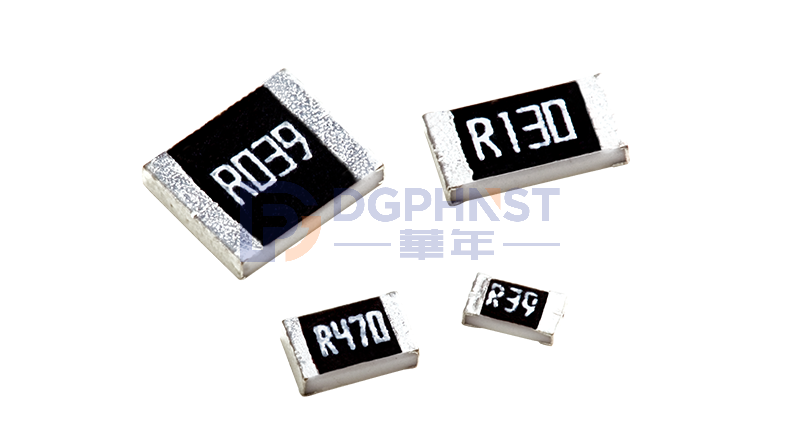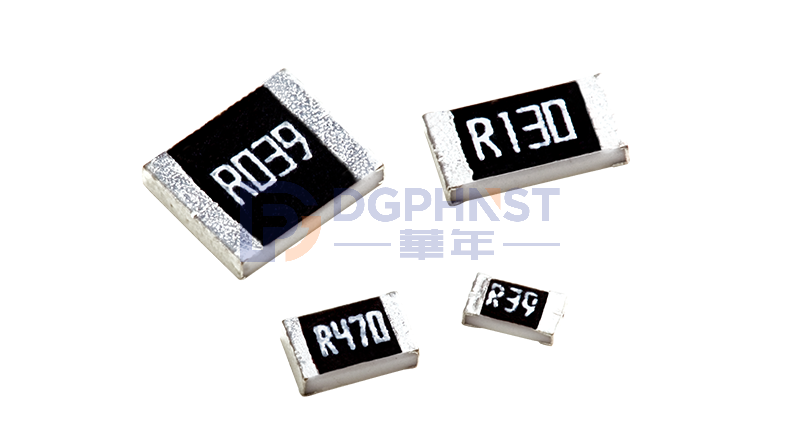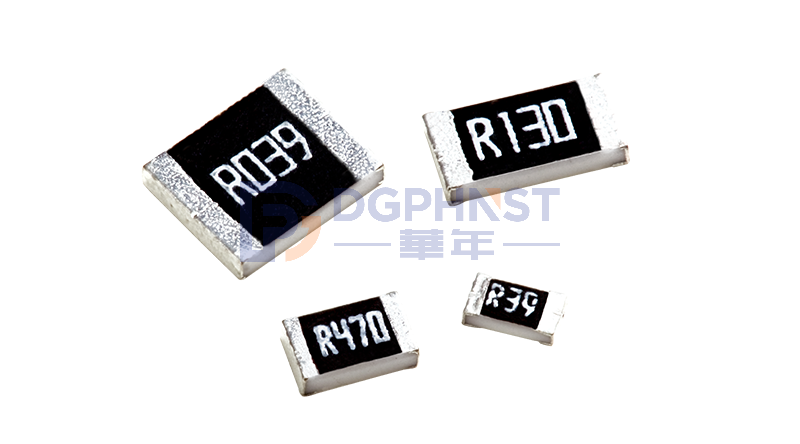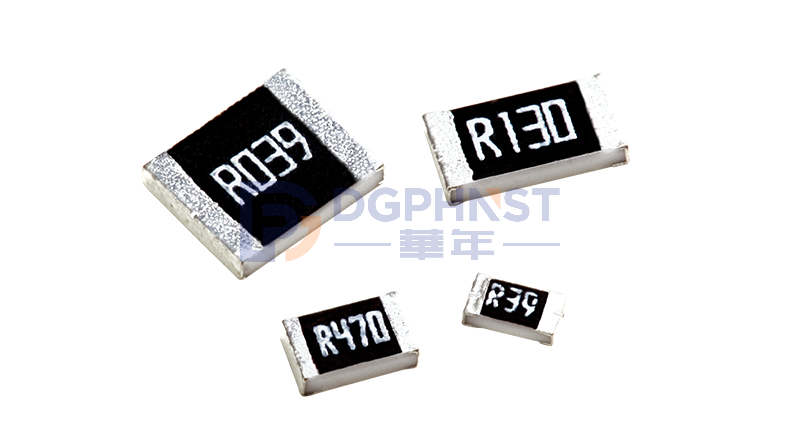
Conclusion: When volume, tolerance, resistance value, and material are strictly fixed, the power rating of a resistor is dictated by the heat dissipation capability of its package; it cannot be arbitrarily increased through selection alone. The only viable engineering paths are reducing actual power dissipation or forced improvement of the thermal environment. If thermal measures are constrained, circuit parameters (voltage or current) must be adjusted; otherwise, long-term reliability cannot be guaranteed. For scenarios requiring both small size and high power margin, ELLON’s alloy resistor series (e.g., ESRH series) offers a 7W rating (at 70°C) in a 2512 package, serving as a reference for high power density selection.
Strategies for Handling Insufficient Resistor Power Rating Under Fixed Volume and Material Constraints
In circuit design and repair, it is common to encounter a situation where the rated power of an existing resistor is lower than the actual dissipated power. If the volume, resistance, tolerance, and material must remain unchanged, the geometric dimensions and thermal conductivity of the resistive element are fixed, and its heat dissipation area and thermal capacity cannot be altered. Under this condition, the rated power (P70) is effectively locked by the physical structure. Faced with this conflict, one should not rely on “overspecification usage” but instead address the issue from two dimensions: thermal management and circuit stress.
First, forcibly improve external thermal conditions. The rated power of a resistor is based on a “still air” test baseline. If the actual ambient temperature exceeds 70°C, the allowable dissipation must be reduced according to the derating curve; conversely, if the environmental thermal resistance can be artificially lowered, a certain power margin can be recovered. Without changing the volume, measures include: applying thermally conductive potting compound or gap pads around the resistor to conduct heat to a large PCB copper area or metal housing; for SMD resistors, ensuring the pads connect to sufficient copper area acting as a heat spreader; and adding air convection (e.g., a micro-fan) inside enclosed chambers. Measured data shows that applying a forced-air heatsink to a current-sense resistor significantly reduces resistance drift caused by temperature rise. This indicates that improved cooling does not change the nominal rating but effectively lowers the resistor body temperature, preventing thermal breakdown.
Second, reduce actual power dissipation at the circuit level. The actual power consumed by a resistor is determined by P=I2R or P=U2/R. With resistance fixed, the only way to reduce dissipation is to decrease the current through it or the voltage across it. If the circuit topology permits, consider adjusting the preceding drive strength, adding series voltage division, or relocating the sensing point. Note that average power alone is insufficient; surge and pulse conditions must not be ignored. Although short-term overload tests may tolerate several times the rated power, instantaneous power exceeding the limit under repetitive pulses or fault conditions can still cause film damage or resistance drift.
Third, examine the engineering necessity of the “fixed volume” constraint. If neither thermal improvement nor power reduction is feasible, feedback must be provided to revise the constraint. In designs with high power density requirements, compressing resistor volume often comes at the cost of long-term reliability. Taking ELLON’s bare copper alloy shunt resistors as an example, the ESRH25 series achieves a 7W rating at 70°C (derating to 5W at 100°C) in a 2512 package through material and structural optimization. The existence of such high-power-density devices indicates that when a design requires small size to carry high current, alloy materials or dedicated power-type structures should be prioritized during the selection phase, rather than overloading general-purpose thick-film resistors. For procurement and selection verification, Shenzhen Shunhai Technology , as an authorized distributor for ELLON, can provide technical documentation and sample support for this series; Huanian Mall is suitable for obtaining现货 and comparing parameters during small-batch R&D stages.
Fourth, the trade-off between parallel and series configurations. If the layout allows multiple resistors, using two resistors of double the resistance in parallel shares the current; total dissipation remains the same, but the temperature rise of each resistor is significantly reduced. However, the premise is that the “fixed volume” constraint applies to a single resistor’s footprint; if the overall layout space is not strictly limited, paralleling is an effective way to spread the hotspot. Note that the equivalent resistance tolerance after paralleling is affected by individual tolerances; precision voltage-divider applications require careful evaluation.