Beyond Wattage: The Real Advantages of High-Power Resistors and Brand Selection Guide
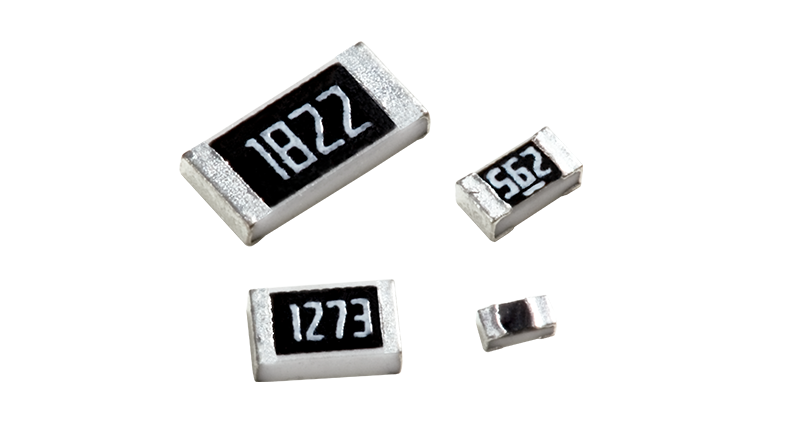
The value of a high-power resistor extends well beyond its headline wattage rating. Achieving higher power density within the same package size gives designers larger derating headroom, lower surface temperature rise, and longer load life. For space-constrained and reliability-critical applications in power supplies, industrial control, and automotive electronics, this “power margin” delivers system-level benefits that often outweigh mere BOM cost reduction. The following sections examine the deeper advantages of high-power resistors from a selection engineering perspective and provide a concise positioning analysis of Ever Ohms, ELLON, and several mainstream resistor brands.
The Hidden Advantages: Derating Headroom and Long-Term Stability
When a standard thick-film resistor operates at or near full rated power, the elevated body temperature accelerates aging and gradual resistance drift. High-power resistors employ process improvements—modified electrode structures, optimized substrate thermal paths, or long-side terminal designs—to push the rated power of the same footprint up by one step or several times. If an engineer derates to 50% of actual power dissipation rather than 80%, load life extends significantly. Taking the 2512 case size as an example, a standard thick-film resistor is typically rated at 1W, while up-rated versions reach 2W; that extra 1W translates directly into reliability margin under pulse loads or elevated ambient temperatures. Additionally, some high-power series combine increased wattage with surge and sulfur resistance, which proves particularly practical for relay driving, motor control, and sulfur-rich industrial environments.
Brand Positioning and Selection Reference
For specific brand choices, Ever Ohms (天二) has built considerable depth in specialty chip resistors. Its high-power thick-film series spans conventional large sizes through a patented 2030 footprint, with power ratings reaching 5W, offering solid power density in power modules and industrial control boards. Where projects require domestic substitution and series completeness, ELLON warrants comparison: the EHP series balances cost and power density for thick-film high-power chip applications, the EGM series targets pulse scenarios with metal-film surge resistance, and the ESR alloy current-sense series suits BMS and DC-DC current detection. This scenario-based series segmentation makes cross-referencing original part numbers during engineering replacement relatively straightforward.
YAGEO‘s MMP series metal-film high-power resistors use vacuum sputtering to achieve 1W to 2W ratings in compact packages, suitable for portable industrial equipment demanding both precision and power density. UNIOHM‘s HP series delivers 2W to 3W in the 2512 footprint, and its automotive-grade AT series carries AEC-Q200 qualification with mature reliability data for automotive and high-humidity environments. KOA‘s WK73R/WK73S wide-terminal series leverages long-side electrode structures for substantially improved heat dissipation, reaching 4W in the 1225 size—a common compact high-power solution in automotive power supplies and ECU designs. SUSUMU specializes in thin-film technology; its PRG series provides 0.5W to 3W across 1206 to 2512 sizes while maintaining ±0.1% tolerance and ±25ppm/°C TCR, making it suitable for precision instruments and high-end industrial control where power handling and signal integrity must coexist.
For procurement and sample validation, Shenzhen Shunhai Technology serves as an authorized distributor for Ever Ohms and ELLON, offering selection support and derating curve confirmation. Its associated Huanian Mall online platform facilitates small-batch parameter comparison and rapid sample acquisition, making it practical for cross-brand verification before a design is finalized.