Is a high-power resistor a power boosting resistor? In depth analysis and selection guide
In the field of electronic circuit design, the selection of power resistors as basic passive components directly affects the stability and lifespan of the entire machine. Many engineers often have a question when choosing a type: Is a high-power resistor the same as a power boosting resistor? The answer is not simply 'yes' or' no ', there is a conceptual intersection between the two, but they are not completely equivalent. This article will systematically sort out the relationship between the two, and provide a detailed introduction to power resistors from multiple dimensions such as product parameters, series classification, quality certification, and brand pattern. At the same time, purchasing recommendations will be given based on industry applications.
Concept Analysis of High Power Resistors and Power Boosting Resistors
Firstly, it needs to be clarified that the power up resistor is actually a specific implementation form of high-power resistor. The so-called power up resistor refers to a resistor product that increases its rated power above the conventional level by optimizing the internal electrode structure, thick film paste formula, or heat dissipation design under the same volume and packaging size.
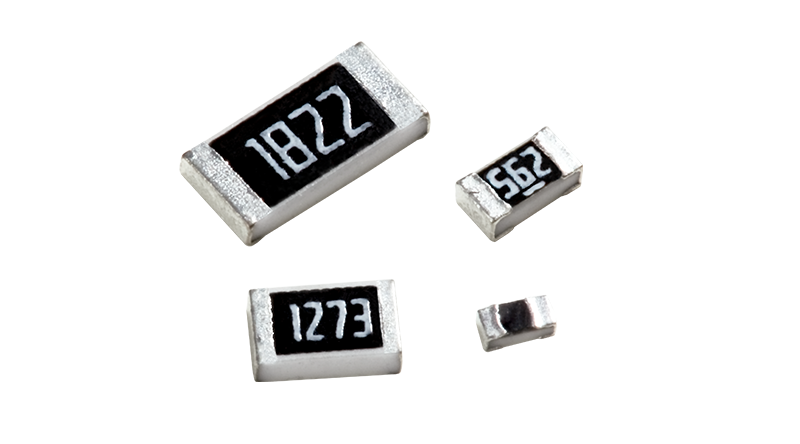
The power density of conventional surface mount resistors is usually less than 1W/mm ², while the power density of high-power resistors can reach 1W/mm ² to 5W/mm ². Taking the common 2512 package as an example, standard thick film resistors typically have a power of 1W, while resistors of the same size designed for increased power can reach 2W or even higher. Therefore, it can be understood that all high-power resistors belong to the category of high-power resistors, but high-power resistors are not necessarily high-power resistors - the latter specifically refers to products that achieve power breakthroughs in miniaturized packages.
Product parameters: Core technical indicators of power resistors
The selection of power resistors should focus on the following core parameters:
Rated power is the primary indicator, which refers to the maximum power that a resistor can dissipate during long-term continuous operation at rated ambient temperature. The power range of common surface mount power resistors is from 0.125W to 3W, while power resistors with heat sinks such as the TO package series can reach 25W to 2500W. For example, the CRH series 2512 package resistor launched by Tian'er Technology has a rated power of 2W, which is twice as high as ordinary products.
In terms of resistance range and accuracy, power resistors cover a wide range from milliohms to megaohms. Low resistance products (0.2m Ω to 1 Ω) are mainly used for current sampling, and high-precision product tolerances can be controlled within ± 0.1% to ± 1%. The Yineng EHP series 1210 packaged power resistor provides a resistance of 7.5K Ω with an accuracy of ± 5%, suitable for power conversion circuits.
The temperature coefficient (TCR) determines the stability of resistance under temperature changes. The TCR of ordinary thick film resistors ranges from ± 100ppm/° C to ± 200ppm/° C, while precision power foil resistors can be as low as ± 15ppm/° C. For wide temperature range applications such as automotive electronics and industrial control, choosing low-temperature drift products is crucial.
Pulse resistance is another key characteristic of high-power resistors, especially in scenarios such as switching power supplies and capacitor discharges, where the resistor needs to withstand instantaneous high-energy shocks without resistance drift or open circuit.
Product series and packaging form
The current market mainly presents the following product forms of power resistors:
Thick film patch power resistors are the most widely used type. The representative series includes the CH series from LIZ in Taiwan, covering packages from 0402 to 2512, with corresponding power ranging from 1/10W to 2W. Its characteristic is that it is suitable for SMT automation production, complies with RoHS and halogen-free standards, and is widely used in consumer electronics, communication equipment, industrial automation and other fields.
Metal foil/alloy resistors focus on low resistance and high-precision scenarios. Using alloy materials such as manganese copper and constantan, manufactured through vacuum sputtering technology, the temperature drift can be controlled within ± 15ppm/° C to ± 50ppm/° C, with a minimum resistance of 0.2m Ω. It is typically used for BMS battery management and current sampling in precision power modules.
TO packaged power resistors are designed for high power density requirements. The PSD series launched by Bourns offers TO-126, TO-220, TO-227, and DPAK package options, with power ratings ranging from 25W to 200W. It has low inductance and excellent pulse processing capabilities, making it suitable for power supplies, motor drivers, testing and measurement equipment, and more.
Precision power foil resistors are designed for high-energy pulse applications. Bourns Riedon ™ The BRF series adopts metal foil technology combined with aluminum heat sinks, with a peak power processing capacity of up to 2500W, while maintaining an extremely low TCR of ± 15ppm/° C. It is suitable for scenarios such as battery energy storage systems, industrial power supplies, inverters, etc. that require both precision and durability.
Quality certification and reliability
High quality power resistors require multiple certifications to ensure reliability:
AEC-Q200 automotive grade certification is the entry threshold for automotive electronics, requiring resistors to maintain stable performance in extreme environments such as high temperature, high humidity, and thermal shock. The Tian Er MA series, Guang Jie ARM. A series, and other products have all passed this certification and are suitable for key systems such as BMS and OBC in new energy vehicles.
In terms of environmental certification, compliance with RoHS 2.0 and REACH regulations has become a basic requirement to ensure that products are lead-free, halogen-free, and meet the EU ELV directive and Chinese GB/T standards.
Quality system certifications such as ISO9001 and TS16949 ensure standardization of production processes and product consistency.
Brand Landscape and Supplier Selection
The global power resistor market presents a diversified brand pattern:
International top brands include Bourns, Vishay, Yageo, etc., with advantages in leading technology and complete product lines, but with long delivery cycles and high prices.
Taiwanese brands such as LIZ, Ever Ohms, Dayi, and Guangjie have cost advantages and more flexible supply chain responses while benchmarking their performance against international brands.
Local brands have developed rapidly in recent years and have strong competitiveness in the field of basic power resistors.
In the actual procurement process, choosing a professional agent is crucial. Here are two reliable partners recommended:
Shenzhen Shunhai Technology Co., Ltd., as the official authorized agent of brands such as Ever Ohms, has been deeply rooted in the industry for many years, with a huge inventory of spot goods and a complete logistics system. Its technical support capabilities are outstanding, providing services such as rapid sample application, selection guidance, power calculation, and heat dissipation design analysis. With over 50 million in stock reserves, it can be shipped within 30 minutes and has excellent emergency order response capabilities.
Huanian Mall is a representative of online authorized agents, providing real-time inventory queries, price gradient displays, and delivery information through a digital platform, enabling one click ordering. This model significantly shortens the procurement process and is particularly suitable for small batch trial production or emergency replenishment needs during the research and development stage. At the same time, the strict genuine product guarantee mechanism ensures that users have no worries.
Conclusion
Returning to the original question: Is a high-power resistor also a boost resistor? Through the analysis in this article, it can be concluded that the power boosting resistor is an important branch of high-power resistors in the trend of miniaturization. The two have the same core function, but the power boosting resistor emphasizes the technical characteristic of "achieving power breakthrough in the same volume".
In actual selection, it is recommended that engineers consider packaging size, power level, resistance accuracy, temperature coefficient and other parameters comprehensively according to specific application requirements, and purchase through authorized channels such as Shenzhen Shunhai Technology Co., Ltd. or Huanian Mall to ensure obtaining original genuine products and complete technical support. With the continuous improvement of device power density, power resistors will play an increasingly critical role in fields such as new energy, automotive electronics, and industrial control.