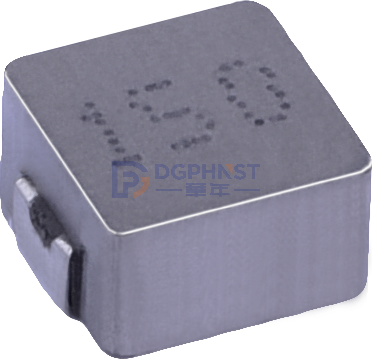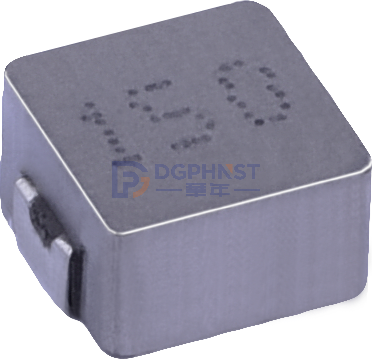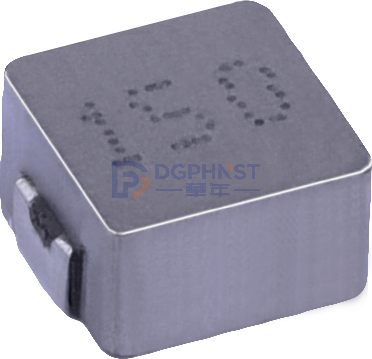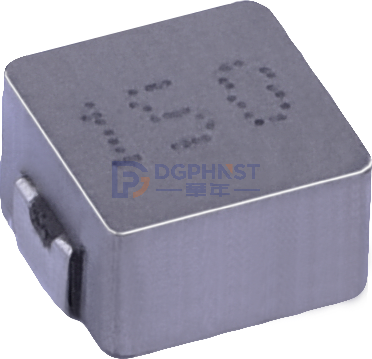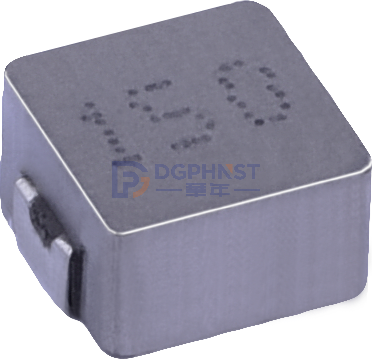
In-Depth Analysis of the 3920 0.005R(5m Ohm) 3W High-Precision Metal Shunt Chip Resistor
In modern electronic circuits, current sensing and power management are critical, with the shunt resistor serving as a core component whose performance directly determines system accuracy and reliability. Today, we provide a comprehensive introduction to a high-performance product: the 3920 0.005R(5m Ohm) 3W 1% ESR39F3WR005K02G Metal Shunt Chip Resistor. Featuring a large 3920 package, an ultra-low resistance of 0.005R (5 milliohms), a rated power of 3W, and a tight tolerance of 1%, combined with a Karma special alloy element and multiple environmental certifications, this resistor is an ideal choice for demanding current-sensing applications.
1. Key Parameters and Package Advantages
The designation 3920 0.005R(5m Ohm) 3W indicates an imperial package size of 0.39 inches by 0.20 inches, which converts to approximately 9.9 mm × 5.1 mm. This large footprint provides ample area for power dissipation and facilitates low-thermal-resistance layout on PCBs. The resistance value is 0.005Ω (5mΩ), belonging to the ultra-low range, making it highly suitable for millivolt-level voltage drop sampling in high-current paths. The 3W rated power enables it to withstand significant Joule heating, while the 1% tolerance ensures minimal sampling error. The full model number ESR39F3WR005K02G includes manufacturer-specific codes and packaging information, where “R005” explicitly denotes 0.005Ω.
2. Karma Alloy Material: The Foundation of Low TCR and Surge Immunity
Conventional copper-manganese or nickel-chromium resistor alloys exhibit considerable resistance drift with temperature changes. In contrast, the 3920 0.005R(5m Ohm) 3W resistor employs Karma alloy (a Ni-Cr-Al-Fe precision resistor alloy) as its core conductive material. Karma offers three outstanding characteristics:
-
Extremely low temperature coefficient of resistance (TCR): Typical values can be as low as ±20 ppm/°C or less, meaning resistance changes negligibly over the operating temperature range of -55°C to +155°C. For current sensing, this directly translates to high measurement stability across the full temperature range without additional compensation circuitry.
-
Excellent surge withstanding capability: The lattice structure of Karma alloy tolerates instantaneous high-current surges well. When the system encounters lightning strikes, load transients, or capacitor charge/discharge surges, this resistor can absorb multiple times its rated power without resistance drift or open-circuit failure. Compared to conventional thick-film resistors, its surge immunity is improved by more than an order of magnitude.
-
Long-term stability: Through specialized heat treatment, the aging rate of Karma material is very low. After 1000 hours of operation at rated power, resistance change is typically less than 0.1%, ensuring consistent sampling throughout the device’s lifecycle.
3. Low TCR and High Precision: Dual Guarantees for Accurate Sampling
In applications such as electric vehicle battery management systems (BMS), server voltage regulator modules (VRM), and industrial drives, current sampling error directly affects protection thresholds and energy metering accuracy. The 3920 0.005R(5m Ohm) 3W resistor, thanks to its Karma-derived low TCR combined with 1% initial tolerance, allows system designers to easily achieve a full-scale error of better than 2% in the current-sensing chain. For example, consider a current of 30A passing through the resistor – the voltage drop is only 150mV. If the ambient temperature rises from 25°C to 85°C, a conventional resistor (assuming TCR of 100 ppm/°C) would see its resistance increase by 0.6%, causing a 0.9mV increase in sampled voltage, equivalent to a 0.18A current error. With this resistor’s TCR of only 20 ppm/°C, the resistance change over the same temperature rise is merely 0.12%, leading to a current error of only 0.036A – a remarkably significant advantage for high-precision closed-loop control.
Furthermore, this resistor features a metal shunt construction. Unlike traditional thick-film or thin-film resistors, it is fabricated from a solid metal alloy plate via photolithography or stamping, eliminating point contacts and micro-cracks found in thick-film resistors, thereby reducing noise and parasitic inductance. Measured inductance is typically below 5nH, making it ideal for current sensing in high-frequency switching power supplies (e.g., hundreds of kHz DC-DC converters).
4. Environmental Compliance: RoHS, REACH, and Lead-Free Process
With increasingly stringent environmental requirements in global electronics manufacturing, the 3920 0.005R(5m Ohm) 3W resistor fully complies with the following standards:
-
RoHS: Contains no lead, mercury, cadmium, hexavalent chromium, polybrominated biphenyls, or polybrominated diphenyl ethers. Its terminations use lead-free plating (typically matte tin or tin-silver), capable of withstanding 260°C reflow without oxidation or soldering defects.
-
REACH: The content of Substances of Very High Concern (SVHC) is below 0.1% by weight. A complete Safety Data Sheet (SDS) is available, meeting EU regulations concerning the Registration, Evaluation, Authorisation, and Restriction of Chemicals.
-
Lead-free environmental requirements: The entire manufacturing process avoids lead-based solders and lead-containing glass frits. After disposal, it can be treated as conventional electronic waste without additional environmental risks.
In addition, the product is certified for low temperature coefficient (i.e., excellent low-TCR performance), ensuring stable operation in cold-chain logistics, outdoor base stations, and other low-temperature environments.
5. Typical Application Scenarios
Thanks to the above characteristics, this resistor is primarily targeted at the following high-reliability fields:
-
Electric vehicles and charging infrastructure: Battery pack current monitoring, motor driver phase current sensing, DC-DC converter output current limiting. The 3920 package is moderately sized, the 3W power rating covers short-term overloads, and the 5mΩ resistance minimizes power loss.
-
Data center power supplies: CPU/GPU voltage regulator modules (VRMs) on server motherboards require real-time current sensing per phase for dynamic current sharing. The resistor’s low TCR ensures consistent current-sharing accuracy across different racks and seasons.
-
Industrial robots and servo drives: High dynamic response demands current-loop bandwidths of several kHz. The low inductance and low noise of the metal shunt resistor introduce no phase lag or distortion.
-
Smart meters and power management ICs: For precision energy metering, combined with high-resolution ADCs to achieve Class 0.5 or even Class 0.2 accuracy.
6. Conclusion
In summary, the 3920 0.005R(5m Ohm) 3W 1% ESR39F3WR005K02G Metal Shunt Chip Resistor is a metal shunt chip resistor specifically designed for high-current, high-precision, and wide-temperature-range applications. Built upon a large 3920 package and combining Karma special alloy material, it delivers core advantages including low TCR, surge immunity, and long-term stability, while fully complying with RoHS, REACH, and lead-free environmental standards. Whether you are designing the next-generation EV BMS or optimizing current-sensing paths in industrial power supplies, this resistor deserves a place in your preferred component list.