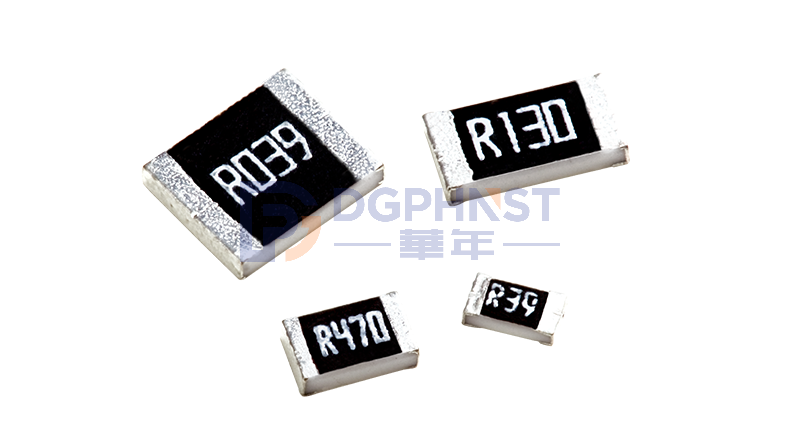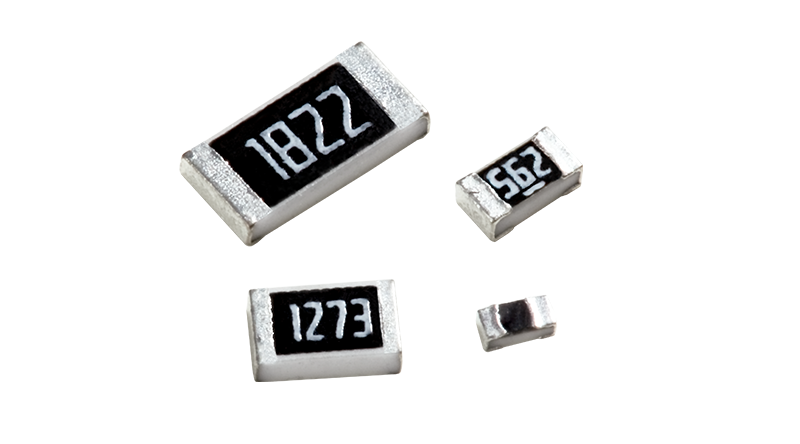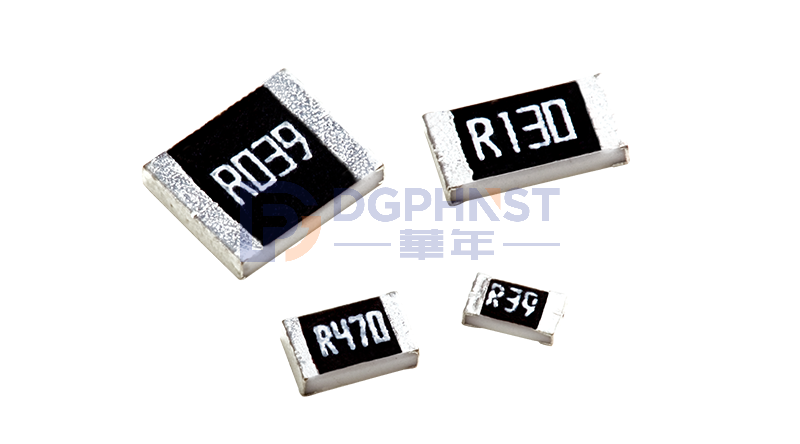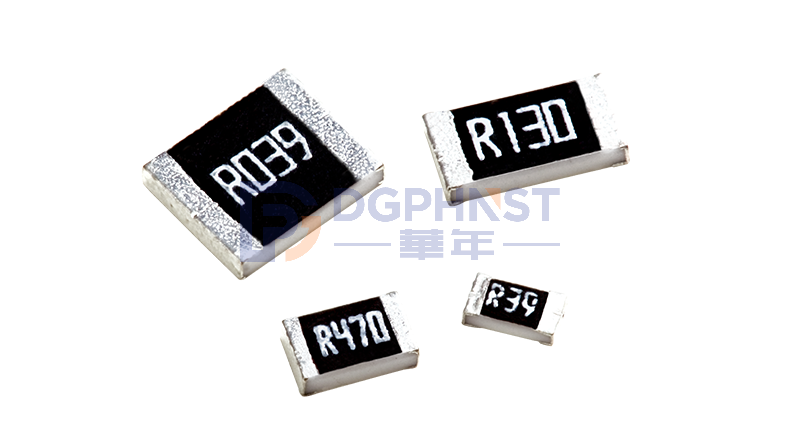
Introduction to 3920 0.002R(2m Ohm) 8W 1% ESR39F8WR002K02G Metal Shunt Chip Resistor: High Precision, Surge Tolerant, Eco-friendly Current Sensing Solution
In modern electronic circuit design, current sensing and power management remain core concerns for engineers. With the trend toward device miniaturization and higher power density, the performance requirements for resistive components have become increasingly stringent. The 3920 0.002R(2m Ohm) 8W metal shunt chip resistor – model ESR39F8WR002K02G – is precisely engineered to meet these demands. Manufactured with Karma alloy, this component features a 1% tolerance, 8W continuous power handling capability, excellent surge immunity, and full compliance with RoHS, REACH, and lead‑free environmental standards. It is suitable for high‑reliability applications such as new energy vehicles, industrial power supplies, and battery management systems.
1. Product Overview and Key Parameters
The ESR39F8WR002K02G is a metal shunt chip resistor in a 3920 package (imperial, equivalent to 10.0mm × 5.0mm). Its nominal resistance is 0.002Ω (2m Ohm), rated power is 8W, and tolerance is ±1%. The combination of 3920 0.002R(2m Ohm) 8W offers significant advantages: small footprint, high power rating, and ultra‑low resistance, making it ideal for high‑current sensing applications. The temperature coefficient of resistance (TCR) is controlled within ±50ppm/°C, providing “low temperature drift” that ensures stable readings over a wide temperature range. Additionally, this model features exceptional surge tolerance, withstanding transient overcurrent events without resistance drift or failure.
2. Technical Advantages of Karma Alloy
The core material is Karma alloy (a nickel‑chromium precision resistance alloy, typical grade NiCr20AlSi). Compared to common manganin or constantan, Karma offers higher resistivity, lower thermoelectric EMF, and superior long‑term stability. The 3920 0.002R(2m Ohm) 8W constructed with Karma maintains stable resistance even in hot and humid environments, with an extremely low aging rate. More importantly, Karma’s surge immunity far exceeds that of conventional metal foil or thick‑film resistors – when faced with transient overcurrent from inductive load switching, ESD, or short‑circuit events, the alloy dissipates heat uniformly, preventing local hot spots that could cause burnout or resistance shift. This characteristic is crucial for motor drives, power input stages, and other surge‑prone circuits.
3. Thermal Design of 8W Power in a 3920 Package
Achieving 8W rated power within a 3920 (10mm×5mm) footprint is made possible by the metal shunt construction. Unlike traditional chip resistors that use ceramic substrates with thick‑film paste, this product employs a solid metal alloy strip as the resistive element. Large electrodes allow direct soldering to PCB copper planes, enabling efficient heat transfer to the board’s thermal layers. The low resistance of 3920 0.002R(2m Ohm) 8W also minimizes self‑heating (P=I²R), but note that at full 8W, the current through the resistor reaches sqrt(8/0.002)=63.2A. Such high currents require proper PCB layout with wide traces and multiple thermal vias. The design accounts for thermal cycling reliability – the solder joint between the metal strip and terminations uses high‑temperature lead‑free solder to prevent fatigue failure under long‑term high current stress.
4. Importance of High Precision and Low Temperature Drift for Sensing
A 1% tolerance is considered high grade for an ultra‑low 2mΩ shunt. While common low‑value sensing resistors offer 5% or even 10% tolerance, the 3920 0.002R(2m Ohm) 8W with 1% tolerance and 50ppm/°C TCR ensures total resistance variation within about 1.5% over the -40°C to 125°C range. This is vital for systems requiring precise charge calculation, such as battery coulomb counters or motor phase current sensing. For example, in new energy vehicle BMS, shunt sensing error directly affects SOC (state of charge) estimation – using this component reduces calibration effort and improves system robustness. Low temperature drift means that even with large ambient temperature changes, the sensing circuit maintains its original ratio without frequent temperature compensation.
5. Engineering Value of Surge Immunity
Surges are among the most insidious threats to electronic systems. Motor startup, hot‑plugging, and lightning induction can produce microsecond to millisecond transients of high voltage and current. Conventional chip resistors, when subjected to surges dozens of times their rated power, may experience instantaneous vaporization of the resistive film or irreversible resistance shift. In contrast, the 3920 0.002R(2m Ohm) 8W uses a solid metal alloy strip without a fragile film or thick‑film structure. Its thermal capacity and electromigration tolerance are far superior. Tests show this model can withstand hundreds of 5W pulse energy events (10/1000μs waveform) with less than 0.5% resistance change. This delivers outstanding reliability in harsh environments such as outdoor equipment, industrial drives, and onboard chargers.
6. Environmental Compliance: RoHS, REACH and Lead‑Free
Global electronics manufacturing increasingly demands strict environmental compliance. The ESR39F8WR002K02G fully complies with the RoHS directive (2011/65/EU and amendments), containing no detectable lead, mercury, cadmium, hexavalent chromium, PBB, or PBDE. It also meets REACH regulation (EC 1907/2006) regarding disclosure of Substances of Very High Concern (SVHC), with none of the candidate list substances exceeding limits. The manufacturing process is lead‑free, and the termination plating is matte tin or tin‑bismuth alloy, offering good solderability and compatibility with lead‑free reflow profiles. The packaging materials of 3920 0.002R(2m Ohm) 8W are also halogen‑free, making the product suitable for export to markets with strict environmental requirements such as the EU and North America. Additionally, the resistor has passed high temperature and humidity bias testing (85°C/85%RH, 1000 hours), confirming long‑term environmental reliability.
7. Typical Applications
-
Battery Management Systems (BMS) – Current detection for power battery packs, working with high‑precision ADCs for charge/discharge monitoring.
-
Switching Power Supplies – Current sensing at the output or source of switching MOSFETs for constant current or overcurrent protection.
-
Motor Drives – Phase current sensing in three‑phase inverters requiring low inductance and strong surge immunity.
-
Automotive Electronics – DC‑DC converters, onboard chargers (OBC), electric power steering (EPS), etc.
-
Industrial Measurement Equipment – Precision shunts in high‑accuracy data acquisition systems.
8. Conclusion
The 3920 0.002R(2m Ohm) 8W model ESR39F8WR002K02G metal shunt chip resistor, leveraging Karma alloy, low temperature drift, 1% high precision, 8W high power, and outstanding surge immunity, provides an ideal solution for high‑current sensing applications. At the same time, it fully complies with RoHS, REACH, and lead‑free environmental requirements, balancing performance with green manufacturing principles. When selecting a current sensing resistor, designers should prioritize resistance stability, thermal effects, and transient tolerance – and this product excels in all these critical dimensions. Whether in new energy vehicles, industrial automation, or high‑end power supplies, the 3920 0.002R(2m Ohm) 8W stands as a reliable and efficient core component for power detection.