Early fuses featured a simple structure, resembling thin wires with no additional protective components. The old-style electrical switches commonly found in rural households used such wire-type fuses. During thunderstorms, circuit overloads frequently occurred, blowing the fuses. Power supply could be easily restored by simply loosening the screws at both ends of the switch and installing a new fuse.
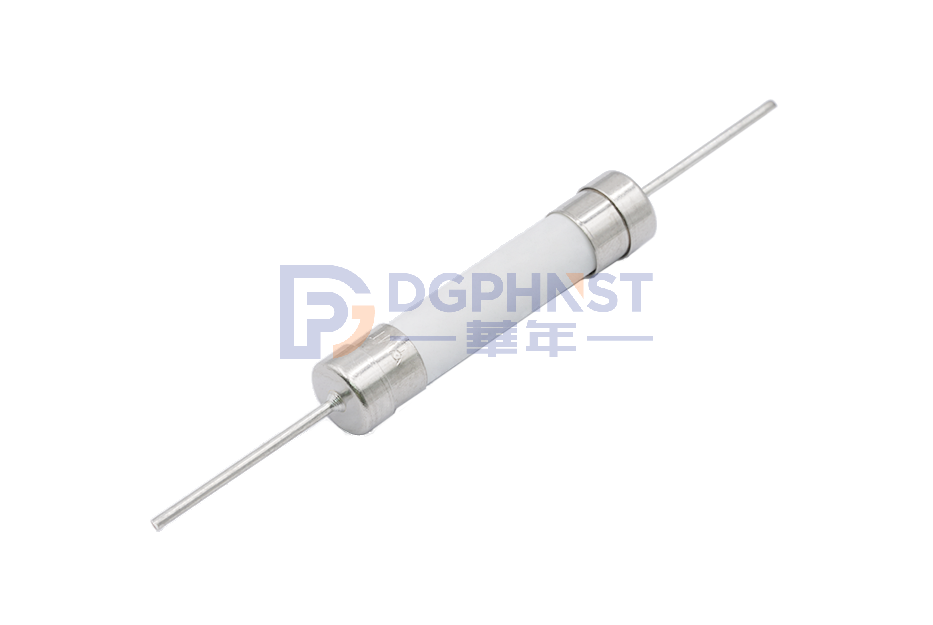
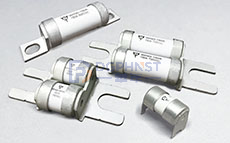
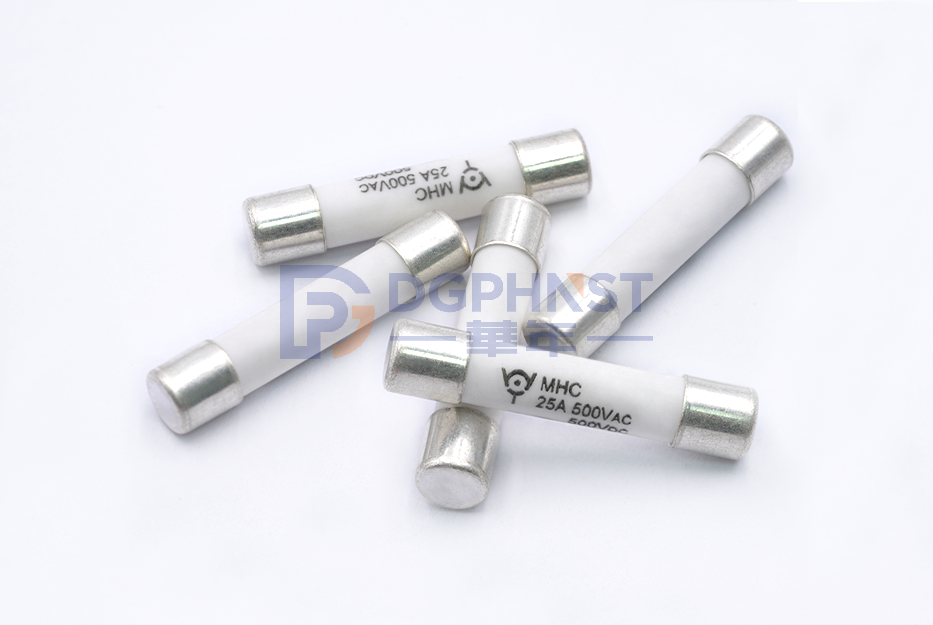
With continuous advancements in technology and manufacturing processes, fuses have evolved into a wide range of forms. The original wire-style fuses have been developed into sheet type, glass tube type, ceramic tube type, plastic sheet type with metal terminals, surface-mount type and other variants.
Surface-mount Fuse | Ceramic Tube Fuse | Glass Tube Fuse
You can find an extensive selection of fuses in the product catalog on the official website of Shunhai Technology.
A resettable fuse enables faulty electronic devices to resume normal operation automatically after a brief shutdown.
Shortened as PPTC, the resettable fuse is also known as a polymeric positive temperature coefficient thermistor, a widely used current-limiting protection component in circuits. Different from ceramic thermistors in structure, it is mainly composed of polymer resin and conductive particles.
Under normal operating conditions, internal conductive particles form a continuous path for smooth current flow. When circuit overcurrent or excessive temperature occurs, the resin expands with heat and separates the conductive particles, causing a sharp rise in component resistance. This cuts off the current and protects the circuit. After the fault is cleared and the temperature drops, the resin returns to its original state and the conductive path is reconnected. No manual replacement is required, hence the name "resettable fuse".
Key Parameters of PPTC
As specified in the PPTC datasheets, there are seven core parameters:
- Hold Current (Ihold): The maximum continuous current that keeps the PPTC in low-resistance conducting state at 25°C.
- Trip Current (Itrip): The minimum current that activates the protection function of the PPTC at 25°C, generally twice the hold current.
- Maximum Voltage (Vmax): The maximum operating voltage that the PPTC can withstand.
- Maximum Current (Imax): The instantaneous short-circuit current the PPTC can endure, indicating its surge resistance capability.
- Maximum Time to Trip: The maximum time required for the PPTC to switch from normal operation to protection mode. This parameter is tested under specified current and closely related to the overcurrent multiple.
- Typical Power Dissipation (Pd): The typical power consumption of the PPTC when it is in protection state at 25°C.
- Minimum Initial Resistance (Ri min): The minimum resistance of the unsoldered component at 25°C.
- Maximum Post-trip Resistance (R1 max): The maximum resistance measured at 25°C one hour after tripping or reflow soldering.
PPTC is highly temperature-sensitive, so temperature impact must be fully considered in practical applications.
Based on ambient temperature and the two current parameters above, the characteristic curve is divided into three zones:
- Zone A: The correlation between current and temperature when the PPTC trips and turns into high-resistance state.
- Zone B: The variation rules of current and temperature of the component under normal circuit operation.
- Zone C: The area where the component may remain in low-resistance state without tripping, determined by its resistance value and ambient temperature.
Trip Time
Ambient temperature directly affects the trip time of PPTC. Take 75°C high temperature as an example: the internal polymer reaches the critical transition temperature with low I²t energy, so the component can be tripped by a relatively small current.
Reset Characteristic
The resistance of PPTC after tripping is higher than its initial value. As standing time increases, the internal polymer gradually recovers, and the component resistance slowly returns to the initial level. Refer to the reset characteristic curve for detailed changes.
Package Dimensions of PPTC
As a special type of fuse with automatic reset function, PPTC has package dimensions different from traditional fuses.
Application Circuits & Scenarios of PPTC
As a specialized circuit protection component with auto-reset capability, PPTC has the following application features:
- Ideal for working conditions where fuse replacement and installation are inconvenient.
- Capable of enduring repeated overcurrent surges without frequent replacement.
- Slower response speed than traditional fuses, not applicable to scenarios requiring instant power cut-off.
- Prone to false tripping in high-temperature environments, so extra attention is needed during model selection and layout design.
- Mainly applied to low-voltage, low and medium-current circuits.
Application Scenarios
- Automotive: On-board power supply, ECU control boards, meters, batteries, vehicle air conditioners, automotive instruments, dashcams, radio modules, tire pressure monitoring systems, etc.
- Computers & Lighting: Hard disk drives, IEEE 1394 interfaces, USB ports, power supplies, energy-saving lamps, electronic ballasts, LED lights, exposure lamps, etc.
- Batteries & Consumer Electronics: Rechargeable batteries, lithium batteries, remote controls, barcode scanners, POS terminals, chargers, Bluetooth headsets, cameras, washing machines, hair dryers, etc.
- Communication & Smart Home: Smart speakers, dimming switches, control consoles, voice control systems, audio and video control devices.
- Instruments & Meters: Electric meters, sensors, high-voltage meters, chemical analyzers, detectors, temperature controllers, data collectors, scanners, etc.
- Industry & New Energy: Industrial control systems, solar power, wind power, biomass energy, geothermal energy and other new energy facilities.
Surface-mount PPTC Fuse
Closing Remarks
After generations of technical innovation, fuses have gone far beyond the basic overcurrent protection design. Featuring unique material properties and working principles, resettable fuses make up for the drawbacks of traditional fuses. With diversified packages and complete parameter specifications, they are widely used in consumer electronics, communication, medical equipment, automotive and many other fields.
Working performance of PPTC is directly affected by temperature, current, voltage and other factors, which sets higher standards for circuit design and component selection. With the continuous innovation of electronic technology, optimizing component performance and properly adopting new protection devices are essential to ensure circuit safety and enhance product core competitiveness.