Continued growth in AI demand is triggering supply tension in the global passive component market.
In August, the entire MLCC capacitor industry chain remained tight, with the spot market already showing a phenomenon of premium purchasing.
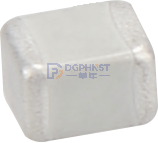
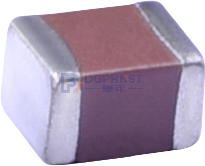
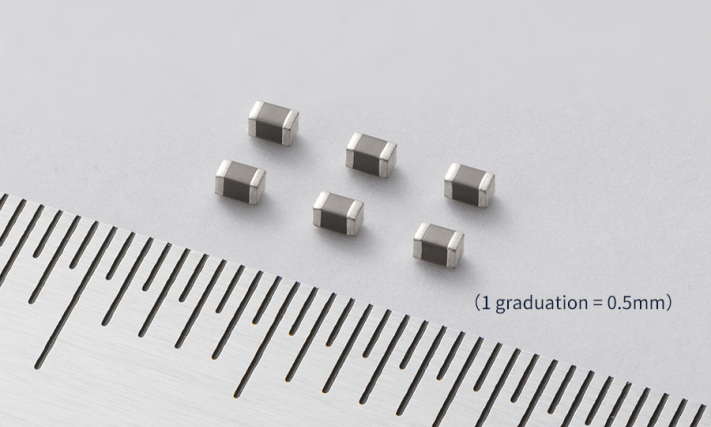
MLCC (Multilayer Ceramic Capacitors), known as the 'rice of electronic industry,' is an essential core component for AI servers and data center computing power. This is not a general inventory shortage, but rather a structural super boom driven by AI computing power, with three aspects - volume, price, and product structure - all improving comprehensively.
1. Industry Situation: Premium Purchase with 2-3 Times Price Increase, Delivery Time Up to 16 Months
The high prosperity of the global MLCC industry chain has been confirmed from multiple dimensions including capacity, orders, and delivery time.
According to a survey by the Chinese Taipei Economic Daily, orders of major global MLCC manufacturers such as TDK and Murata are fully loaded, with product delivery cycles significantly extended. The mainstream delivery time has stretched to 12-16 months, while some high-end models have delivery times exceeding 20 weeks.
The severe imbalance in capacity allocation has become the industry norm: Major original equipment manufacturers prioritize securing capacity quotas for top-tier clients and long-term partners, prioritizing orders for high-end applications such as AI servers and large-scale data centers, directly squeezing the supply space for small and medium-sized customers. For small and medium-sized manufacturers facing urgent inventory shortages and concerns about supply interruption, they can only purchase at high prices in the spot market, with some emergency orders reaching 2-3 times the original price.
As a leading company in the Taiwanese industry, TDK has already confirmed the booming market conditions. The company officially confirmed that current MLCC demand is extremely strong, with continuous improvement in capacity utilization: Standard product capacity utilization this quarter increased from 80% in the second quarter to over 90%, while special high-end product capacity utilization remains stable at a high level of 90%, with overall capacity continuously approaching full load.
To cope with the explosive demand, TDK has launched a global expansion plan, adding new capacity through its four production bases in Kaohsiung, Taiwan; Suzhou, China; Vietnam; and Mexico. With new equipment gradually coming online, capacity will be steadily released quarter by quarter.
2. Global Major Manufacturers Confirm: Explosive Growth in Performance, Demand Far Exceeds Expectations
This round of MLCC industry prosperity is not an isolated case for a single manufacturer. The performance and business guidance of major global Japanese, South Korean, and Taiwanese manufacturers fully confirm that the demand surge driven by AI is a real industry trend.
MLCC leaders have seen significant performance improvements, consistently raising industry expectations:
- Murata: Capacitor revenue in the second quarter rose 30% year-over-year, with AI servers becoming the core growth engine. While industry inventory has slightly increased, inventory of high-end AI-specific capacitors continues to decrease, with real and vigorous incremental demand.
- Taiyo Yuden: Second-quarter operating profit surged 53.3% year-over-year, with a significant upward revision of full-year performance guidance, clearly stating that AI server MLCC demand far exceeds previous industry forecasts, with the market accelerating towards high-capacity, high-performance products.
- Samsung Electro-Mechanics maintains a full order book for high-end MLCC, with ongoing long-term orders from major clients. The company actively raises the priority of high-end product lines to fully adapt to AI computing power scenarios.
- Industry Overall Data: According to TrendForce data, in June 2026, the monthly shipments of the three global MLCC leaders, Murata, Samsung Electro-Mechanics, and Taiyo Yuden, all reached record highs in five years, with continued pressure on order backlogs and expanding supply-demand gaps.
3. Core Logic of the Shortage: Not Total Shortage, But AI Restructuring the Demand System
Many people mistakenly believe that the current MLCC price increase and shortage is a routine recovery of the industry cycle, but this is not the case. The essence of this round of market dynamics is that AI computing power has completely restructured the MLCC demand standards and usage ceiling, which is a typical structural shortage, not a general shortage across all categories.
Previously, MLCC demand mainly relied on consumer electronics such as mobile phones and home appliances, with stable usage and slow iteration. However, the implementation of AI servers and whole cabinet computing devices has led to a tenfold jump in MLCC usage per unit, significantly increasing value:
- Conventional dual-channel commercial servers use only 2,000-5,000 pieces of MLCC per unit;
- High-end AI servers equipped with 8 GB200 cards use up to 20,000-30,000 pieces of MLCC per unit, which is 7-15 times higher than regular servers;
- The next-generation Rubin whole cabinet computing device could require up to 400,000-600,000 pieces of MLCC, with the value of passive components per cabinet increasing by 182% compared to the previous generation.
- Goldman Sachs industry data shows that the annual compound growth rate of the AI server MLCC segment is as high as 80%, making it the strongest growth driver in the passive component industry.
Not only has the usage exploded, but AI scenarios have also significantly raised the performance threshold for MLCC. Compared to ordinary consumer-grade products, AI servers require a large number of specialized MLCC with high capacitance, low ESL, high temperature resistance, and high reliability, with extremely high technical barriers. Currently, the global high-end MLCC market is highly concentrated, with Murata and Samsung Electro-Mechanics together accounting for about 85% of the market share, and the industry entry barrier is very high.
More importantly, global leading manufacturers are actively adjusting their capacity structures, collectively reducing low-margin consumer-grade low-end MLCC capacity, and focusing on AI high-end, high-margin models. This adjustment further reduces the supply of mid-to-low-end general-purpose materials, ultimately forming a situation where high-end products are severely scarce, mid-range products are in balance, and the entire industry faces shortages.
4. Industrial Chain Transmission: Computing Power Dividends Flow Downward, Basic Components Become New Bottlenecks
The tightening of MLCC supply and demand is an inevitable result of the computing power industry's rotation.
Industry demand enthusiasm was first triggered by core hardware such as GPUs, HBM, and optical modules. As AI servers begin mass production, demand flows downstream to basic passive components.
This trend is similar to the previous logic of rising prices and volumes in memory chips. AI's new demand reshapes the entire industry's supply and demand structure, making basic components a key bottleneck for computing power implementation.
5. Cycle Outlook: Short-Term Prosperity Continues, 2027 Marks the Turning Point in the Industry Structure
It should be clear that MLCC is a typical cyclical industry. The current ultra-prosperous market driven by AI is not permanent, and the industry still faces risks of future cyclical fluctuations.
From a short-term perspective, the structural shortage of high-end MLCC is difficult to reverse. On one hand, the AI computing power construction dividend continues to be released, and the trend of long-term contracts locking capacity and prices becomes increasingly common. On the other hand, the high technical barriers of high-end MLCC and the slow progress of new capacity lead to a difficult short-term supply-demand gap, and the premium spot market and long delivery times will continue to persist.
From a medium to long-term perspective, the industry supply and demand structure will see a reversal. Currently, major global manufacturers have already launched large-scale expansion plans. According to industry estimates of an 18-24-month expansion cycle, new MLCC capacity globally will be concentrated in production around 2027, at which point the shortage of high-end products will gradually ease.
At the same time, the continuously rising raw material prices are constantly increasing the cost pressure on downstream end manufacturers. There is a natural ceiling for price increases. Long-term high prices may suppress the end users' willingness to purchase and stock up. Once demand weakens marginally, the industry's prices and orders may fluctuate.
Conclusion
Short term, the AI computing power dividend continues to be released, and the structural shortage of high-end MLCC is difficult to reverse, with long-term contracts locking capacity and high premium situations continuing to persist. From a medium and long-term perspective, as new capacity comes online and demand gradually returns to rationality, industry cycle fluctuations will become the norm.