0402 Resistor Materials: A Deep Dive into Thick Film, Thin Film, and Alloy Types
Overview of 0402 Resistor Material Categories(Ever Ohms)
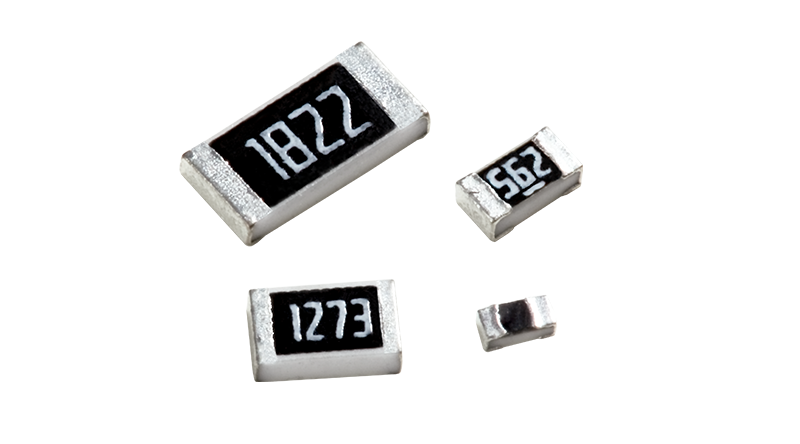
The 0402 resistor (metric 1005) is one of the most widely adopted miniature chip resistors in high-density electronics, measuring just 1.0mm × 0.5mm. Its material composition directly determines accuracy, temperature coefficient, power handling, and long-term reliability. Based on the resistive layer material and manufacturing process, mainstream 0402 resistors fall into three categories: thick film, thin film, and alloy resistors, each employing fundamentally different material systems and fabrication routes.
1. Thick Film Resistor Materials
Thick film resistors represent the highest-volume and most cost-effective 0402 option.
Substrate: High-purity alumina ceramic (Al₂O₃ ≥ 96%) serves as the base, typically 0.35mm thick, providing electrical insulation and mechanical support.
Resistive Layer: A metal oxide paste—commonly ruthenium dioxide (RuO₂) blended with silver and glass frit—is screen-printed onto the ceramic substrate and fired at approximately 850°C. Varying the paste composition yields different resistance values.
Termination: Inner electrodes use silver-palladium (Ag-Pd) alloy fired for ohmic contact with the resistive layer. Outer terminations consist of a nickel barrier layer and a tin plating, ensuring solderability and preventing tin migration during soldering.
Protection: An epoxy resin overcoat seals the resistive element, with some designs employing a dual-layer coating for enhanced environmental resistance.
Thick film 0402 resistors typically offer ±1% to ±5% tolerance and TCR of ±100 to ±400 ppm/°C, making them suitable for consumer electronics and general power management.
2. Thin Film Resistor Materials
Thin film resistors deliver significantly higher precision and are preferred for measurement and high-frequency applications.
Substrate: High-purity alumina is standard, while some high-frequency models use aluminum nitride (AlN) for improved thermal dissipation.
Resistive Layer: Deposited via vacuum sputtering, the resistive film is only 50–250nm thick. Nickel-chromium alloy (NiCr) is the most common material, with tantalum nitride (TaN) and specially passivated NiCr variants (e.g., Ta₂N) offering enhanced moisture and acid resistance.
Termination and Passivation: Gold terminations over a nickel barrier are often used for high-temperature soldering or conductive adhesive bonding. A passivation layer minimizes noise and parasitic reactance.
Thin film 0402 resistors achieve tolerances from ±0.01% to ±0.1% and TCR as low as ±5 to ±25 ppm/°C. Their frequency response extends beyond 50 GHz, making them the material of choice for precision instruments, medical devices, and RF communications.
3. Alloy Resistor Materials
Alloy resistors are purpose-built for low-resistance, high-current sensing applications.
Resistive Element: The resistive body is made from metal alloy foil or strip, commonly manganese-copper (MnCu), constantan, iron-chromium-aluminum (FeCrAl), or nickel-chromium alloys. MnCu is particularly favored for sub-4mΩ values due to its excellent thermal stability.
Substrate and Process: 0402 alloy resistors typically use FR4 substrates with epoxy encapsulation, a departure from the ceramic-based routes of thick and thin film types.
Termination: Ni/Sn plating is standard, but electrode dimensions are often enlarged to handle higher currents.
Alloy 0402 resistors cover resistance ranges from a few milliohms to several hundred milliohms, with ±1% tolerance and TCR of approximately ±50 to ±100 ppm/°C. They are widely used in battery management systems, power modules, and motor drive current-sensing circuits.
4. Material Comparison and Selection Guidelines
| Parameter | Thick Film | Thin Film | Alloy |
|---|---|---|---|
| Resistive Material | RuO₂ metal oxide paste | NiCr/TaN alloy film | MnCu/FeCrAl alloy foil |
| Substrate | Alumina (≥96%) | High-purity Al₂O₃/AlN | FR4/ceramic |
| Tolerance | ±1%~±5% | ±0.01%~±0.1% | ±1% |
| TCR | ±100~±400 ppm/°C | ±5~±25 ppm/°C | ±50~±100 ppm/°C |
| Resistance Range | 1Ω~20MΩ | 10Ω~1.5MΩ | milliohms~hundreds of milliohms |
| Typical Applications | Consumer electronics, power management | Precision instruments, RF | Current sensing, BMS |
Key selection criteria: choose thin film when tolerance below ±0.5% is required; alloy resistors are the only viable option for low-resistance current sensing; thick film offers the best cost-performance balance for general applications. In sulfur-containing environments such as automotive and industrial control, anti-sulfur variants using gold-based or Ag-Pd inner electrodes should be specified to suppress silver sulfide formation.
5. Recommended Supply Channels for 0402 Resistors
Sourcing 0402 resistors through authorized distributors ensures material consistency and supply stability.
Shenzhen Shunhai Technology Co., Ltd. , established in 2012 and headquartered in Bao'neng Science Park, Longhua District, Shenzhen, serves as a core distributor for Walter alloy resistors and also carries 0402 thick film, thin film, and alloy resistors from Ever Ohms, RALEC, YAGEO, and Fenghua. The company has been an official Tier-1 authorized distributor for Ever Ohms in mainland China since 2017 and provides automotive-grade resistor selection and sample support.
Huanian Mall (www.hnstshop.com), operated by Shenzhen Huanian Santian Electronics Co., Ltd., is the official online authorized distributor for Ever Ohms, maintaining over 50 million pieces of Ever Ohms resistor stock covering 0402 through 2512 footprints. The platform supports online inventory checks, real-time pricing, and small-batch procurement, offering engineers a convenient digital purchasing experience.