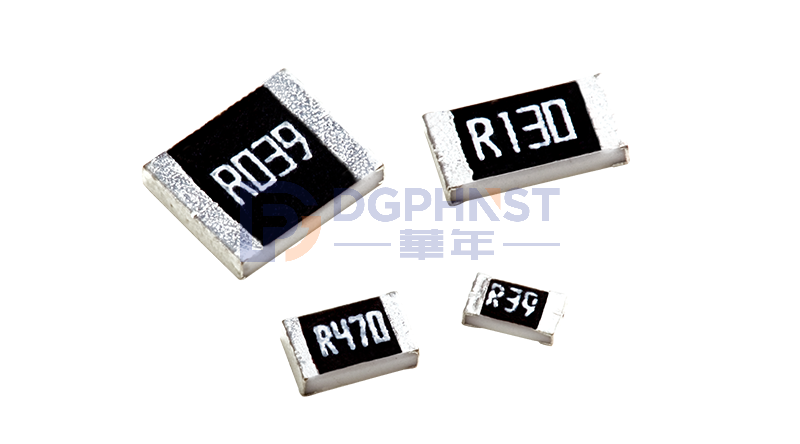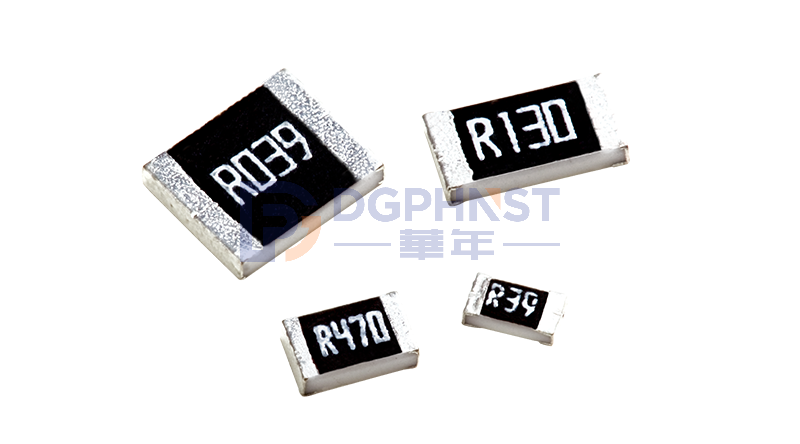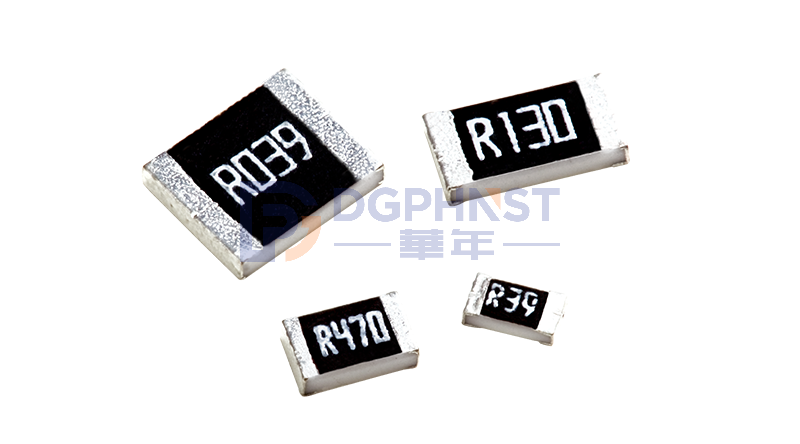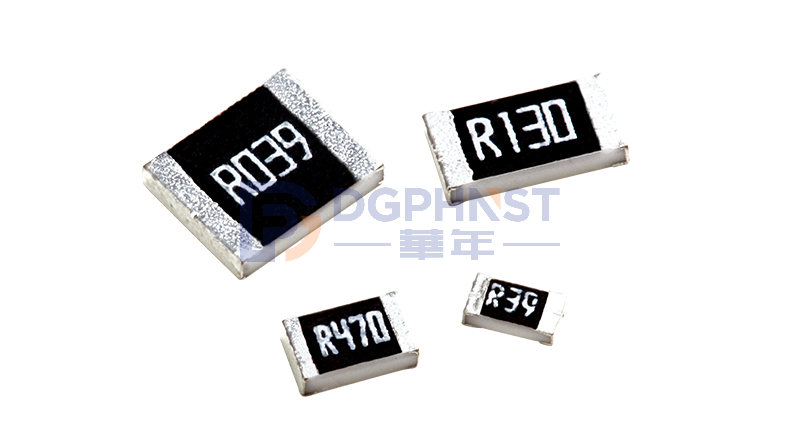
As one of the most widely used basic components in electronic circuits, 0402 surface mount resistors are deeply adapted to three major mainstream fields: automotive electronics, industrial control equipment, and consumer electronics, thanks to their compact packaging and strong versatility. If the resistance value, precision, and power rating are consistent, can 0402 resistors be directly interchangeable? The answer is no.
Basic electrical parameters are just the minimum threshold for resistor selection. The core factor that determines the suitability of a resistor for a specific application is its ability to withstand different environmental stresses. Although the package is the same, the design objectives of 0402 resistors for automotive, industrial control, and consumer electronics applications are completely different.
1. Core Usage Characteristics Differences of 0402 Resistors in Three Scenarios
Automotive Electronics: Wide Temperature Range, High Reliability
The core requirements for 0402 resistors in automotive applications are wide temperature adaptability, stable performance, and compliance with regulations. All selection criteria are formulated around the complex environment and safety needs of vehicle operation.
1. Certification Is a Mandatory Requirement
Automotive passive components must meet AEC-Q200 requirements. Materials that do not pass certification cannot pass the Tier1 BOM review and will be rejected during整车 (whole vehicle) certification.
2. Installation Position Determines Environmental Stress Level
Even within automotive devices, resistors at different installation positions experience significantly different stress levels:
- The cabin entertainment module has relatively mild operating conditions, but the materials still need to meet automotive standards;
- The engine compartment and underbody ECU require resistance to -40°C~125/150°C temperature ranges, while also withstanding corrosive media such as fuel byproducts, oil volatilization, and condensation water, requiring higher resistance to withstand performance.
3. Functional Safety Circuits Do Not Allow Downgrade Substitution
According to ISO 26262, functional safety-related circuits such as BMS sampling, braking, airbags, steering signals, and OBC protection prohibit using consumer-grade or industrial control-grade materials as substitutes, even if the electrical parameters are consistent, as it does not comply with design specifications.
4. Must Have Anti-Sulfurization Capability
Areas with high sulfurization risk, such as ECUs near engines, sealed chambers of battery packs (rubber parts release sulfur-containing gases), and external intake ports of OBCs, require the use of anti-sulfur resistors with silver-palladium/silver-ruthenium electrodes combined with dense protective layers to avoid sulfurization failure risks.
5. Strict Power Derating Standards
Automotive resistors typically require actual power consumption to be no more than 50% of the rated power; in closed and high-temperature areas of the engine compartment, derating is further controlled to 30%~40%, reducing the probability of failure due to high-temperature aging.
When selecting automotive 0402 resistors, compliance, operational safety, and quality traceability are prioritized, with parameter performance and material cost subject to safety and specification requirements.
Industrial Control Equipment: Anti-Vibration, Anti-EMI
In industrial scenarios, although the environmental temperature may not be as extreme as in automotive applications, continuous mechanical vibration, dust, power surges, and EMI interference are common. 0402 resistors on PLCs, industrial gateways, sensor acquisition boards, and inverter control boards primarily test structural stability and pulse resistance.
1. Wide Working Temperature Range, Higher Power Derating Requirements
The working temperature range is -40°C~85°C, and most conditions operate continuously 7×24 hours. For the same 1/16W resistor, a 70% power margin is sufficient for consumer applications, while industrial control applications generally require a power margin of no less than 50% to reduce drift and burning risks from long-term high-temperature operation.
2. Temperature Coefficient and Precision Are Key Indicators
Industrial equipment's analog sampling, reference voltage division, and current detection circuits require high parameter stability. Ordinary ±1% precision resistors are insufficient, so ±25~50ppm film resistors are usually selected. In necessary cases, resistors from the same batch are used together to ensure stable sampling accuracy.
3. Consideration of Environmental Corrosion Risks
Scenarios like chemical plants, sewage, textile, and mining environments contain sulfur and chlorine in the air, making conventional silver electrode thick-film resistors prone to sulfurization and open circuit failures. In such scenarios, A/B-grade anti-sulfurization resistors should be used, which is also an important distinction point between industrial control and consumer electronics resistor selections.
When selecting industrial control 0402 resistors, the focus is on ensuring long-term stable operation of the equipment, prioritizing anti-vibration, anti-interference, and corrosion resistance capabilities, with reliability taking precedence over material costs.
Consumer Electronics: Lightweight, Low Cost, and Conventional Mild Conditions
Consumer products such as mobile phones, tablets, smart small appliances, and wireless modules operate in indoor ambient temperature environments with relatively mild vibration and temperature differences. Consumer-grade 0402 resistors are designed with volume and cost as priorities, meeting conventional service life requirements.
1. Simplified Selection Parameters
Circuits such as pull-up/pull-down, LED current limiting, and general voltage division detection typically use ±5% thick-film resistors. Selection mainly evaluates resistance value, package, and price, with TCR and long-term drift usually not considered as evaluation indicators.
2. Relatively Mild Working Environment Conditions
Internal device temperatures are generally below 70°C, with no condensation or continuous vibration; product iteration cycles are short, so they do not require long-term endurance against aging loss.
3. Packaging Selection Focuses on Saving PCB Area
Consumer electronics choose 0402 packaging mainly to reduce PCB board area and achieve lightweight design, without additional special design requirements for reliability and safety.
Consumer electronics 0402 resistors prioritize controlling material costs and improving replacement convenience while meeting basic circuit functions, without redundant high-performance parameters.
- Differences Among the Three Scenarios of Same-Package 0402 Resistors
|
Comparison Item |
Automotive 0402 Resistor |
Industrial Control 0402 Resistor |
Consumer Electronics 0402 Resistor |
|
Core Design Objectives |
Adapt to wide temperature conditions, ensure operational safety and high reliability |
Anti-vibration, anti-surge interference, adapt to long-term continuous operation |
Adapt to mild conventional conditions, control costs, and optimize layout |
|
Typical Operating Temperature Range |
-40°C~125°C |
-40°C~85°C |
0°C~70°C |
|
Key Reliability Verification Projects |
AEC-Q200 certification, thermal cycling, salt spray testing, long-life aging verification |
Vibration impact, pulse surge, ESD protection, long-term operation stability verification |
Conventional aging performance testing |
|
Main Failure Risk |
Thermal cycling causes electrode cracking and resistance drift, medium corrosion, and sulfurization failure |
Continuous vibration produces micro-cracks, and instantaneous pulse voltage breaks the device |
Conventional high-temperature aging, large working temperature drift |
|
Power Derating Requirements |
Largest derating (30%-50%) |
Moderate derating (≥50% power margin) |
Conventional derating (70% power margin) |
|
Design Life Cycle |
Over 10 years |
5-8 years |
2-5 years |
Summary at the End
Under the same appearance, 0402 resistors represent three completely different reliability design logics: the automotive version is designed for extreme temperatures and safety; the industrial control version is designed for continuous vibration and power surge interference; the consumer version balances cost under mild environmental conditions.
From working temperature range, power derating, reliability verification, to lifecycle, 0402 resistors for the three scenarios each have their own standards and responsibilities, and there is no possibility of universal substitution. Passive components do not have a 'universal standard model'; choosing the right grade is the most economical way to reduce later failures and minimize field faults.