——This article is edited by Shenzhen Shunhai Technology Co., Ltd., a distributor of molded inductors, and Huanian Mall.
In the new energy replenishment sector, a silent "efficiency involution" is taking place.
For charging station operators, equipment depreciation is a visible cost, but continuous power loss is the invisible expense that erodes profits in the long run. In integrated solar-storage-charging and off-grid DC fast charging scenarios, every 0.5% increase in system efficiency allows an ultra-fast charging station operating year-round with 10,000 kWh daily charging volume to save 18,250 kWh annually, directly translating into net profit for the station.
The key to improving efficiency lies in the PFC and DC/DC conversion circuits of the power modules. With the popularization of 800V high-voltage platforms and SiC (Silicon Carbide) devices, module switching frequencies have increased from the traditional 20kHz to over 100kHz. Amid this trend towards higher frequencies, traditional toroidal and ferrite inductors are gradually hitting engineering performance ceilings imposed by materials and structures in high-power applications.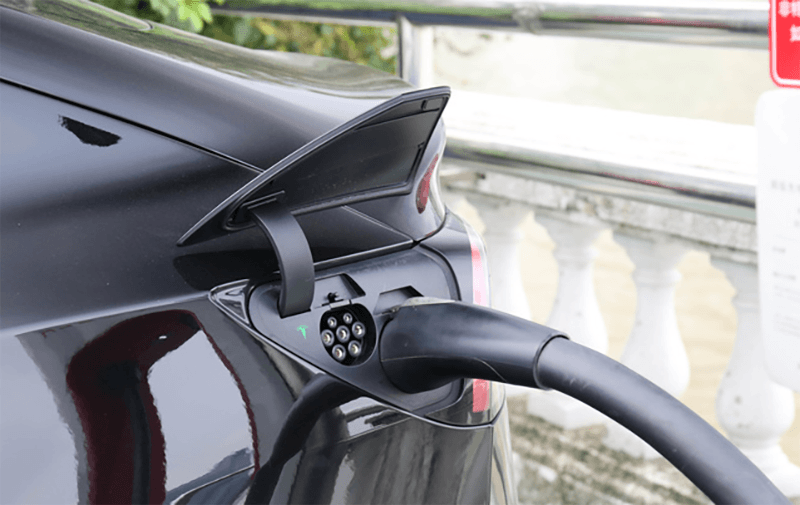
I. Why Are Traditional Power Inductors Struggling in the Era of High-Frequency Ultra-Fast Charging?
Today, as we pursue extreme power density (some 40kW module designs target power densities above 68W/cm³), traditional inductor designs reveal three prominent pain points under high-power conditions:
1. Increased High-Frequency Losses and Significant Temperature Rise Pressure
As switching frequencies soar, eddy current losses in traditional ferrite materials rise with the square of the frequency. To control temperature rise, inductor volumes often need to be enlarged, which contradicts the current development direction of miniaturization and high power density in ultra-fast charging piles.
Ferrite toroidal inductors can operate at 100kHz conditions through material and winding optimization; their core shortcoming lies in lower saturation flux density under high-power, high-current conditions, making them prone to magnetic saturation. It is not that they are completely unusable once the frequency reaches 100kHz.
2. Leakage Flux Interference Leading to Long EMC Debugging Cycles
Traditional wound inductors mostly use open or semi-shielded structures. Within the highly integrated systems of ultra-fast charging piles, the leakage magnetic field generated by inductors easily interferes with surrounding sensitive control circuits and communication modules, causing repeated rectifications during EMC testing, increasing R&D time and capital costs, and delaying product mass production progress.
3. Batch Consistency Risks Due to Process Variations
Traditional high-current toroidal inductors often rely on manual or semi-automatic winding processes in low-cost solutions, making it difficult to fully unify enamel wire tension and winding tightness. In automotive-grade and industrial-grade environments involving high temperatures and vibration, process dispersion increases the risk of early product failure.
Toroidal inductors with automated winding can also achieve high consistency; poor consistency is more common in low-cost versions using manual winding, rather than being an inherent defect of toroidal inductors themselves. Inductor failure is also influenced by multiple factors such as magnetic material quality, insulation processes, and structural fixation.
Power modules facing the ultra-fast charging era require device solutions that can overcome these engineering bottlenecks, making molded inductors the preferred choice.
II. How Do Molded Inductors Resolve Pain Points in Ultra-Fast Charging Applications?
Molded inductors have already been widely used in consumer electronics and AI servers. In high-power, high-voltage charging pile power module scenarios, the optimization value they bring at the component level is particularly significant.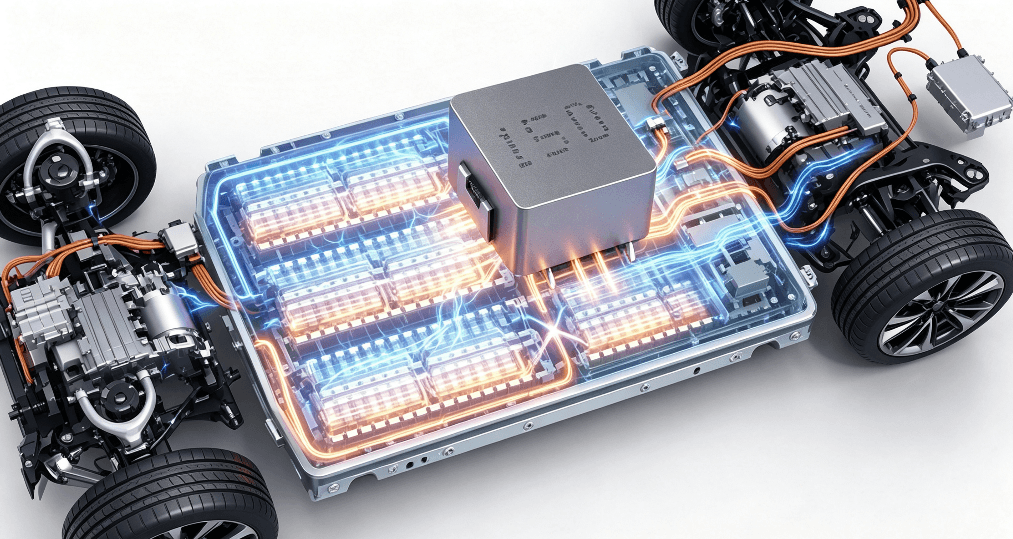
1. Structural Optimization Enhances Heat Dissipation and Effectively Suppresses Temperature Rise
In traditional inductors, heat is concentrated inside the coil, where air has poor thermal conductivity. Molded inductors use flat copper wire windings combined with iron-silicon or iron-silicon-aluminum alloy magnetic powder, formed integrally via high-pressure die casting.
Highly thermally conductive alloy magnetic powder tightly wraps around the coil, effectively creating numerous micro three-dimensional heat dissipation structures;
Flat wires increase the conductor cross-sectional area, reducing DC resistance (DCR) and cutting copper losses at the source.
Under equivalent electrical specifications, compared to same-spec manual-wound toroidal inductors, the working temperature rise of molded inductors can decrease by 10℃-20℃, helping to improve the overall conversion efficiency of power modules by 0.5%~1%.
The improvement in overall system efficiency is also constrained by other components such as power transistors and transformers; this represents an achievable optimization range rather than a guaranteed fixed value. This performance improvement has practical value for electricity cost control in long-term charging station operations.
2. Nearly Closed Magnetic Circuit Reduces Difficulty of EMC Rectification
The internal space of ultra-fast charging pile chassis is compact, and the electromagnetic environment is complex. Molded inductors, formed by metal powder die-casting, possess a nearly closed magnetic circuit structure:
Leakage flux levels are significantly reduced, resulting in weak outward radiating magnetic fields;
Stronger resistance to external magnetic interference reduces disturbance to CAN buses and precision sampling circuits, lowering the rectification costs and debugging workload required to pass conducted and radiated EMC certifications.
In engineering, there is no absolutely zero-leakage fully closed magnetic circuit; molded inductors still exhibit minor leakage flux, but it is far superior to open-loop structure inductors.
3. Fully Automated Production Balances Batch Consistency and Environmental Reliability
For power module manufacturers, supply chain stability and product batch consistency are crucial.
Unlike traditional low-cost toroidal inductors that rely on manual processes, molded inductors can achieve fully automated production from magnetic powder preparation and coil forming to high-pressure die casting:
Component dimensions, DCR, and inductance decay curves can achieve very high batch consistency;
Integral die-casting provides high mechanical strength, adapting to the complex conditions of outdoor ultra-fast charging piles, including wide temperatures (-40℃~125℃), high-frequency vibration, and salt spray/humidity.
III. Beyond Component Replacement: Achieving System-Level Cost Reduction and Efficiency Gains
Space Benefits: Under equivalent electrical specifications, molded inductors can reduce volume by over 30% compared to traditional manual-wound toroidal inductors. 40kW and 60kW power modules can be made more compact, allowing more power modules to be integrated within limited chassis space, thereby improving overall power density. Shunhai Technology, in collaboration with Sunlord and E-Neng, offers multi-specification molded inductor products covering selection needs for various power-level charging piles.
Time Benefits: Characteristics of low leakage flux and high consistency reduce the number of EMC iteration validations, shortening the cycle from solution finalization to mass production; meanwhile, Shunhai Technology provides technical selection support to help engineers quickly match inductor specifications.
Economic Benefits: As the domestic integrated industry chain matures, from self-developed soft magnetic alloy powders to fully automated die-casting lines continuously coming online, the application costs of molded inductors in high-power industrial and automotive-grade scenarios continue to decline, improving economic viability.
Molded inductors also have application boundaries. In some extremely high-frequency conditions, optimized ferrite solutions may offer better loss characteristics; simultaneously, in high-power high-voltage scenarios, device insulation design and small-batch procurement costs need to be comprehensively evaluated based on actual project requirements.
In Conclusion
From 40kW to 480kW, every leap in charging pile power tests the comprehensive engineering capabilities of underlying magnetic components.
The popularization of molded inductors in new energy charging pile power modules signifies that magnetic components are no longer just passively adapting to circuit requirements but are actively empowering power systems through structural innovation. For power manufacturers and charging/swapping equipment enterprises aiming to establish technological advantages in the ultra-fast charging race, selecting suitable magnetic device solutions can secure a competitive edge in terms of efficiency, size, and reliability.
HNST WELCOME! 0755-23173910
English |中文

Cart
{{cartCount}}
你当前的浏览器版本过低或不支持。请升级或更换浏览器。推荐浏览器 Chrome Edge。