
The formulation of rules for BMS (Battery Management System) battery protection boards is a multidimensional and systematic engineering process that requires comprehensive consideration of battery characteristics, application scenarios, safety standards, and performance requirements. The following provides a detailed analysis of the core rule formulation logic for BMS battery protection boards from the perspectives of technical principles, industry standards, and practical applications:
Recommended alloy resistors for BMS battery protection board: Yineng EMA series
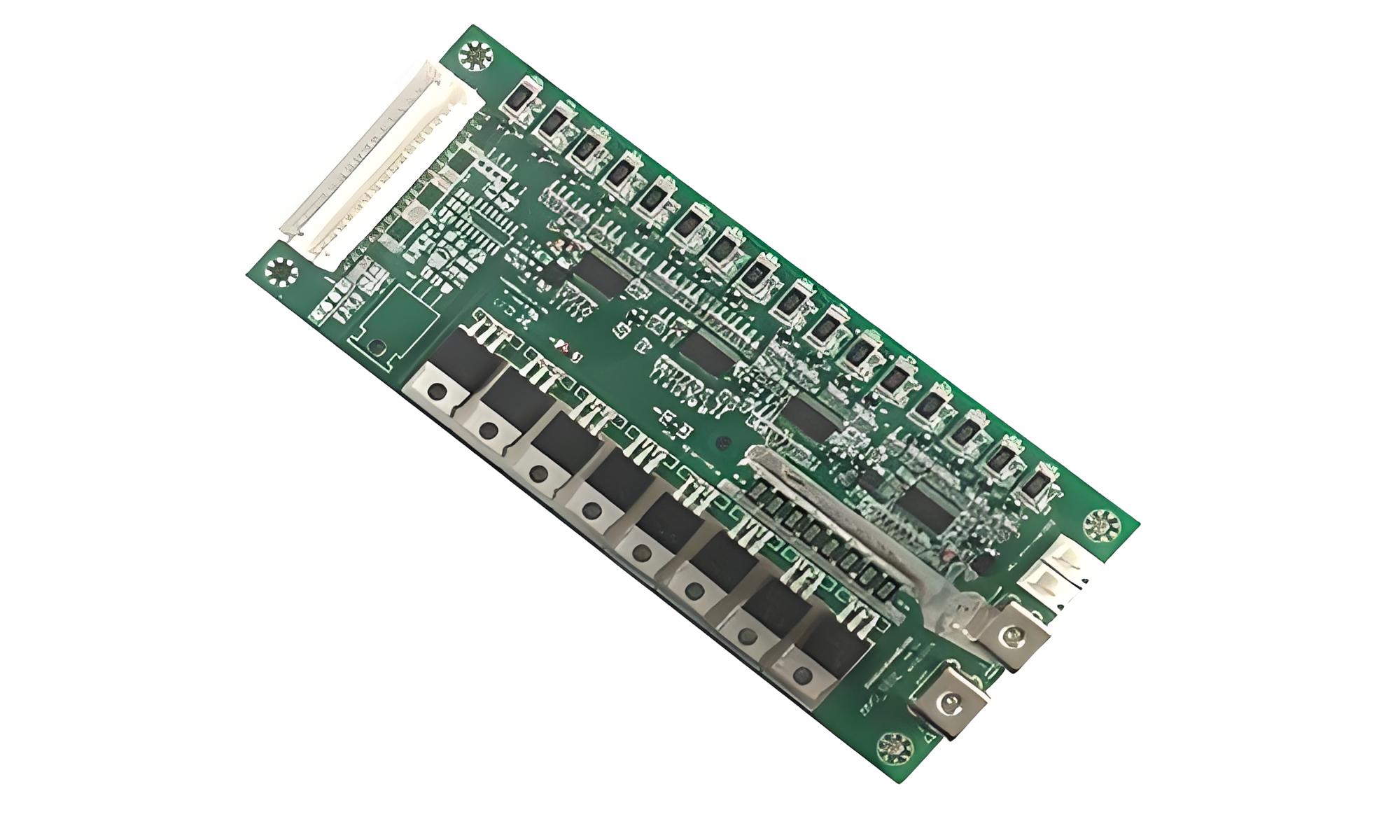
1、 Hardware parameter rules driven by battery characteristics
The rule setting of BMS protection board is first based on the chemical characteristics and physical parameters of the battery:
Voltage threshold
Ternary lithium battery: upper limit of overcharge voltage 4.2 ± 0.05V, lower limit of over discharge 2.7 ± 0.1V;
Lithium iron phosphate battery: upper limit of overcharge voltage 3.65 ± 0.05V, lower limit of over discharge 2.0 ± 0.1V;
Lithium titanate battery: upper limit of overcharge voltage 2.8V, lower limit of over discharge 1.5V.
The voltage windows of different materials need to be determined through experimental testing to ensure operation within the safe range of the battery.
Current limit
Continuous discharge current: set according to the battery rate characteristics (such as 1C, 3C), for example, power battery packs usually support 3-5C continuous discharge;
Instantaneous pulse current: The short-term (≤ 10ms) overcurrent threshold can reach 2-3 times the rated current. For example, a 500A battery pack can be equipped with 1200A pulse protection.
Temperature monitoring
Working temperature range: Lithium batteries are usually set within the allowable range of -20 ℃~60 ℃. When exceeded, power limit or shutdown protection will be triggered;
Gradient protection: When the temperature difference between adjacent cells is greater than 5 ℃ or the temperature change rate of a single cell is greater than 2 ℃/s, thermal equilibrium or alarm will be activated.
2、 Protection logic rules dominated by safety standards
The protection rules of BMS protection board must comply with international and industry safety standards:
Overvoltage/undervoltage protection
According to UL 1973 standard, single unit overvoltage protection needs to cut off the charging circuit within 0.1 seconds, with a response delay of less than 50ms;
Under voltage protection requires retaining 5% -10% redundant capacity (such as forced shutdown when SOC=10%) to avoid deep discharge damage to the battery.
Short circuit protection
The hardware level short circuit detection circuit needs to identify anomalies within 10 μ s, and perform power outage after software algorithm synchronization verification;
Staged protection mechanism: The primary protection is turned off through MOSFET, and the secondary protection triggers the fuse to completely isolate.
Thermal runaway protection
According to the requirements of GB 38031-2020, BMS needs to monitor parameters such as CO/smoke concentration and sudden changes in air pressure, and provide a 15 minute advance warning of the risk of thermal runaway;
Multi layer protection design: battery level insulation material → module level fire protection device → system level emergency pressure relief channel.
3、 Functional rules for customized application scenarios
The rules for BMS protection boards in different scenarios need to be adjusted accordingly:
Electric vehicles
Fast charging rule: During 4C charging, limit the fluctuation of individual cell voltage to ≤ 50mV and the temperature rise rate to<1 ℃/min;
Low temperature preheating: PTC heating will automatically start below -10 ℃, and the battery can only be charged after heating up to 5 ℃.
Energy storage system
Cycle life optimization: SOC is controlled within the range of 20% -80% to reduce lithium dendrite growth;
Grid frequency regulation response: dynamically adjust the charging and discharging power according to AGC instructions, with a response delay of less than 200ms.
Consumer Electronics
Miniaturization rules: Chip level BMS (such as TI BQ25703) supports 0.1 μ A sleep current, extending standby time;
Charging strategy: The mobile BMS adopts CC-CV segmented charging, and the current during the fast charging stage is ≤ 1.5 times the battery capacity (such as a 4000mAh battery limit of 6A).
4、 Dynamic rule generation of software algorithms
Modern BMS achieves rule adaptive adjustment through intelligent algorithms:
SOC/SOH calibration
Adopting the Extended Kalman Filter (EKF) algorithm, combined with the Open Circuit Voltage (OCV) curve, to real-time correct SOC errors;
Capacity attenuation model: The SOH value is updated every 100 cycles with an accuracy of ± 2%.
Optimization of Balanced Strategy
Active equilibrium triggering conditions: Single cell voltage difference>30mV (ternary lithium) or>50mV (lithium iron phosphate);
Start when energy transfer efficiency is greater than 85% to avoid ineffective balancing losses.
Fault prediction rules
Train LSTM neural network based on historical data to predict abnormal internal resistance growth or micro short circuit risk;
Trigger maintenance mode in advance to reduce the probability of sudden failures.
5、 Industry certification and functional safety rules
BMS protection board needs to pass strict certification standards and design rules:
Functional safety standards
ISO 26262 ASIL-D: requires hardware failure rate<10 FIT (1 FIT=1 time/10 billion hours), software code coverage>95%;
IEC 61508 SIL-3: Redundant communication design, dual MCU cross validation of instruction validity.
Electromagnetic Compatibility (EMC)
Compliant with CISPR 25 Class 5 standard, radiation emission limit<30dB μ V/m (30-1000MHz);
Surge immunity test: It is required to withstand ± 4kV contact discharge and ± 8kV air discharge.
6、 User defined rule extension
Some high-end BMS supports user-defined rule configuration:
Parameter programmability
Modify the charge discharge curve, equilibrium threshold, etc. through upper computer software (such as Victron VEConfigure);
Supports importing configuration files in JSON or XML format, suitable for customized energy storage projects.
Scene mode switching
Set "Performance Mode" (allowing SOC to drop to 5%) or "Lifetime Priority Mode" (limiting SOC to 30% -70%);
Dynamically adjust the temperature protection threshold to adapt to extremely cold/high temperature environments.
The formulation of rules for BMS battery protection boards is essentially a dynamic balance between battery physical characteristics, safety boundaries, and scenario requirements. With the application of AI and digital twin technology, future rule generation will evolve towards a "self-learning adaptive" mode. For example, the BMS of Tesla 4680 battery can optimize charging and discharging strategies based on user driving habits, achieving deep coupling between rules and behavior. Throughout this process, safety has always been the core red line of rule design.