HNST WELCOME!
0755-23173910
Sign in
|
Register
|
Supplier Join
English
|
中文
{{searchSelectTypeText}}
{{isCn?item.cn:item.en}}
Search
Alloy resistance
current diverter
Precision resistor
SMD fuse
fuse
walter
ever ohms
Hnstshop
Supplier
{{isCn?'¥':'$'}}{{isCn?scope.row.subTotal:scope.row.usdSubTotal}}
Cart
{{cartCount}}
CATEGORY
{{isChinese?level2CategoryView.viewNameCn:level2CategoryView.viewNameEn}}
{{ isChinese?level2Category.viewNameCn:level2Category.viewNameEn }}
{{ isCn ? thirdLv.descCn : thirdLv.descEn }}
HN Shop
Manufacturers
Cooperation
Help center
你当前的浏览器版本过低或不支持。请升级或更换浏览器。推荐浏览器 Chrome Edge。
HNST
→
storage
→
What is storage?
What is storage?
2025.05.08
HNST
views: 473
storage
memory
Flash Memory Spot Check
Product Recommendation
Flash Memory
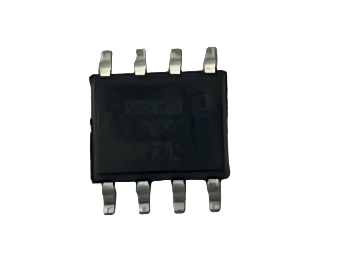
ZD25WQ16CTIGT
Recommend Article
The revenue ranking of NAND Flash/DRAM market in 1Q24 has been released, with a significant increase of over 80%!
It is expected that the significant growth in the global storage market this year will mainly depend on the significant increase in storage prices in the first half of the year, as well as the degree of recovery in the global server market this year, which will have a positive impact on the simultaneous increase in server storage volume and prices.
What is storage?
Memory is the core component used in computer systems to store program instructions, data, and computational results, serving as the "memory warehouse" of the computer. It determines the data processing capability, operating speed, and long-term storage reliability of the device. The following provides a comprehensive analysis of memory from three dimensions: functional classification, technical principles, and application scenarios:
What is the function of memory?
Memory plays a core hub role in information storage and supply in computer systems, and its fundamental role can be summarized as providing temporary storage and persistence capabilities for information in both time and space dimensions, thereby ensuring the continuity of the computing process and the accessibility of data.
Classification of Memory Brands and Representative Enterprises
Memory, as the core component of data storage, covers multiple fields such as memory modules, solid-state drives (SSDs), mechanical hard drives (HDDs), flash memory products (such as USB drives, storage cards), etc. The following are mainstream brand classifications and representative enterprises based on comprehensive market performance and technological strength:
What are the categories of storage devices?
Memory is a component used in computer systems to store data and instructions. According to different classification criteria, memory can be classified into multiple categories. The following is a detailed classification of memory from different dimensions:
Hot Tags
TLC
Patch resistance
walter
Metal foil resistance
LB
Thick film low resistance resistor
VISHAY resistor
sartfuse
GDT
Polymer capacitors
Littelfuse
High power low resistance thick film resistor
Metal film resistance
Thermistor
AEM
socay
resistance
FUZETEC
TVS transient suppression diode
Low resistance current sensing resistor
CBB capacitor
sunlord
Interface chip IC
Solid state capacitor
alloy resistance
Fenghua resistor
RALEC thin film resistor
VISHAY
PCBA scheme
viking
murata
LANSON
ROHM
Safety capacitor
Filter capacitor
fuse
thick film resistor
C_NEW
DC-DC
NXP active bridge rectifier controller (AC-DC)
RALEC power resistor
JINKE
default
Walterfuse
JDT
yageo
RALEC precision resistor
PLC
Power Semiconductor
Energy storage power supply
Prev:
SUNLORD Brand Introduction
Next:
SOCAY Brand Overview
No account,
Create an account
Already a member,
Sign in