Deep analysis of performance stability of volume resistors with the same parameters 1225 and 2512
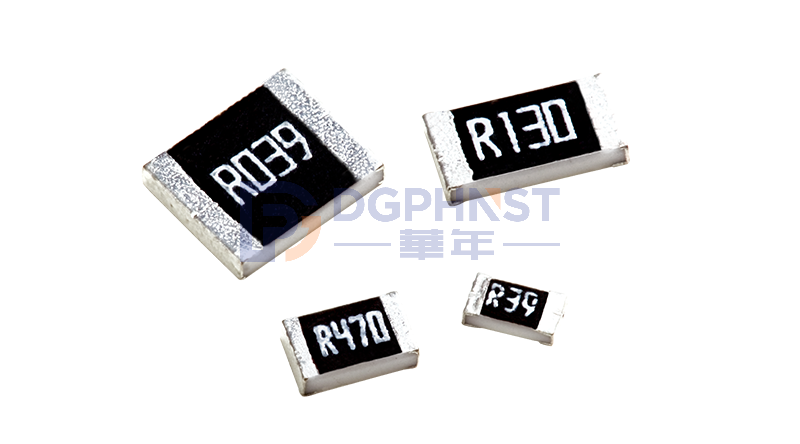
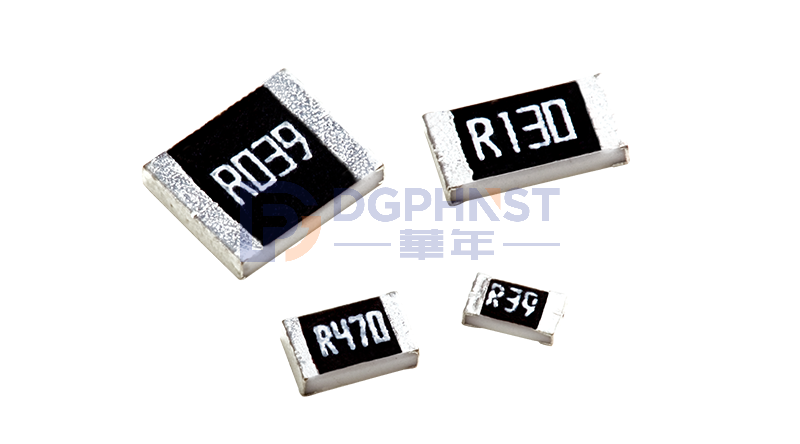
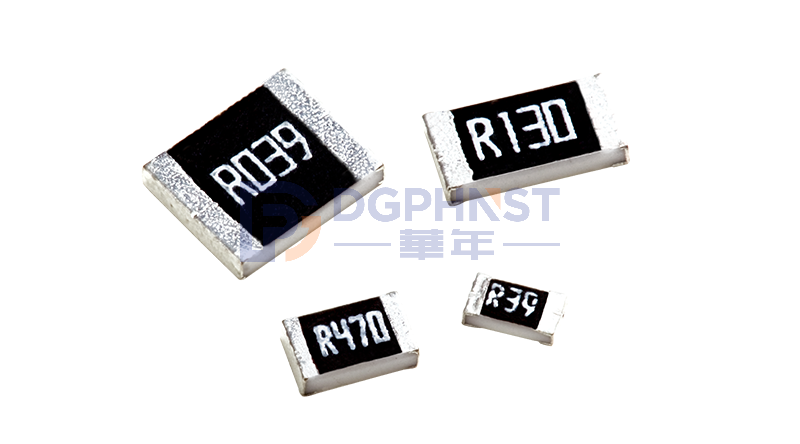
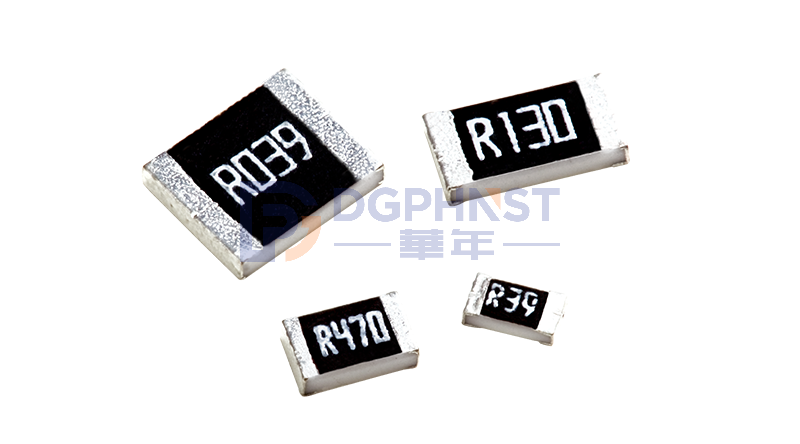
In electronic circuits, the stability of resistors is a key factor in ensuring long-term reliable operation of the circuit. When faced with resistors with the same parameters (such as resistance, power, tolerance, and temperature coefficient) but different volumes, many engineers pay attention to their performance differences. This article will conduct a multidimensional analysis of the impact of the volume difference between two common surface mount resistors, 1225 (with a specification of 3.2mm × 6.4mm) and 2512 (with a specification of 6.4mm × 3.2mm), on performance stability, and ultimately provide a conclusion.
The relationship between resistance volume and heat dissipation capacity
The stability of a resistor is directly affected by the operating temperature, while its heat dissipation capacity is closely related to its volume. The surface area of the 2512 resistor (approximately 20.48mm ²) is significantly larger than that of the 1225 resistor (approximately 20.48mm ², but with different aspect ratios), but its larger volume (typically thicker substrate thickness for 2512) means better thermal capacity and heat dissipation efficiency. In practical applications, under the same power conditions (such as 1W or 2W), the 2512 resistor, due to its volume advantage, can effectively reduce thermal resistance by contacting the PCB over a larger area and utilizing copper foil for heat dissipation. Experimental data shows that the temperature rise of 2512 resistor at full load is usually 1520% lower than that of 1225, and the low temperature rise is directly related to lower drift and longer lifespan.
2. The influence of internal structure and materials
Although the parameters are the same, there may be differences in the internal structure of resistors of different volumes. The 2512 resistor can accommodate thicker resistive films or more uniform distribution of conductive materials due to its larger space, thereby reducing the generation of local hot spots. For example, in pulse loads or high-frequency applications, the thermal stress distribution of materials is more uniform, reducing the risk of cracking or failure. In contrast, the 1225 resistor may face higher current density in a compact space and is prone to material fatigue during long-term operation, leading to an increase in resistance drift rate.
3. Environmental adaptability and mechanical stability
The larger volume of the 2512 resistor provides stronger mechanical strength. In vibration or temperature cycling tests (such as 55 ° C to+155 ° C), the bonding between the electrode and the ceramic substrate is stronger and less prone to microcracks due to mismatch in coefficient of thermal expansion (CTE). 1225 resistors may experience higher mechanical stress under extreme temperature changes due to their smaller size, thereby affecting contact reliability. Especially in automotive or industrial applications, 2512 resistors typically exhibit better environmental resistance characteristics.
4. Electrical performance and noise performance
Under the same parameters, a larger 2512 resistor often has a lower noise index. This is because the current path of large-sized resistors is wider, reducing the turbulence effect of electron flow. For high-precision circuits such as medical equipment or measuring instruments, the noise advantage of 2512 can enhance signal integrity. In addition, in high-voltage applications, the larger creepage distance of 2512 enhances voltage stability and reduces the risk of arc breakdown.
5. Comparison of actual application scenarios
High power scenario: If the circuit needs to continuously withstand loads close to rated power, the 2512 resistor has significantly better stability than the 1225 resistor due to its heat dissipation advantage.
Space limited design: The 1225 resistor is suitable for high-density PCBs, but needs to be downgraded (such as using only 50% of rated power) to compensate for insufficient heat dissipation, otherwise stability will decrease.
High frequency or pulse load: The 2512 resistor has a larger thermal response time constant, which can better absorb instantaneous energy and avoid overheating failure.
6. Comprehensive conclusion: 2512 resistor has more stable performance
Based on the above analysis, under the same parameter conditions, the 2512 volume resistor outperforms the 1225 specification in terms of thermal management, mechanical robustness, environmental adaptability, and electrical noise control. Its larger volume is essentially designed for stability, especially in medium to high power applications where long-term reliability is higher. However, the 1225 resistor still has value in compact designs, but stability shortcomings need to be compensated for through derating or auxiliary heat dissipation. Therefore, if performance stability is given priority, 2512 is a wiser choice.
Extended suggestions
When selecting, in addition to volume, attention should also be paid to resistor brand technology (such as thick film vs thin film), coating materials (such as silicone protection), and testing certification (such as AECQ200). The final decision needs to be based on specific application scenarios, costs, and supply chain factors, but the 2512 resistor is undoubtedly a more stable solution in the vast majority of harsh environments.