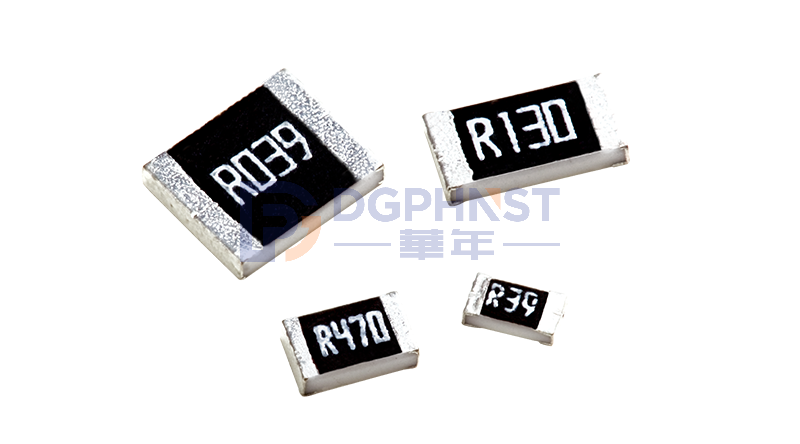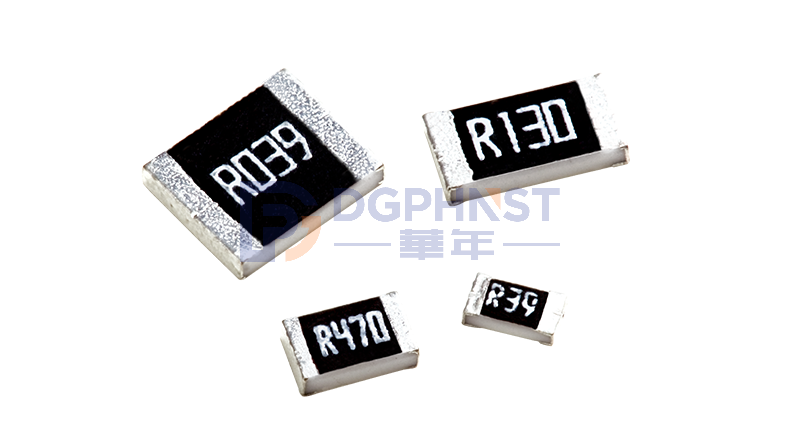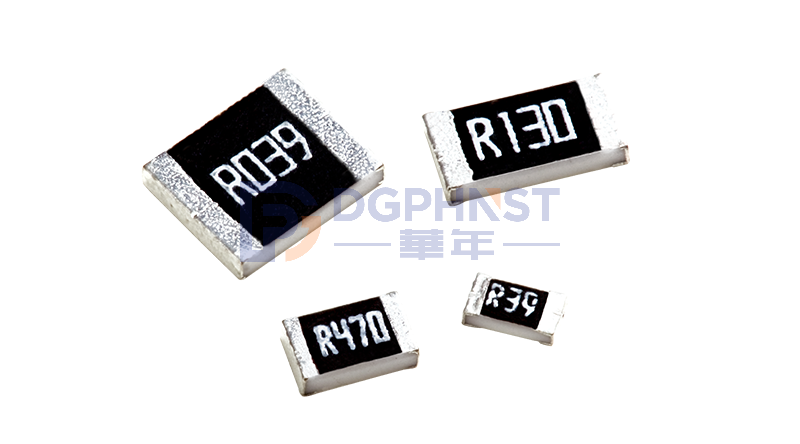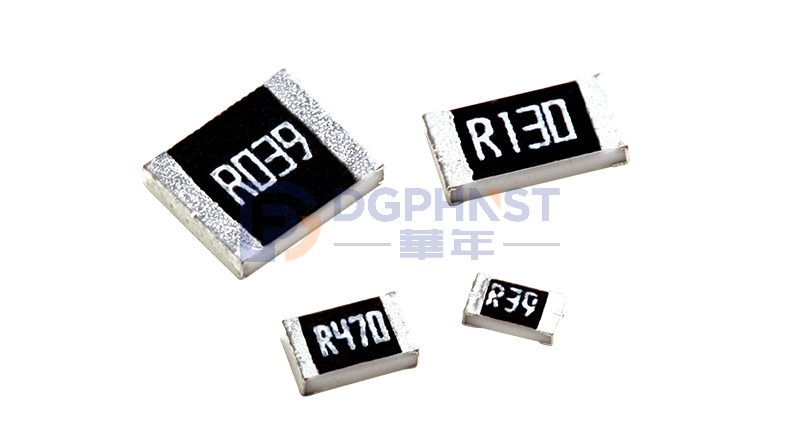
Okay, this is a very professional and important question. The use of manganese copper alloy as the material for alloy resistors is mainly due to its excellent physical properties, making it an ideal material for manufacturing high-precision and high stability resistors.
The following are the main benefits of manganese copper alloy as a resistor material, which I will explain in detail from core characteristics to specific application advantages:
Extremely low temperature coefficient of resistance
This is the most core and important advantage of manganese copper alloy.
Meaning: The temperature coefficient of resistance represents the degree to which the resistance value changes with temperature. The temperature coefficient of resistance of manganese copper alloy is very low, usually between ± 20 ppm/° C and ± 50 ppm/° C (ppm is one millionth).
Benefit: This means that when the ambient temperature or the resistance itself rises due to electricity heating, the change in its resistance value is minimal.
Application value: For applications that require high-precision measurement, such as precision instruments, sampling resistors, and current detection resistors, the stability of resistance values is crucial. Manganese copper resistors can ensure accurate and reliable measurement results throughout the entire operating temperature range.
Excellent long-term stability
Meaning: The crystal structure of manganese copper alloy is very stable, and its resistance value changes very little over time, making it less prone to aging.
Benefit: The resistor produced can maintain its resistance value within the initial accuracy range even after long-term use or storage.
Application value: Suitable for electronic devices that require high reliability and long lifespan, such as aerospace, military, medical, and reference voltage sources.
Low thermal electromotive force
Meaning: When there is a temperature difference between the connection points of two different metals, a small voltage is generated, called thermoelectric potential or Seebeck effect. The thermoelectric potential between manganese copper alloy and copper lead is very low.
Benefit: When measuring small voltage signals (especially in high-precision current detection, where the voltage drop across the sampling resistor is already very low), low thermal electromotive force can avoid introducing additional measurement errors.
Application value: For high-precision amplifiers and measurement systems, this is a crucial feature that can ensure the authenticity of measurement signals.
Good electrical resistivity
Meaning: Manganese copper alloy has a moderate electrical resistivity (approximately 0.43 µ Ω· m).
Benefit: This allows manufacturers to manufacture resistors with the required resistance within a reasonable volume. If the resistivity is too low, a long length or a thin wire diameter is required; If it is too high, it is not conducive to manufacturing low resistance resistors.
Application value: Especially suitable for manufacturing low resistance, high-power alloy resistors, such as current sampling resistors.
Excellent processability and mechanical properties
Meaning: Manganese copper alloy can be made into very fine wires or extremely thin strips through processes such as drawing and rolling, and has certain strength and toughness.
Benefit: This allows it to be processed into various forms of resistors, such as precision wire wound resistors, metal strip resistors, etc., to meet different installation and power requirements.
Summary and Application Scenarios
Combining the above advantages, the core advantages of manganese copper alloy resistors can be summarized as "precision" and "stability".
Therefore, it is mainly applied in the following performance demanding fields:
Current detection and sampling resistors: This is the most common application. Accurate current measurement is required in circuits such as power management, motor drive, battery management system (BMS), inverters, etc. Manganese copper resistors, due to their low temperature coefficient and low thermal electromotive force, can provide the most accurate voltage signal for calculating current.
Precision measuring instrument: As a reference resistor or voltage divider resistor inside the instrument, it ensures the measurement accuracy of the instrument.
High precision splitter: A classic splitter used for calibrating high-precision instruments, many of which are made of manganese copper.
Non inductive resistors in high-frequency circuits: By using special winding methods (such as Ayrton Berry winding) or strip structures, manganese copper resistors with extremely low inductance can be made for high-frequency circuits.
Brief comparison with other alloy materials
To better understand the advantages of manganese copper, you can compare it with other commonly used resistance alloys:
Kangtong: Its temperature coefficient of resistance is slightly higher than that of manganese copper, and its cost is lower. It is commonly used in power resistors and heating elements that do not require extremely high accuracy.
Nickel chromium alloy: high resistivity, high temperature resistance, but high temperature coefficient of resistance, commonly used in electric heating wires and high-power resistors, not suitable for precision applications.
Silicon aluminum alloy: a resistance material made by modern semiconductor technology, with a temperature coefficient that can be made very low, even lower than manganese copper, but at a higher cost, commonly seen in high-end surface mount sampling resistors.
In summary, choosing manganese copper alloy as the resistance material is an excellent balance between precision, stability, and reliability. When your circuit design has strict requirements for the "accuracy" and "stability" of resistance values, manganese copper resistors are usually the preferred solution.